LoL Team Tracker for Ranked Flex: Checklist

Your Flex 5 team logs on for a practice session. The goal is to tighten up your early game invades, but the review spirals into a vague debate about who should have warded river. Two weeks later, you're stuck in the same division, unsure if you've actually improved or just played more games. This is the gap a structured team tracker is designed to fill. To go deeper, you can also read Learning from Pro Flex 5 Team Strategies: Winning League of Legends Flex 5 as a True Team.
A LoL team tracker for ranked Flex is more than a shared spreadsheet. It's a centralized system for translating hours of gameplay into actionable, targeted improvements. Without one, progress relies on memory and feeling, which fades with each login screen. This checklist provides the concrete framework competitive teams use to stop guessing and start building consistent, evidence-based synergy. You'll learn what to track, how to structure reviews, and why most DIY tracking efforts fail before they yield results. To go deeper, you can also read Comparing Flex 5 with Clash Team Dynamics: Deep Dive into League of Legends Team Play.
What exactly are you trying to improve? Defining your tracking goals
Start by asking a simple question: why are you tracking data? The answer should never be 'to have data.' Effective tracking begins with specific, team-wide objectives that your chosen metrics will directly measure. A team aiming to dominate early game needs a different tracking focus than one struggling to close out mid-game leads.
Begin your checklist by establishing two to three primary objectives for the next 20-25 games. These should be narrow enough to act upon. 'Improve macro' is too broad. 'Increase first Herald control rate to 70% in games where we secure first dragon' is a trackable goal. This precision forces your team to discuss specific map movements and vision setups, not general concepts.
From objectives to key performance indicators (KPIs)
Once objectives are set, you need KPIs that act as your scoreboard. For a Flex 5 team, effective KPIs often blend in-game stats with observational notes. A pure stat like 'average vision score' is less informative than 'vision score differential at 10 minutes' paired with a note on which quadrant control was lost.
Consider tracking these categories for each game:
- Objective Timelines: Record the exact game time of first Blood, first Tower, each Dragon, Herald, and Baron take. More importantly, note the 60-second window leading up to each. Who initiated the call? Was vision established? Were lanes properly set?
- Resource Allocation Efficiency: Track gold leads at 15 minutes and how they were generated (turrets, kills, farm). Note when a gold lead fails to translate into map pressure. This often points to indecisive shot-calling post-objective.
- Draft Cohesion Notes: Log your team composition's intended win condition (pick, siege, teamfight) and a post-game rating on how well you executed it. A 'wombo-combo' draft that never groups is a coordination failure, not a draft failure.

Building your central tracking hub: Tools and structure
You have your goals and KPIs. Now you need a place to put them that the whole team will actually use. The most common pitfall is choosing a tool that's too complex, leading to abandoned logs after three sessions. Simplicity and accessibility are paramount.
A shared Google Sheet or Airtable base is often the best starting point. Its strength is customization; its weakness is requiring discipline to maintain. Structure your hub with clear, separate tabs or views. One tab for raw game data (match ID, result, KPIs). Another tab for 'Weekly Focus Review' where you synthesize trends. A third for 'Draft Library' recording successful compositions against certain enemy styles.
The essential template columns for every match
Your match log template should make data entry fast. Every row (one game) should include these columns at a minimum:
- Match ID & Result (Win/Loss): The basic record.
- Primary Objective Performance: A simple 'Yes/No/Partial' on whether you achieved the week's stated goal (e.g., 'Secured First Herald').
- Critical Moment Time Stamp: The single most important game time that decided the match (e.g., '22:34 - Lost fight at Dragon soul point'). This focuses review sessions.
- Synergy Note: One sentence on a specific positive play (e.g., 'Jungle-Mid duo successfully invaded their blue at 7:15') and one on a breakdown (e.g., 'Bot lane was ganked while flash was down, no warning pinged').
- Post-Game Rating (1-5): Each player privately rates team communication and their own comfort in the draft, then you average it. This tracks morale and meta-fit beyond the win/loss.
This template takes under 2 minutes to fill post-game and provides rich material for discussion. The alternative, trying to remember key moments two days later, is why many teams spin their wheels.

Transforming data into decisions: The weekly review ritual
Data sitting in a sheet is worthless. Its value is unlocked in a structured, time-boxed weekly review. This meeting is not a replay of every game. It's a 60-minute strategic session focused on patterns from the last 5-7 games, guided by your tracker.
Start the review by looking at the 'Critical Moment' column. Is there a recurring timestamp? If multiple losses cluster around 25-30 minutes, the issue is likely mid-game macro, not laning. Then, check the 'Primary Objective Performance' rate. A 30% success rate on first Herald control demands immediate attention. Finally, read the 'Synergy Notes' aloud. Often, the same lane dynamic issue is noted by different players across games, confirming a systemic problem.
Creating actionable practice drills
The output of a review must be one or two concrete practice drills for the coming week. If the data shows poor vision before objectives, the drill isn't 'ward more.' It's a 15-minute custom game scenario: 'Set up vision around Baron without being spotted, starting from a base reset at 20 minutes, against intermediate bots placed as scouts.'
Log these drills in your tracker's 'Weekly Focus' tab. Next week, your primary KPI should directly measure performance on that drill (e.g., 'Vision score differential at Baron increased from -5 to +2'). This creates a closed-loop system: identify problem via data, design intervention, measure result. This methodical approach is what separates progressing teams from stagnant ones.

The hidden costs and common failure points of DIY tracking
After a month of diligent tracking, many teams hit a wall. The initial excitement fades. The spreadsheet feels like homework. The review meetings become repetitive, circling the same issues without new insights. This is the predictable plateau of the DIY approach, and it stems from three core challenges.
First, there's the analysis paralysis problem. You have columns of data on dragon takes, vision scores, and gold differentials, but correlating them to find the root cause of losses is a specialized skill. Was the 25-minute Baron throw caused by poor vision, a misplaced flank, or an item timing miscalculation? Most players, even at high ELO, are experts at playing, not at forensic game analysis. They miss the subtle chain of events your data is hinting at.
Second, maintaining objectivity within the team is nearly impossible. The player whose lane is consistently the source of the 'breakdown' note may become defensive. The shot-caller may dismiss data that contradicts their instincts. Your tracker becomes a political document, and its findings are negotiated, not accepted. This erodes trust and halts real improvement. An external perspective has no stake in team dynamics and can present data findings bluntly, directing focus to the game, not the personalities.
When your internal data isn't enough
The third challenge is data scope. Your internal tracker records what you did. It can't fully analyze what your opponents did, or more importantly, what you didn't do. It lacks comparative benchmarking against the broader meta at your rank. Are your objective times slow? Your sheet might show a 24-minute average Baron take. Is that good? Without context against thousands of other Flex games at your MMR, you don't know.
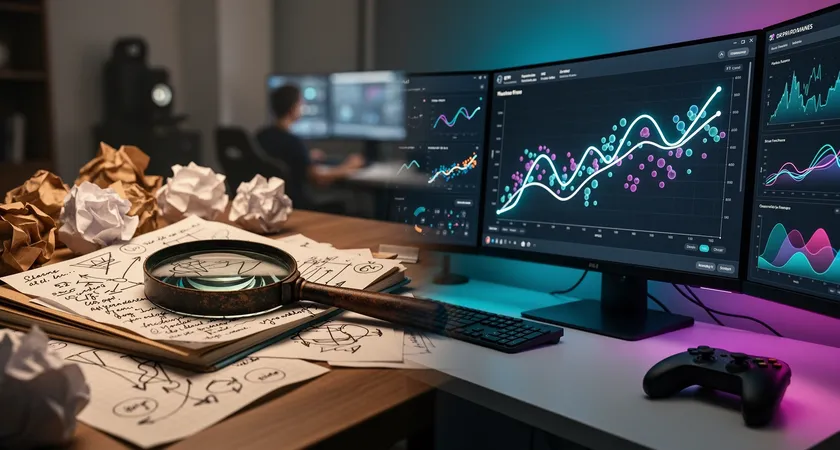
This is where the limits of a manual tracker meet the need for professional-grade analytics platforms. These tools automatically ingest all your games, providing heatmaps of ward placements, efficiency ratings for pathing, and win probability graphs. They answer the 'compare to what' question. In practice, teams that hit a ranking ceiling often discover, through this broader data, that they've optimized the wrong things entirely, perfecting a level 1 invade while their late-game teamfight positioning is statistically aberrant for their tier.
Knowing when to seek a structured system
The ultimate sign your DIY tracker is insufficient isn't a losing streak. It's a winning streak with no understanding of why. You climb, but the feedback loop is broken. You cannot reliably replicate your success because you aren't sure which tracked variable was the actual lever. This creates fragile confidence that shatters at the next meta shift or promotion series.
Investing in a dedicated team tracker platform or coaching analysis is a strategic decision to outsource the 'data engineering' and 'pattern recognition' work. It frees your team to focus on what they do best: playing, practicing, and communicating. The professional's role is to manage the tracker, highlight the one or two most consequential insights each week, and design the precise drills to address them. They act as an objective facilitator in reviews, ensuring data leads to constructive change, not blame.
For a committed Flex 5 team, this transition often happens when members value their collective time more than the subscription cost. Spending six hours a week grinding games plus two hours struggling through manual analysis is an eight-hour commitment. If a service can cut the analysis to 30 minutes with better insights, the return on investment is clear. It turns playtime into focused development time.
Implementing a LoL team tracker transforms your Flex 5 squad from a group of individuals playing together into a coordinated unit with a shared memory. The initial checklist, goals, template, review rhythm, builds the discipline of measurement. It surfaces your real strengths and the repetitive mistakes that hold you back. Sticking with this process is what builds incremental, lasting improvement.
The journey typically reveals a deeper truth: consistent climbing requires more than good mechanics and a positive attitude. It requires a system. For many teams, building and maintaining that analytical system internally becomes a distraction from the game itself. Recognizing that point is not a failure; it's a sign of a team serious about optimizing their performance. It's the moment you shift from asking 'What does our data say?' to asking 'What should we do about it, and who can help us see it clearly?' Your next step is to run your next five-game block using the core template outlined here. Then, review the data and ask honestly if your conclusions feel definitive, or if you're still guessing at the 'why.'
FAQ
What is the best free team tracker for LoL Flex 5?
There's no single 'best' free tool, as it depends on your team's needs. For most teams starting out, a well-structured Google Sheet using the template columns (Match ID, Critical Moment, Synergy Notes) is the most flexible and accessible free option. For more automated stat aggregation, consider linking your op.gg accounts to a shared document or using a basic stat-tracking website, but remember the real value is in your custom notes on coordination, not just the raw numbers the game provides.
How often should a Flex team review their tracker data?
Aim for a dedicated, 45-60 minute review session once per week, covering the last 5-7 games. Reviewing after every single game leads to burnout and overreaction to outliers. Reviewing less than weekly allows bad habits to cement and loses the thread of your weekly practice focus. The ritual is as important as the data itself.
What's the one thing we should absolutely track that most teams forget?
Track the 'preparation state' before a key objective is taken or lost. Note down: Were summoner spells up? Were ultimate abilities available? Was the wave in the adjacent lane pushed? This context turns a note like 'lost dragon fight at 20 mins' into an actionable insight: 'lost dragon fight at 20 mins because mid had no flash and top lane was recalling with wave under tower.' This highlights macro setup errors, not just teamfight execution.
Our team tracker just causes arguments. What are we doing wrong?
This usually means your tracker is being used as a blame tool rather than a learning tool. Shift the language from 'who messed up' to 'what broke down.' Frame notes around the play, not the player ('the vision line collapsed at river' vs. 'the support didn't ward'). Consider having an impartial person, like a dedicated analyst or even a rotating team member, lead the review session using the data as the sole agenda to depersonalize the discussion.
Can a team tracker help us with our draft strategy in Flex queue?
Absolutely. Use a dedicated tab in your tracker as a draft library. Log your team composition, the enemy's key picks, and the result. Over time, you'll see patterns: which of your comfort comps have high win rates against engage-heavy teams? Which ones fail against split-push strategies? This moves drafting from gut feeling to an evidence-based process, allowing you to target ban more effectively and enter games with a clearer win condition.
We have a tracker but our rank isn't improving. What's the next step?
If you're consistently tracking and reviewing but not climbing, your analysis layer is likely insufficient. Your data shows 'what' happened, but your team may be misdiagnosing the 'why.' This is the classic point to seek an external review. A coach or analyst can audit your tracker findings, compare them with broader meta data, and often identify a single, critical strategic blind spot your team has internalized, like consistently forcing fights when you should be trading objectives.