How to Run a Post-Game Review as a Full Stack

The final Nexus explosion echoes in your headset. Another game in the books for your full stack. The victory feels hollow, though, or the loss stings with confusion. You know you need to talk about it, to figure out what just happened. But without a clear plan, the conversation spirals into vague blame, defended egos, and wasted time. To go deeper, you can also read Leveraging In-Game Stats for Flex Improvement: How Data Can Elevate Your League of Legends 5-Stack.
A disciplined post-game review isn't just replaying the highlights. For a committed Flex 5 team of five dedicated players, it's the single most powerful tool for systematic improvement. It transforms raw, chaotic gameplay into structured lessons. This process ensures every loss teaches you something and every win makes you stronger. The goal is to move the team forward, not to assign points for a 'who played worst' contest. Done right, it builds trust and a shared understanding far faster than grinding hundreds of ranked games on autopilot. We'll break down how to establish a review process that is focused, constructive, and turns your team's collective experience into a competitive edge. To go deeper, you can also read How to Review Flex 5 Matches Effectively.
Building Your Review Framework Before the Game Even Ends
The most common mistake is treating the review as an impromptu chat that starts the moment you hit the post-game lobby. This approach is a recipe for emotional arguments and surface-level analysis. The real work begins by setting expectations and gathering tools well before your next session.
First, commit to a consistent schedule. Decide as a team: will you review every game? Every loss? Once per week? Consistency matters more than frequency. Announce the plan. "We review our Friday night scrims every Saturday at 2 PM." This gives everyone mental prep time and prevents the dreaded, "Hey, can we talk about last game... right now?" ambush.
Second, designate roles. One person should be the primary facilitator. This isn't the shotcaller or the best player by default. It's the person best at keeping discussions on track, asking open questions, and mediating disagreements. Their job is to guide the process, not deliver all the answers. Another player can be the 'clip curator,' responsible for timestamping key moments during the game for quick review.
Finally, choose your tech stack. You need reliable VODs. League's built-in replay system is your foundation. For deeper analysis, consider a tool like Outplayed or Medals to automatically record your perspective. A simple shared document—a Google Doc or a dedicated channel in your Discord server—becomes your living playbook to store agreed-upon takeaways and action items.
Setting the Right Tone and Ground Rules
How you start the conversation dictates its entire trajectory. The facilitator must explicitly set the tone. A simple opening statement works wonders: "Okay team, the goal here is to find mistakes in our system, not mistakes in people. We're analyzing our play to get better, not to make anyone feel bad. Let's focus on decisions and outcomes."
Establish non-negotiable rules. "We talk about our own mistakes first." This disarms defensiveness. "We use 'we' language, not 'you' language." Instead of "You died there," it's "We overextended without vision." Ban absolute terms like "always" and "never." They are rarely true and always inflammatory. Most importantly, make it safe to be wrong. If a player gets criticized for admitting a misplay, they'll stop admitting them, and learning grinds to a halt.
Structuring the Session: From Macro to Micro, Not Kill to Kill
A scattered review jumps from that missed Smite at 22 minutes to a bad trade in lane at level 3. This creates noise, not insight. A professional structure follows the game's own hierarchy of importance: Macro Decisions, Objective Fights, and then Micro Execution.
Start with the Macro story. Open the replay and pull back to the full map view. Trace the broad narrative. "At 10 minutes, we had a 1k gold lead. By 20 minutes, we were down 3k. Let's find the turning point." Look at major map swings: first Herald usage, first Tower fall, first major rotation blunder. Ask big-picture questions: What was our win condition this game, and did our plays align with it? When we got a pick, what objective was actually available to take? This phase is about the team's collective brain, not individual hands.
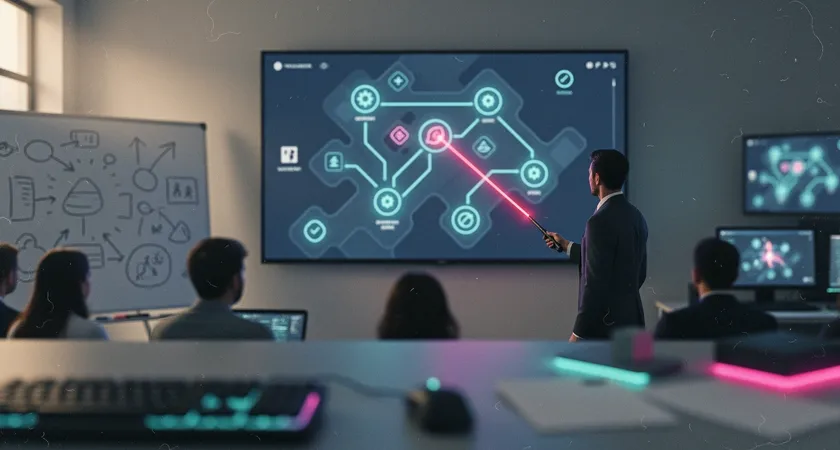
Next, isolate key Objective Fights. This means Dragon soul fights, Baron attempts, and sieges on Inhibitor towers. Don't just watch the fight. Start the replay 60 seconds before. Analyze the setup: Where was our vision? How was the wave state? Who was on the map and who was missing? Were we grouped by choice or by accident? Watching the setup often reveals why the fight was won or lost before the first ability was even cast.
Only after this should you drill into specific Micro Moments. These are the flashy outplays or tragic misclicks. The rule here is specificity with purpose. Don't just say "our bot lane lost." Isolate the exact moment: "At 6:45, after the wave crashed, you stepped up for a caster minion while their jungle was visible topside. Let's look at the cooldown tracker. Your Heal was down, their Leona had Flash and R. That was the punish window." This turns a blameful statement into a technical lesson about wave states and cooldown awareness.
The Art of Effective VOD Analysis: Asking Questions, Not Giving Lectures
Here is where most reviews die. Someone hits play, narrates exactly what everyone is already seeing ("Okay, so I'm walking up here... and I die"), and the room falls silent. The facilitator's core skill is to ask questions that provoke thought and self-discovery.
Replace declarative statements with investigative prompts. Instead of "You shouldn't have face-checked that bush," pause the VOD and ask, "What information did we have about that quadrant of the jungle before you entered it?" Instead of "Our engage was bad," ask, "What was the signal for us to start this fight? Was it clear to everyone?" Good questions are open-ended and focus on the decision-making process leading to the action.
Utilize the pause button ruthlessly. The moment you see a critical decision point—a player breaking from the group, a crucial cooldown used—pause. Ask the player in the hot seat: "Talk us through your thought process right here. What were your priorities?" Often, you'll find a mismatch between intent and execution, or a critical piece of information a teammate failed to communicate.
Compare perspectives. Watch the same fight from the jungler's view, then the mid laner's view. You'll frequently discover that what looked like a "greedy chase" to one player was a "sure cleanup" to another, based on their limited fog of war. This builds empathy and highlights communication gaps more effectively than any lecture.

Navigating Conflict and Handling Sensitive Feedback
Even with the best rules, tensions flare. A player feels targeted. A recurring mistake frustrates the team. How you handle these moments determines if your review culture survives or collapses.
When emotions rise, the facilitator must depersonalize immediately. Shift the focus from the person to the pattern or the situation. "Let's look at this as a pattern. In the last three reviews, we've identified early-game invades as a pain point. What's our systemic breakdown? Is it our leash timing, our ward placement, or our level 1 communication?" This moves the conversation from "you keep dying" to "we keep losing to invades."
Use the "feedback sandwich" with caution. The classic "good, bad, good" structure can feel transparent and patronizing to experienced players. A more authentic method is direct, kind, and focused on growth. "Your teamfighting has been great. A specific area for growth I see is tracking the enemy jungler in the early laning phase. When you have priority, a deep ward here can totally change our mid game. Let's focus on that one habit next session." This ties the critique to a clear, actionable next step.
If two players clash repeatedly on a strategic point—like engage timing or split-push strategy—don't let it become a debate of opinions. Take it to the VOD. Find two comparable examples: one where it worked, one where it failed. Analyze the conditions that led to each outcome. Data from your own games is the ultimate tiebreaker. It's not about who's right; it's about what works under which conditions.
The Limits of DIY Analysis and Recognizing Blind Spots
Every team, no matter how diligent, develops ingrained habits and blind spots. You watch your own replays through the lens of your own assumptions. You may perfect your late-game Baron setups but completely miss that your default draft strategy has been statistically weak into the current meta for three patches.
This is where the self-run review hits a natural ceiling. You can see *what* you did wrong. It's much harder to diagnose *why* you keep making the same category of error, or to identify strategic patterns invisible from inside your own game history. Teams often spend cycles optimizing a strategy that is fundamentally suboptimal, because it's the only one they know. An external perspective isn't about having a higher-ranked player tell you to "farm better." It's about bringing a structured methodology to diagnose systemic issues, spot meta deviations, and introduce concepts your team hasn't yet considered. The value lies not in superior mechanics, but in superior analysis frameworks and an unbiased eye for your team's unique patterns.
Translating Insight into Actionable Change
A review that ends with "okay, we gotta fight better" is a failed review. The final, critical phase is committing to one or two specific, tangible changes for your next block of games. Vague resolutions lead to zero improvement.
Close every session by summarizing and assigning. The facilitator should recapitulate: "So our two key takeaways today are: first, we need a clear, verbal call for when to disengage after a failed pick. Second, our support will take charge of placing one deep ward in the enemy jungle on every first back." These are testable, observable actions.
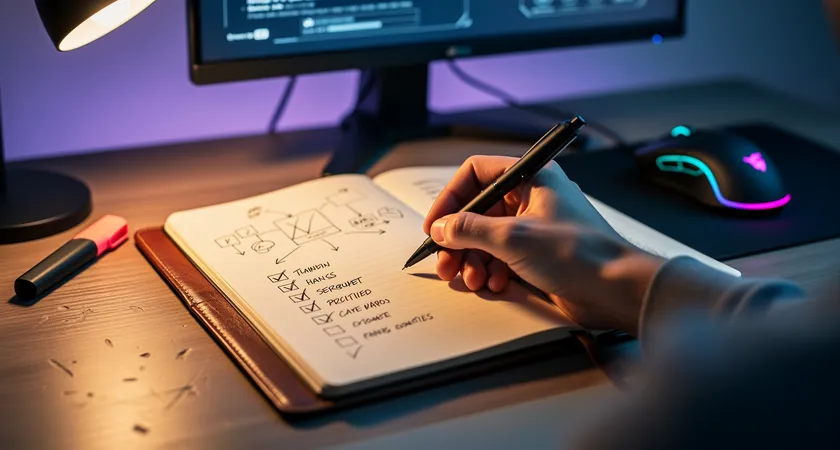
Document these action items in your shared playbook. Before your next competitive session, do a quick 5-minute briefing to remind everyone of the focus points. "Remember, tonight's priorities are the disengage call and the first-back deep ward. Let's track it." This creates accountability and closes the feedback loop.
Finally, follow up. Start the next review by checking in on those action items. "Last time we said we'd work on disengage calls. Let's look at the fight at 28 minutes this game. Did we do it? What happened?" This creates a culture of continuous, measurable progress and shows the team that their review time directly translates to in-game results.
Mastering the post-game review turns your full stack from a group of individuals sharing a rank into a learning organization. It replaces frustration with understanding and randomness with intention. The process itself—the disciplined watching, the respectful debate, the focused commitment to change—becomes your team's core competency. It's what allows you to learn from every single game on the rift, ensuring that your time invested yields not just LP, but genuine, sustainable growth as a cohesive five-player unit. Start your next session not with a sigh, but with a plan.
FAQ
How long should a post-game review for a League of Legends team last?
Aim for 30 to 45 minutes maximum. Effective reviews are focused and intense, not sprawling marathons. Going longer often leads to diminishing returns, fatigue, and repetitive discussions. It's better to cover one or two major themes thoroughly than to skim every minute of the game.
What's the best way to record gameplay for a full stack review?
Every player should locally record their own perspective using League's replay function for the full map view. For personal perspective and comms, a tool like Outplayed or Medal.tv that auto-records sessions is ideal. This gives you both the macro overview and the individual player's screen and decision-making context to compare.
How do you stop a post-game review from becoming a blame session?
The facilitator must enforce strict ground rules from the start. Mandate 'we' language, ban 'you' accusations, and have players critique their own play first. Frame every mistake as a problem for the team's system to solve, not an individual's failure. Pause emotional discussions and redirect to the specific in-game decision, not the person.
How many games should we review in one session?
Review one game in depth per session. Attempting to cover multiple games usually results in shallow, scattered analysis. It is far more valuable to completely break down the pivotal moments of a single match than to superficially touch on several. Focus on quality of insight over quantity of footage covered.
What if our team has a big skill gap between players? Won't reviews just target the weakest link?
A well-run review focuses on team coordination errors, not mechanical misplays. The jungler's pathing timing, the team's vision setup for an objective, or the communication before a fight are all collective responsibilities. Frame analysis around these cooperative elements, which involve everyone, rather than individual laning performance. The goal is to elevate the team's floor, not just the ceiling.
Should we review wins or just losses?
Review both, but for different reasons. Losses expose clear weaknesses and mistakes to correct. Wins, however, are crucial for reinforcing what you did correctly and identifying the *conditions* that led to success. A sloppy win can teach you just as much as a close loss, highlighting areas where you got lucky and need to tighten up.