Find Ranked Flex Teammates You Can Queue With

You've cleared your evening, queued up Flex, and watched the lobby dissolve after one game. The chat is silent, the VODs unmade, and the only ranking progress you see is on your solo ladder. Finding teammates you can actually queue with consistently is the single most significant blocker for serious Flex 5 play. This isn't about finding five warm bodies; it's about assembling a crew that shows up, communicates, and wants to improve as a unit. This guide cuts through the noise to show you where dedicated players look for teams, how to evaluate them beyond their OP.GG, and the crucial steps to transform a pickup group into a team you can rely on for the entire season.
Forget the Public Queue: Go Where Committed Players Look
The public Flex queue is, by design, a place for casual groups. Finding a permanent fifth player there is like looking for a dedicated project manager in a weekend co-working space. You need to go to the digital places where players have already signaled their intent to build something structured. This requires a shift in mindset from "who's online?" to "who's recruiting?"
Dedicated Discord servers are the modern hub. Look for servers tied to larger League communities, content creators who focus on competitive play, or regional amateur leagues. The key difference in these spaces is that conversations are threaded and searchable. You can post a detailed looking-for-team (LFT) or looking-for-players (LFP) message that stays up, allowing interested parties to find you days later, not just in the moment. Reddit's r/LeagueConnect and similar subreddits function similarly, but the ephemeral nature of posts means you need to be more proactive in browsing and responding.
On these platforms, your post is your first filter. A message that says "Gold ADC LF Flex team" will attract a different crowd than one that outlines your preferred playtimes, communication style (voice comms required?), and team goals ("aiming for Gold I this split, with focused VOD review once a week"). Being specific about what you offer and what you seek automatically screens for alignment. It tells the reader you're serious and saves everyone's time.
Beyond the Discord Post: The Overlooked In-Game Tool
Many players completely forget the Clash tab in the League client. While its primary function is to register for Clash tournaments, the "Find Team" feature is a curated pool of players who have proactively opted into a team-based, scheduled competitive environment. Browsing these profiles gives you immediate data: their declared primary roles, a history of past Clash tournaments (a proxy for reliability), and their win rates on declared champions. This is a higher-signal pool than the general player base, as using the feature implies a willingness to commit to scheduled play.
Screening for Synergy, Not Just Stats
You've got five responses to your LFP post. The immediate reflex is to check each OP.GG. A 55% win rate on Lucian is good data, but it's the weakest predictor of whether this person will be a good teammate. Stats tell you what they did in anonymous, often chaotic solo queue games. You need to know how they think, communicate, and handle pressure within a team context.
Start with a casual voice chat before you even queue up. This isn't a formal interview, but a 15-minute conversation can reveal volumes. Do they speak in "we" terms or "I" terms when discussing the game? Can they articulate why they lost a recent game beyond "my team fed"? Ask about their previous team experiences. The most telling answers aren't about victories, but about how they describe conflicts. A player who says, "We disagreed on baron calls, so we started doing a vote system," shows more maturity than one who just complains about a "bad shotcaller."
Their champion pool is a strategic screen. A mid-laner with 500 games on Yasuo and nothing else is a different proposition than one with a balanced pool of control mages, assassins, and a pocket supportive pick like Lissandra. In Flex, where drafts are more coordinated and targeted bans are common, flexibility is a tangible asset. It also indicates a player's adaptability and willingness to play for the team's composition, not just their personal preference.
Structuring a Tryout That Actually Tests Team Fit
The standard tryout is three Flex games. This is almost useless. It tests momentary gameplay and luck. You need a process that tests reliability, communication under stress, and the capacity to learn. The first test isn't in-game at all: it's getting everyone online at the agreed time. If someone is 20 minutes late without notice, you've already learned something critical about their commitment.
Design the session with intent. Play two or three normal Flex games to build basic rapport and observe raw mechanics and map awareness. Then, move to a custom game scenario. A 5v5 against another tryout group or a willing scrim partner is ideal, but you can also run a specific drill. For example, set up a scenario where your team is 3k gold down at 20 minutes and must defend and scale. The goal isn't to win the custom, but to observe decision-making, shotcalling emergence, and how players react to a controlled, disadvantageous situation. Do they tilt? Do they go silent? Or do they start suggesting specific macro plays?
The post-tryout debrief is the most important part. How a candidate performs here is more predictive than their KDA. In a follow-up voice chat or text conversation, ask specific questions: "What did you think about our early jungle pathing?" "How did you feel about our communication during that stalled Baron dance?" Their ability to give and receive constructive feedback, without ego or defensiveness, is the bedrock of a team that improves. If their only feedback is "was fine," you have a player, not a teammate.
The Hidden Cost of Skipping the Trial Period
Many teams, eager to start grinding LP, formalize the roster after one good night. They assign roles, set a schedule, and jump into ranked. The problem surfaces weeks later when inconsistencies in attitude, availability, or communication style become friction points. Instituting a two-week "trial phase" explicitly, where the goal is mutual evaluation, creates a psychological safety valve. It allows both parties to opt out without drama if the fit isn't right, preventing the much messier process of removing a "full" teammate later.
Setting the Foundation: Schedules, Roles, and Conflict Protocols
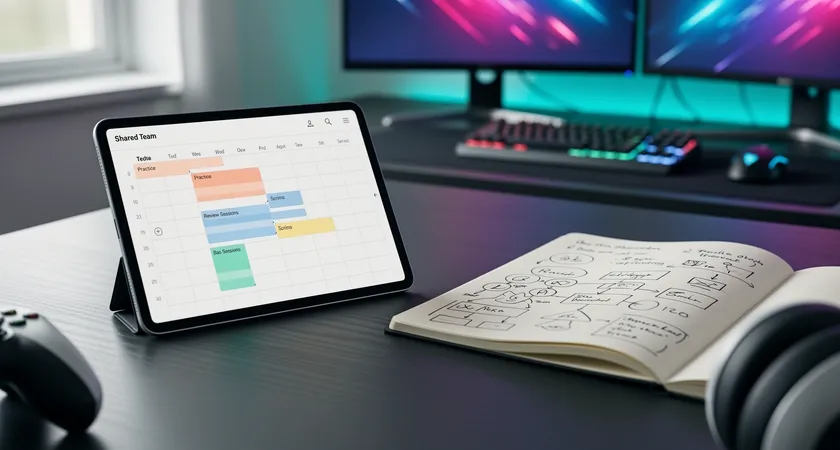
You've found five people who can play and communicate. Now you need to build the structure that turns them into a persistent team. The number one reason Flex teams disband isn't losing streaks; it's scheduling collapse. Life happens. A shared Google Calendar or a pinned Discord message with weekly practice times (e.g., "Tues/Thurs 8-11 PM, Sunday 3-6 PM") is non-negotiable. More crucial is establishing the protocol for missed sessions. Is a 24-hour notice in the Discord "absences" channel required? What is the acceptable absence rate per split? Defining this upfront removes ambiguity and resentment.
In-game roles need clarification beyond "top" or "support." Who is the primary shotcaller in the early game? Late game? Who tracks enemy summoner spells and ultimate cooldowns? Who is responsible for initiating the "we should Baron" or "we should split" discussion? These don't have to be permanent titles, but assigning them initially creates clarity and prevents the chaotic "everyone talking, no one deciding" moments that lose games. Revisit these assignments monthly; they should evolve as the team does.
Finally, agree on a conflict resolution process before you have your first conflict. A simple, three-step rule works for most teams: 1) Issue raised respectfully in team chat after the gaming session (not in the heat of the moment). 2) If unresolved, a dedicated "feedback" voice channel meeting is scheduled for the next day. 3) If still deadlocked, a neutral third party (a respected mutual friend, a community moderator, or a coach) is brought in to mediate. Having this framework depersonalizes disagreements and keeps them focused on improvement.
When DIY Team Building Hits Its Limits
You've followed all the steps. You have a team that shows up, has clear roles, and a conflict chart. You grind 50 games together and... stall. You're hard-stuck in mid-Gold, winning games through individual outplays but losing through consistent macro mistakes. The VOD reviews become circular, with everyone agreeing something went wrong but no one able to pinpoint the systemic cause. This plateau is the natural ceiling for most self-organized teams. The collective game knowledge within the group is insufficient to diagnose and correct the complex, layered issues holding you back.
Common patterns emerge at this stage. Teams develop "comfort picks" that win in their bracket but have a clear, exploitable weakness they can't see. Drafts become repetitive and predictable. The shotcalling hierarchy solidifies, but the quality of the calls doesn't improve. Internal feedback softens to avoid rocking the boat, creating a polite stagnation. These aren't failures of effort; they are gaps in structured, external perspective.
This is where the investment shifts from time to targeted expertise. A qualified coach or analyst from outside the team brings a dispassionate eye. They can identify the single, high-impact leak in your gameplay, perhaps your vision control dies completely at 25 minutes, making Baron impossible to contest, and design specific drills to fix it. They can introduce advanced concepts like tempo mapping or compositional win conditions that are outside the group's collective lexicon. More importantly, they can facilitate difficult conversations about role performance without the interpersonal risk that teammates feel. The goal isn't to outsource your teamwork, but to equip it with the tools and knowledge to reach the next level, preserving the cohesion you worked so hard to build.

Finding ranked Flex teammates you can consistently queue with is a project, not a pickup. It demands a strategic approach to recruitment, a focus on interpersonal and strategic fit over raw stats, and the deliberate construction of team systems. The public queue won't hand you a ready-made team. The real work begins in the spaces where committed players congregate and continues through structured tryouts and explicit team agreements. The payoff is a reliable, improving competitive unit, the core experience Flex queue was designed for but rarely delivers by chance. When progress inevitably plateaus, recognize that the bottleneck is likely knowledge, not effort. At that point, seeking targeted expertise can be the most efficient way to achieve the competitive goals that brought your team together in the first place.
FAQ
What's the best Discord server to find League of Legends Flex teammates?
There's no single 'best' server, as it depends on your region and competitive level. Start by searching for Discord servers linked to larger League communities, streamers who focus on educational content, or your regional amateur esports leagues. The quality of these servers is defined by active moderation, dedicated LFP/LFT channels, and a member base that aligns with your rank and seriousness.
How do you avoid toxic players when building a Flex team?
Screening for toxicity happens long before you queue. Listen carefully in initial conversations for how they describe past teams and losses. Use your structured tryout to observe how they communicate under pressure in a losing game. Players who consistently blame external factors, refuse to articulate their own mistakes, or communicate with hostility during a tryout will not improve in a permanent team setting.
Is Clash a good way to find permanent Flex teammates?
Clash can be an excellent sourcing tool. Using the 'Find Team' feature in the Clash tab connects you with players who have already opted into scheduled, team-based play, which is a strong indicator of reliability. Successfully completing a Clash tournament together is a better test of team fit than several random Flex games, as it involves preparation, drafting, and handling tournament pressure.
What should a Flex team tryout consist of?
A valuable tryout tests more than mechanics. It should include: 1) A test of punctuality and reliability. 2) Several normal Flex games to assess basic synergy. 3) A structured custom game or scrim under specific conditions (like playing from a deficit) to evaluate decision-making and communication under stress. 4) A post-game debrief conversation to gauge their ability to give and receive constructive feedback.
My Flex team has good players but we're stuck in our rank, what now?
A hard plateau often signals that the team has exhausted its collective internal knowledge. At this stage, common issues include repetitive, exploitable drafts, systemic macro errors everyone misses, and feedback that becomes less honest to avoid conflict. This is the point where an external coach or analyst can provide the dispassionate perspective and advanced strategic knowledge needed to identify and correct the specific, high-impact problems holding you back.