Prep Your LoL Team for Amateur Tournaments

The first time your League of Legends squad signs up for a local tournament, the excitement is real. You've got a solid group of friends who know their roles, grind ranked, and share a Discord full of hype. Then, within the first ten minutes of your bracket, everything falls apart. Your top laner is on an island, the jungle pathing is scouted, and communication dissolves into panic pings. The difference between a good Flex 5 queue team and a prepared tournament roster is vast, and it's not just about individual skill. To go deeper, you can also read LoL team tracker: stats that matter for Ranked 5s teams.
Preparing your League of Legends team for amateur tournaments requires a shift in mindset from casual play to coordinated competition. It involves structured practice, defined communication protocols, and a deep understanding of meta adaptations under pressure. This guide walks you through the actionable steps, from foundational team building to post-match analysis, helping you transform your group of solo queue stars into a cohesive, tournament-ready unit. We'll focus on the practical systems that separate hopeful entrants from consistent bracket contenders. To go deeper, you can also read Raise LoL Team Win Rate & Synergy for Free.
Establish Your Team's Foundation Before Drafting a Single Champion
Imagine trying to build a house without agreeing on the blueprint. That's what it's like jumping into tournament prep without a solid team foundation. The initial step isn't watching VODs or learning new combos. It's establishing the non-negotiable framework that will guide every decision you make, from scrim schedules to in-game shotcalling.
First, define your team's core identity and goals with absolute clarity. Is this a fun, weekend-warrior experience focused on the thrill of competition? Or is the objective to win a specific local circuit and potentially attract sponsors? Getting every player on the same page here prevents mid-tournament conflicts when stress levels are high. A team aiming for a top-four finish will practice differently than one just looking for a good time.
Next, formalize roles beyond just lane assignments. Designate a primary and secondary shotcaller for early, mid, and late-game phases. Decide who has final say on draft strategy. Appoint one person to be responsible for logging scrim results and another for managing tournament communications. These seemingly administrative tasks are critical. On the teams we've worked with, ambiguity in these areas is a top predictor of internal friction when results don't go as planned.
Creating a Sustainable Practice Schedule
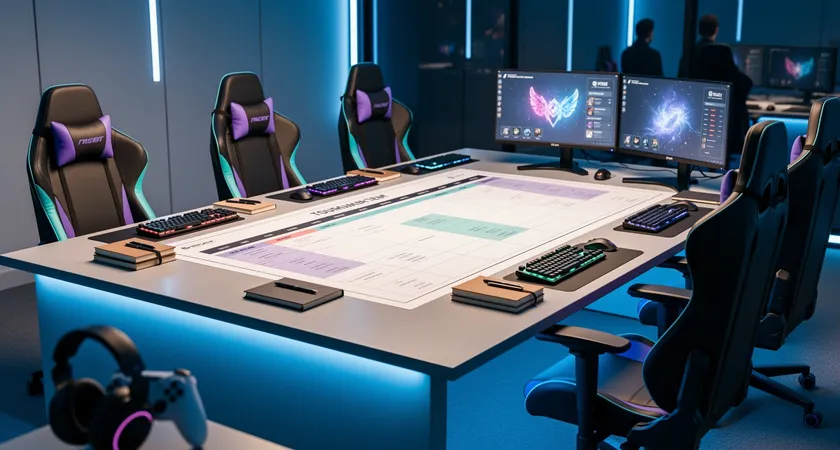
Consistency beats intensity. A team that practices three hours, twice a week, for a month will see more improvement than a squad that crams twelve hours the weekend before the event. Work with your team to lock in 2-3 weekly practice blocks that everyone can reliably attend. Treat these blocks like professional appointments. The schedule should include a 15-minute pre-scrim discussion of goals, the scrims themselves, and a mandatory 20-30 minute post-scrim review.
Protect this time. The single biggest mistake amateur teams make is allowing practice to devolve into unstructured ranked flex games where people come and go. That builds bad habits, not team play. Your scheduled practice is for coordinated scrimmages against other teams, focused role discussions, and deliberate drill work. Everything else is supplemental.
Transform Your Scrims from Random Games into Targeted Labs
Scrimming another team and losing 0-3 feels bad, but it's worthless if you don't know why. Most amateur teams treat scrims as a mere test of current strength, rather than the primary tool for improvement. The goal of a scrim isn't to win. The goal is to learn something specific that makes you better for the real tournament.
Start by setting a clear, singular objective for each scrim session. Announce it to your team beforehand. Examples include: "Today, we are testing our level 1 invade setup against a safe, scaling bot lane," or "This session's focus is maintaining vision control around the first two Herald spawns." This focuses the review and prevents the post-game discussion from spiraling into a blame game about a missed Smite.
Record every scrim. The free replay function within the League client is sufficient. The act of reviewing is non-negotiable. During the review, watch key moments related to your stated objective. Pause the replay and ask pointed questions. "Why did we choose to fight here when our objective was Herald control?" "What information did we have, and what did we lack?" Encourage players to critique decisions, not mechanics. The language should be "our pathing" and "our vision," not "your failed gank."
Building a Playbook, Not Just a Champion Pool
Every player has comfort picks, but a team needs reliable strategies. Develop a simple playbook of 3-4 compositions you can execute blind. These should cover different win conditions. Have one hard-engage, pick-oriented comp (like a Nautilus, Lee Sin, LeBlanc core). Have one scaling, teamfight comp (like Ornn, Orianna, Aphelios). Have one split-push comp. Drafting becomes infinitely less stressful when you can default to a known, practiced strategy.
Practice these compositions repeatedly, even in unfavorable matchups. The value isn't in the theoretical strength of the draft, but in the team's familiarity with its power spikes, item breakpoints, and win condition. Knowing you hit your critical strength at 22 minutes with two items on your hyper-carry allows for purposeful, patient play, a huge advantage over teams that are just reacting minute-by-minute.
Master the Meta Beyond Tier Lists
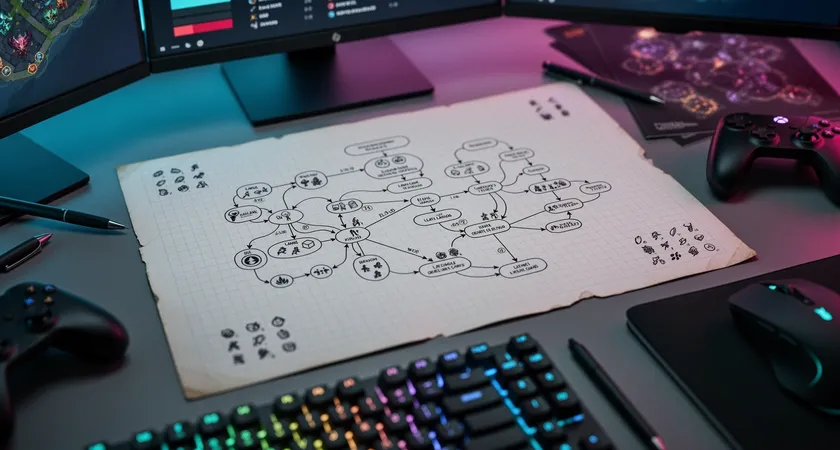
Reading a patch note summary gives you data, not understanding. For tournament play, you need a functional grasp of why the meta is shifting and how it impacts your team's style. If the current patch heavily favors early skirmishers but your team's identity is late-game scaling, you have a critical strategic decision to make: adapt your playstyle or double down on your strength and draft around it.
Analyze professional and high-level amateur play, but do so with intent. Don't just copy picks. Watch for the patterns behind them. Is the priority on Rift Herald because of specific champion changes that allow faster takes? Is a certain support rising because it counters the most popular AD carry? This level of analysis helps you anticipate bans and first picks in your tournament bracket. You'll move from being surprised by picks to understanding their purpose.
Furthermore, develop a meta for your specific regional amateur scene. The "best" champion according to global statistics might be less relevant if the players in your local circuit can't pilot them effectively. Pay attention to the bans and picks in tournaments one tier above you. What are the consistent trends? Often, the amateur meta lags behind the professional one by a patch or two, creating a predictable environment you can exploit with prepared counters.
Cultivate Tournament-Specific Mental Performance
The pressure of a live bracket, often with spectators and casters, breaks teams that only practice in the comfort of their own discords. The game doesn't change, but the context does, and that affects decision-making. Your team's mental preparation is as important as their champion pool.
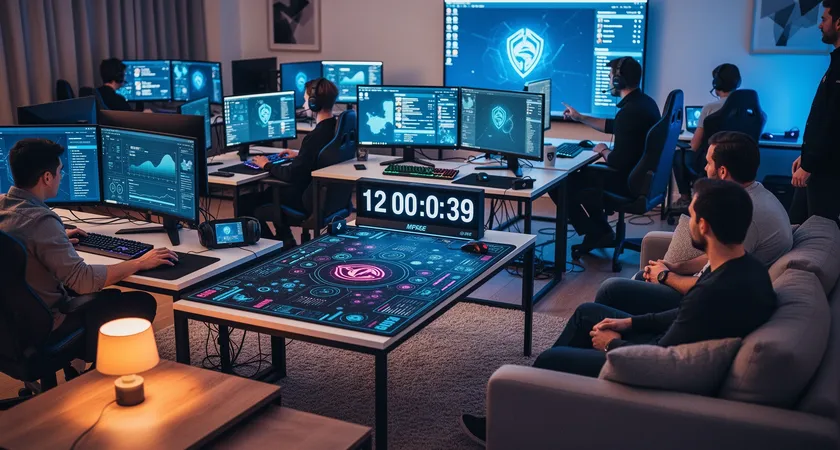
Simulate tournament conditions during practice. Schedule a "show match" scrim where you invite a few friends to spectate and provide light commentary. Force yourselves to use tournament realm settings, including champion select timers and pause rules. This exposes nerves and procedural hiccarbons before the real event. We've observed that teams who do this even once significantly reduce their game-one jitters.
Establish pre-game and mid-series protocols. What does your team do during the 10 minutes before check-in? Do you warm up mechanically, or do you sit quietly and discuss strategy? What is the rule for communication during a pause or a technical difficulty? Decide these things in advance. In the chaos of a tournament, having a predefined routine provides stability and keeps the team focused on the game, not the surrounding noise.
Execute a Systematic Post-Game Review Process
Your tournament isn't over when you get eliminated or lift the trophy. The most critical learning happens in the review. However, emotions run high. A structured, objective process is essential to extract value without causing team drama.
Implement a 24-hour cooling-off period. No detailed review should happen immediately after a loss. Let players decompress. Then, reconvene with a specific framework. Start by having each player, in role order, state one thing the team did well and one strategic mistake they believe the team made, without naming individuals. This focuses the conversation on collective play.
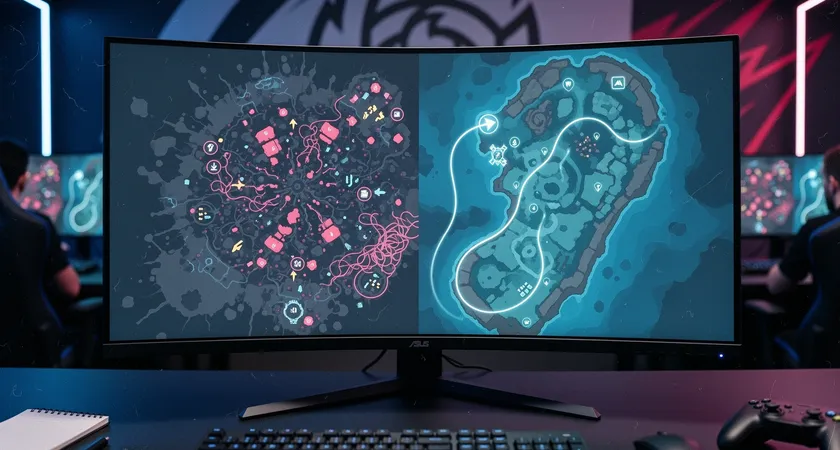
Use the replay to examine key turning points: first blood, first major objective loss, and the fight that decided the game. Pause and ask what information was available, what the alternatives were, and what the consensus decision should be moving forward. The output of this review should be 2-3 concrete, actionable items to address in the next practice block. For example: "We need a clearer signal for when to disengage a fight," or "Our vision line at 15 minutes consistently falters."
Recognizing the Limits of Self-Coaching
There comes a point in a team's development where internal review hits a ceiling. You're all great players, but you share the same blind spots. You've internalized certain habits and mistakes, making them invisible. An outside perspective becomes invaluable.
This is where many serious amateur teams consider external support. A qualified coach or analyst can spot systemic issues, like predictable jungle pathing or repetitive warding patterns, that the team cannot see itself. They bring frameworks for draft analysis and macro decision-making that go beyond "we should have won that fight." They can also mediate strategic disagreements with an unbiased eye, preserving team morale. The decision to seek this help often marks the transition from a casual tournament participant to a dedicated competitive squad.
Avoiding Common Pitfalls on Tournament Day
All your preparation can unravel due to simple, avoidable errors. Tournament day has a unique rhythm and a set of non-game challenges that catch first-time teams off guard.
First, manage logistics ruthlessly. Confirm start times, check-in procedures, and server details the night before. Ensure every player has updated the game, tested their equipment, and has a stable internet connection. Plan for food and breaks. Running late or dealing with a technical issue during champion select puts your team at an immediate mental disadvantage.
Second, stick to your prepared systems under pressure. It's tempting, when down a game in a series, to abandon your practiced compositions for a "Hail Mary" comfort pick. While flexibility is important, a desperate, uncoordinated strategy change usually backfires. Trust in the coordination you built over weeks of practice. Your practiced teamfight execution around a known composition is more reliable than individual outplays.
Finally, manage energy and focus between matches. Avoid long, draining post-mortems after a loss in a double-elimination bracket. Give quick, focused feedback, then have players stand up, stretch, hydrate, and mentally reset for the next game. The teams that maintain composure and a forward-looking attitude are the ones who make deep runs from the loser's bracket.
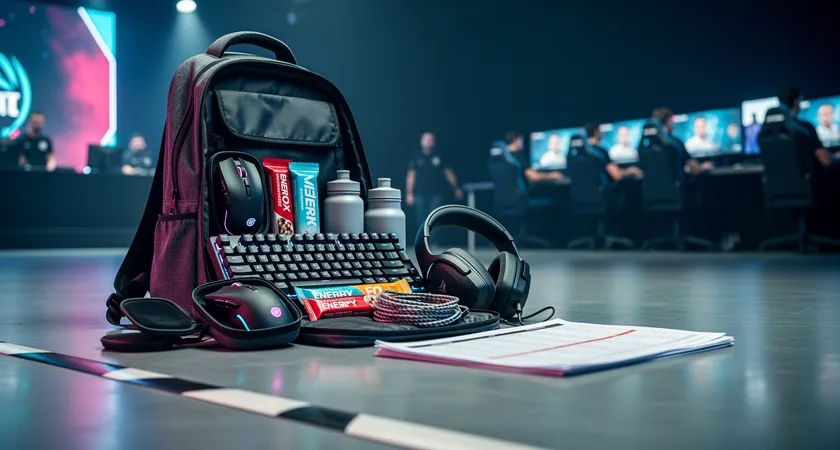
Preparing a League of Legends team for amateur tournaments is a project in team building and systematic improvement. It moves beyond individual rank and into the realm of shared responsibility, clear communication, and deliberate practice. The process of establishing a foundation, conducting targeted scrims, understanding the meta, building mental resilience, and rigorously reviewing performance will not only make you more competitive but will fundamentally change how your team experiences the game.
The next step is to take one element from this guide, perhaps the scrim objective framework or the playbook creation, and implement it in your very next practice session. Progress is incremental. The goal isn't to become a professional team overnight, but to be a noticeably more prepared and cohesive team by your next tournament sign-up. For squads aiming to make that final leap from consistent participants to consistent contenders, seeking an external review of your systems can provide the strategic clarity and focused direction that internal discussion sometimes cannot. The path from Flex queue to the winner's podium is paved with intention, not just intuition.
FAQ
How many hours a week should a League of Legends team practice for an amateur tournament?
Consistency is more important than total hours. Aim for 2-3 dedicated, structured practice blocks per week, each lasting 2-3 hours including review time. This 6-9 hour weekly commitment allows for focused improvement without leading to burnout. The key is that every minute of practice has a clear objective, unlike unstructured ranked games.
What is the most important thing to focus on during a scrim review session?
Focus on team decisions, not individual mechanics. Review key moments related to your pre-scrim objective, like objective setups or vision control. Ask "why" the team made a certain call based on the information available. The goal is to build shared understanding and establish better protocols for future games, not to assign blame for a missed skillshot.
My amateur League team always falls apart in communication during high-pressure games. What can we do?
Designate specific shotcalling roles for different game phases before the tournament. Have one primary voice for early laning and invades, another for mid-game objective calls, and a clear late-game decision-maker. Practice under simulated pressure by inviting observers to scrims. Also, establish a keyword for resetting communications, like "reset" or "regroup," to cut through chaotic chatter.
How do we decide on tournament bans if we don't know the other team's players?
Don't target ban for unknown players. Use a three-layer ban strategy. First, ban meta power picks that are strong against your planned compositions. Second, ban champions that disrupt your team's preferred playstyle (e.g., ban disengage tools if you're running hard engage). Third, have one flex ban reserved for a last-second counter to your first pick. This creates a proactive, strategy-driven ban phase.
Is it worth hiring a coach for an amateur League of Legends team?
It can be a significant accelerator once your team hits a self-improvement plateau. A good coach identifies systemic blind spots in your macro play, draft strategy, and team dynamics that are hard to see from within. They provide structured frameworks for practice and review. Consider it if your team is serious about advancing beyond early bracket exits and has already mastered basic team coordination.
What should we do between matches in a double-elimination tournament bracket?
Have a strict between-game protocol. Briefly discuss what went right/wrong from a strategic perspective, then physically and mentally reset. Players should stand up, hydrate, stretch, and avoid dwelling on mistakes. Use the time to quickly confirm your draft strategy for the next game based on what you've observed. The goal is to maintain energy and focus, not to conduct a full-scale review.