Flex Queue: From Ranked Teams to Premades

You've gathered your crew, a group of friends or dedicated players who want to climb together beyond the chaos of solo queue. You queue up for Flex 5v5, ready to prove your collective skill, only to find yourselves facing teams that seem to move with a singular, unnerving purpose. The reality of Flex Queue sets in: it's a different beast from solo play, and transforming a premade into a true competitive team requires a deliberate shift in mindset and mechanics. To go deeper, you can also read Find Ranked Flex Teammates You Can Queue With.
This isn't about having five good players in a Discord call. It's about building a system. From the ashes of the old Ranked Teams system, Flex Queue offers a persistent ladder for groups, but success demands more than just coordination. It requires understanding the distinct meta, establishing clear roles both in and out of game, and navigating the unique social dynamics of a fixed team. Let's map out the concrete steps to evolve from a casual premade into a formidable Flex squad, address the common roadblocks that stall progress, and identify when bringing in structured guidance might be the play that secures your victory. To go deeper, you can also read Best Voice Chat Tools for Flex Squads: Unlocking True Team Synergy in League of Legends Flex 5 Queue.
Building the Foundation: More Than Just Roles and Champions
Your first instinct might be to slot players into the five standard positions and call it a day. This is a starting point, but a shallow one. A functional Flex team foundation is built on three interconnected layers: strategic identity, communication protocols, and consistent scheduling.
Start by defining your team's strategic identity. Are you an early-game composition that looks to secure leads through aggressive invades and dives, aiming to close games before 25 minutes? Or do you prefer a scaling, team-fight oriented style that focuses on wave management and objective control to reach a powerful late-game win condition? This identity should influence your collective champion pool, ban strategy, and early-game pathing. It's not about being one-dimensional, but about having a default, practiced game plan you can execute confidently.
Establishing Clear, Calibrated Communication
Communication is the most cited, yet most poorly implemented, aspect of team play. The goal isn't constant chatter; it's high-value information exchange. Establish a simple vocabulary for critical calls. Decide on terms for summoner spell tracking ("jungle flash 1430"), objective priority ("we're setting for dragon, play slow"), and disengage commands ("reset, reset"). Crucially, designate a primary shot-caller for macro decisions during the mid and late game, typically the jungler or support, to avoid conflicting voices in crucial moments.
The in-game leader should summarize the next objective, not micromanage every auto-attack. Other players feed them information: lane states, ward locations, cooldown sightings. This creates a clear hierarchy of communication that prevents noise and ensures decisive action.

The Non-Negotiable: Consistent Practice Times
Treating Flex like a pickup game you play whenever three people are online guarantees stagnation. Consistency is your most powerful tool for improvement. Agree on a fixed schedule, even if it's just two dedicated evenings a week for 3-4 games. This allows for proper warm-up, focused play, and post-game review. The regularity builds muscle memory for your strategies and reinforces team cohesion far more effectively than sporadic, high-volume sessions.
Use the first 15 minutes of your scheduled time for discussion. Review a key fight from the last session, talk about a specific matchup you expect to see, or solidify your draft priorities for the evening. This ritual primes the team for strategic play before you even hit the queue button.
Drafting with Purpose in the Flex Meta
The draft phase in Flex 5v5 is a strategic minigame with higher stakes. Unlike solo queue where picks can be isolated power choices, your team composition must tell a cohesive story. The enemy team is also a coordinated unit, meaning they will draft to exploit weaknesses in your narrative if you let them.
A common trap is the "comfort pick" draft, where everyone simply plays their favorite champion regardless of synergy. While comfort is important, it must be filtered through your team's strategic identity. If your identity is early aggression, a top-lane Kayle pick, despite a player's mastery, creates a fundamental conflict. Your jungler is now forced to play for a lane that wants to avoid confrontation, neutering your planned proactive map play.
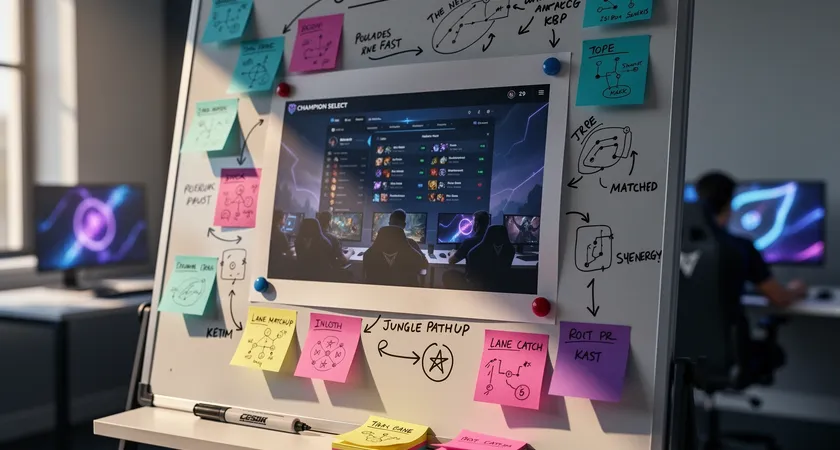
Develop a core roster of 2-3 champions per player that align with at least two different team comp strategies (e.g., an engage support like Nautilus and an enchanter like Lulu). This gives your draft flexibility. Prioritize picks that create multi-lane synergy. For example, a Jarvan IV jungle pairs powerfully with champions like Orianna, Diana, or Yasuo who can follow up his engage. A first-pick Kalista signals a potential for aggressive dives, inviting your support to select a strong all-in champion like Alistar or Rell.
Your ban phase should be proactive, not reactive. Don't just ban the current OP solo queue stompers. Ban champions that specifically dismantle your preferred win condition. If you're a team-fight composition, a well-played Split-pusher like Tryndamere or Fiora can be more devastating than a high-damage mid-laner. Communicate your ban intentions based on your planned draft strategy, not personal lane fears.
The In-Game Shift: Playing the Map as One Unit
This is where the transformation from premade to team becomes most visible. In solo queue, players often make individually optimal plays. In coordinated Flex, the optimal play is sometimes suboptimal for an individual if it creates a larger team advantage. This requires a sacrifice of ego and a deep trust in the collective plan.
Take resource allocation. In a coordinated setting, funneling gold and experience to your primary carry isn't just possible; it's often optimal. This means the top laner on a tank willingly giving over jungle camps after laning phase, or the mid laner allowing the ADC to take the side lane farm while they hold mid. These decisions must be communicated and agreed upon, not taken as personal slights.
Vision transforms from a personal survival tool into a collective information-gathering network. Establish default ward locations for each stage of the game. For example, when preparing for a Baron play, your vision shouldn't just be around the pit. It needs to cover all possible enemy approach angles through the river and jungle, which requires all five players to contribute and respect the established vision lines. Sweeping becomes a coordinated effort to create a specific zone of darkness for the enemy, not just clearing wards for gold.

Objective control is the ultimate test of team synchronization. It starts a full minute or more before the spawn. Called "setting up," this involves clearing vision, securing key choke points, and ensuring waves are pushed on the opposite side of the map to create pressure. A team that arrives at the dragon pit at 5:30 is reacting. A team that has controlled the entire river and flank routes since 5:00 is commanding.
Navigating the Inevitable: Conflict and Stagnation
Every team hits a plateau. The initial climb feels great, but then you hover at the same rank for weeks, and losses start to breed frustration. This is the most critical phase for a team's longevity. Without a structured approach to adversity, groups often dissolve in a flurry of blame.
The root cause of stagnation is rarely a single player's skill. More often, it's a strategic inflexibility or a breakdown in process. Perhaps your early-game dive composition is now being consistently read and counterplayed. Maybe your communication has become cluttered with non-essential comments, drowning out critical shot-calling. The first step is to depersonalize the review. Move the discussion from "why did you die there?" to "what was our team's goal during that play, and why did the enemy's response succeed?"
Implement a structured, blame-free review session after your play times. Use the replay function to watch one loss and one close win per week. Focus on key decision points: a contested objective, a lost teamfight, or a successful rotation. Pause and ask: "Based on the information we had on the minimap at that moment, was our decision correct?" This separates outcome from process. A bad call that works out due to an enemy mistake is still a bad call to learn from.
Player burnout is a real threat. The solution isn't always to play more. Sometimes, it's to play differently. Designate an occasional session for "off-role" or "for-fun" games within the team. This relieves pressure, builds empathy as players experience different lane challenges, and can surprisingly unlock new strategic insights when viewed through a different lens.
When to Consider Bringing in an Outside Perspective
You've built your schedules, defined your strategies, and conducted your reviews, yet you feel you're diagnosing your own symptoms without finding the cure. This is a common and frustrating plateau. An internal view is always filtered through shared assumptions and blind spots developed over months of playing together. This is where an outside, expert perspective can provide the breakthrough.
A qualified coach or analyst doesn't just offer generic macro advice. They perform a diagnostic on your team's specific ecosystem. They can identify systemic issues invisible to you, such as predictable jungle pathing timings that better opponents are exploiting, or subtle communication tics that cause hesitation during engages. They bring a framework for analysis that moves beyond results and into the granular details of execution.
Consider this scenario: your team consistently loses late-game teamfights. Internally, you might debate champion picks or individual positioning. An external analyst, reviewing several replays, might pinpoint the issue two minutes before the fight ever happens: your vision pattern before objectives always leaves the same flank route unsecured, or your team's engage is telegraphed because your frontline and backline routinely separate by a predictable distance during sieges. They see the pattern you're too close to perceive.
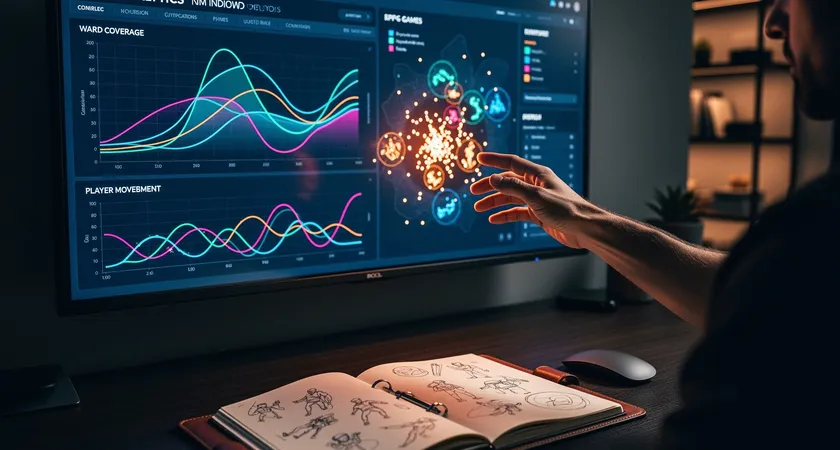
Engaging with a professional service is an investment in accelerated, structured growth. It's the difference between practicing a musical instrument alone versus with a tutor who can correct your posture, fingering, and rhythm in real time. The value isn't in them telling you to "ward more" it's in designing a customized vision system for your team's playstyle, drilling the specific rotations you fail to execute, and breaking the habitual mistakes that have become ingrained. For teams serious about climbing the Flex ladder efficiently and building a lasting competitive foundation, this external catalyst can transform months of trial-and-error into targeted, measurable improvement.
The journey from a group of friends playing together to a cohesive Flex Queue force is one of deliberate construction. It requires laying a foundation of shared strategy and communication, drafting with collective purpose, and executing on the map with unified will. It demands navigating internal challenges with maturity and a focus on process over blame. For many teams, this journey is rewarding in itself. When progress stalls despite your best internal efforts, recognizing the value of a specialized, external perspective can be the strategic decision that unlocks your team's full potential. The climb is always harder alone, and sometimes, the most powerful play is knowing when to seek the guide who knows the path.
FAQ
What is the biggest difference between playing Flex 5v5 and climbing in solo/duo queue?
The core difference is the shift from individual agency to collective system play. In solo queue, you often focus on winning your lane and making plays you can control. In Flex, success hinges on executing a shared game plan, sacrificing personal resources for team advantage, and moving as a synchronized unit across the map. It's less about outplaying your direct opponent and more about outmaneuvering the enemy team as a whole.
How do you deal with a player on your Flex team who has a significantly lower rank or skill level?
Integrate them into your system by assigning a clear, stable role that minimizes high-pressure, isolated skill checks. Often, placing them on a utility-based champion in a supportive role (like an engage tank top or a straightforward enchanter support) allows them to execute the team's strategy effectively. Focus their practice on macro fundamentals like vision placement and objective timing with the team, rather than complex mechanical outplays.
Is it better to have a fixed team composition or be flexible with our picks in Flex Queue?
You need both. Develop a core, well-practiced composition that defines your primary strategic identity. This is your "default" win condition. However, you must also cultivate flexibility by having each player master a small pool of champions that enable different comps. This allows you to adapt to enemy bans, counter-pick effectively, and avoid becoming predictable, which is a major weakness against coordinated opponents.
Our Flex team argues after every loss. How can we have productive post-game reviews?
Implement a strict rule: no immediate blame discussion right after the game. Schedule a brief, calmer review session later. Use the replay tool and focus analysis on specific, neutral decision points, not outcomes. Frame questions around the team: "What information did we have when we decided to start Baron?" instead of "Why did the jungler get smite stolen?" This separates emotional reaction from strategic learning.
What are the most common drafting mistakes made by new Flex 5v5 teams?
The most frequent errors are drafting five comfort picks with zero synergy, ignoring multi-lane combinations, and using reactive bans based on personal annoyance rather than a strategy to protect your own game plan. Teams also often fail to consider how their picks will function at different stages of the game, ending up with a composition that has no clear win condition or is strong at nothing.