LoL Ranked 5s: what competitive teams should know

You've clicked 'Play' on the Ranked Flex queue with four teammates. The goal is clear: climb as a coordinated unit, not just as a collection of skilled individuals. Yet, the experience often diverges sharply from the promise of structured competition. The reality for many teams is a cycle of volatile wins, frustrating losses, and a ranking that doesn't reflect their collective belief in their skill. To go deeper, you can also read Season Rewards Differences in Flex Queue: What Every League Player Should Know.
This gap between potential and results in LoL Ranked 5s stems from a simple mismatch. Playing as a premade isn't the same as playing as a team. The Flex Queue environment, with its distinct meta and strategic demands, requires a deliberate framework that most squads lack. Without it, you're essentially practicing five-man chaos instead of honing competitive synergy. To go deeper, you can also read LoL Team Tracker for Ranked Flex: Checklist.
What you need isn't just another list of champion tier lists. You need a concrete understanding of the Ranked 5s ecosystem, from its fundamental rules to the advanced teamplay protocols that separate casual groups from competitive crews. We will outline the operational blueprint for a serious Flex 5 team, covering the queue's structure, drafting philosophy, early game scripting, common progression traps, and the discipline required for consistent improvement.
Understanding the Flex 5s arena: It's not just Solo/Duo with friends
The first misconception to dispel is treating Ranked Flex as an extension of Solo/Duel. They are different competitive environments with different player psychology and strategic pressures. In Solo/Duel, success is often a function of individual lane dominance and opportunistic roaming. In Flex 5s, the game transforms. Lane assignments are flexible, early jungle paths are coordinated, and objective control is pre-meditated, not reactive.
The ranking system itself operates on a separate MMR. A team of all Platinum Solo/Duel players can, and often does, place into Silver or Gold in Flex. This isn't a bug; it's a feature. The system assesses your team's collective ability to execute as a unit, which is a separate skill set. Climbing, therefore, means proving you can beat other organized squads, not just outperform individuals.
The queue's meta also develops independently. Champions with powerful team-wide synergy or those that thrive in a communication-heavy environment often have higher priority. A champion like Sona or Rell, who can enable perfect teamfight engages with a single callout, frequently holds more value here than a hyper-scaler who requires 30 minutes of isolated farming.
Practical observation from team reviews shows a common initial hurdle. Teams import their Solo/Duel habits, focusing on KDA, split-pushing without prior setup, taking fights for the sake of fighting. Unlearning this instinct is the first step toward genuine Flex 5s proficiency. Your victory condition shifts from 'outplay the opponent' to 'out-system the opponent.'

The critical role of a dedicated shotcaller
In the noise of a live match, with five voices sharing information, decisive action can stall. The most consistent Flex teams designate a primary shotcaller, typically the jungler or support player due to their map-wide perspective. This isn't about creating a dictator, but a clear hierarchy for decision-making during time-sensitive windows like Baron setups or base races.
The shotcaller's authority must be established in pre-game discussion and respected in-game. The rule is simple: during an active objective play or engage, their call overrides individual instinct. Debates happen post-game, not in the middle of a Dragon fight. Teams that operate on committee voting for every major play consistently fail to react with the speed required at higher levels of play.
Building your blueprint: The pre-game draft strategy session
Your game starts in the lobby, not on Summoner's Rift. For competitive Ranked 5s, the draft phase is where 30% of the game is decided. Approaching it without a plan is the first major pitfall. Effective drafting isn't just about picking strong meta champions; it's about constructing a coherent game plan with identifiable win conditions.
Start by identifying your team's collective comfort zone. Do you excel at swift, explosive teamfights? Are you more adept at split-push pressure and map rotation? Your draft should amplify this identity. A team strong in skirmishing should prioritize early-to-mid-game champions with high crowd control density, like Jarvan IV and Leona. A team preferring late-game scaling might draft for disengage and wave clear, such as Janna and Anivia.
Here is a foundational approach used by many organized teams:
Ban for strategy, not just annoyance: Use bans to remove champions that specifically counter your intended game plan. If you plan to run a dive composition, ban strong disengagers like Janna or Poppy.
First rotation priority: Your first pick should either secure a universally powerful flex pick (a champion that can play multiple roles, confusing the enemy draft) or the absolute highest-priority champion for your core strategy.
Pilot over power: In all but the highest tiers of play, a player's mastery of a B-tier champion is far more valuable than their uncomfortable fumbling of an S-tier pick. Never force a meta pick if it compromises player confidence.
Always have two or three practiced team compositions in your pocket. These are pre-rehearsed champion sets with understood power spikes and primary objectives. For example, a 'pick' composition built around champions like Blitzcrank and Ahri aims to create isolated catches. A 'siege' composition with Ziggs and Caitlyn aims to take towers from maximum range. Having these frameworks speeds up your draft and ensures everyone knows their role from minute one.
Executing the script: The first 10 minutes are everything
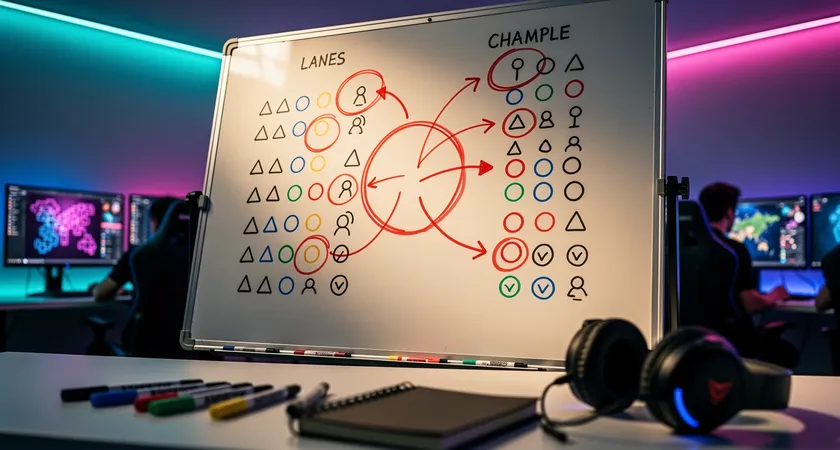
The early game in Ranked 5s is a script your team writes before minions spawn. How you play levels 1-3 sets a tempo that most opponents will unconsciously follow for the next 15 minutes. The goal is not to 'see what happens' but to force the enemy to react to your pre-planned sequence.
It begins with a level 1 setup. Decide as a team: are you invading, defending against an invade, or setting up for standard lane control? Communicate this clearly. If invading, designate who goes first, who holds which choke point, and the exact abort signal. A coordinated five-man move into the enemy jungle can secure a crucial early kill or flash summoner spell, instantly creating map pressure.
Next, synchronize your jungle path with your lane states. The top laner should know if the jungler is starting on their side for a potential level 3 gank. The mid and bot lanes should understand if they need to play safely because their jungler is pathing away from them. This basic information sharing prevents the classic scenario where a laner dies just seconds before their jungler arrives for a gank.
The first major objective, usually the Rift Herald or first Dragon, should be called at least 90 seconds before it spawns. This gives time to recall for items, place deep vision to track the enemy, and slow-push the nearest lanes to create a favorable minion wave state. Teams that wait until the objective is alive to make a decision have already lost the initiative.
The difference between a good Flex team and a great one is measured in these first ten minutes. Great teams create an unavoidable early-game narrative that funnels into their mid-game strengths. They don't just take free Dragons; they orchestrate the lane states and vision that make the Dragon free to take.
The plateau and the pitfalls: Why many teams stop climbing
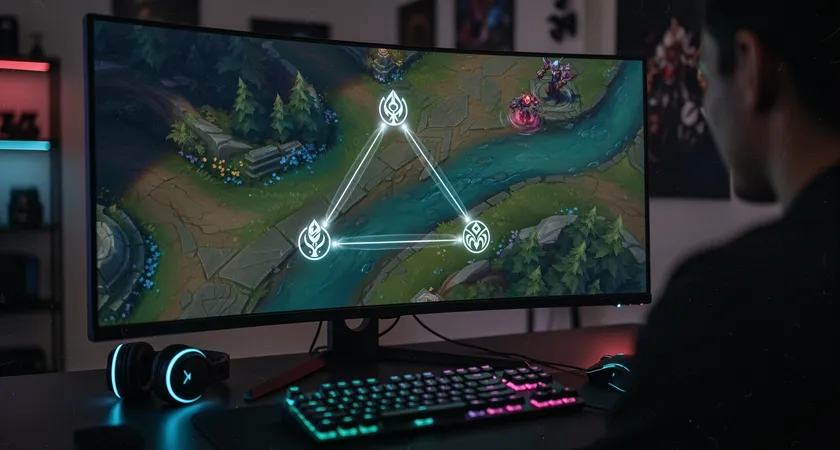
After initial success, many Flex 5 teams hit a hard plateau. They've mastered basic communication, have a few comfortable drafts, and execute a standard early game. Then, the wins slow down. The losses feel inexplicable. This plateau is rarely about mechanical skill; it's almost always a failure of adaptation and systemic review.
One of the most frequent pitfalls is success blindness. A team finds a composition or strategy that works in Gold and rides it into Platinum. They become so reliant on this single formula that they fail to adapt when opponents in higher tiers know how to counter it. Their draft becomes predictable, their pathing becomes readable. Flexibility in strategy is as important as flexibility in champion pool.
Another common trap is the blame spiral. A lost teamfight or a bad game degenerates into in-fighting about individual misplays. This toxic environment kills the psychological safety required for honest improvement. The focus shifts from 'what did we do wrong as a system' to 'who is at fault.' Teams that survive the plateau install a non-negotiable rule: post-game reviews are analytical, not accusatory. Discuss macro decisions, not missed skillshots.
Resource allocation is a more subtle error. In practice, too many teams spend 90% of their time playing matches and 10% reviewing them. This ratio should be inverted. One thoroughly analyzed replay, where you pause to discuss each major rotational decision, provides more learning than five auto-piloted games. The goal is to identify patterns in your collective decision-making, not just correct one-off mistakes.
Moving beyond DIY: When self-coaching reaches its limit
There comes a point where internal review hits a wall. You are using your own perspective to critique your own play, which creates blind spots. Teams at this stage often cycle through the same mistakes because they lack the external framework to diagnose the root cause. They know something is wrong, but they can't see what they can't see.
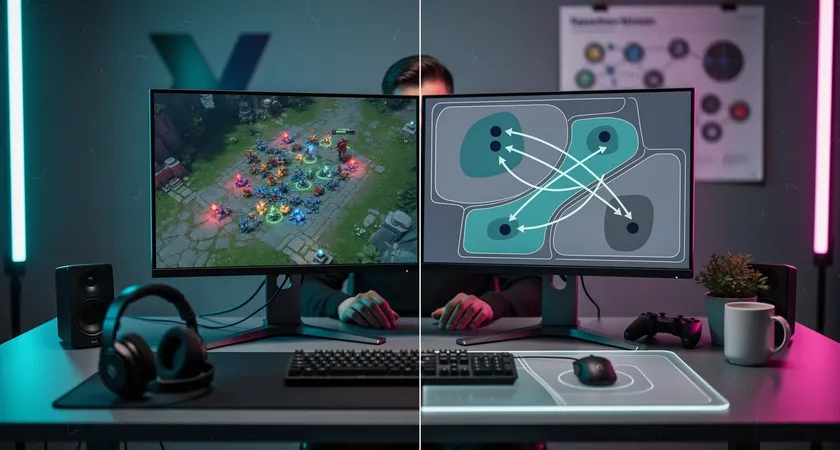
This is the natural limit of the do-it-yourself approach. You've optimized what you can perceive. The next level of improvement requires an outside observer, someone who can analyze your team's gameplay not as a participant, but as a systems architect. This person looks for the silent leaks: the predictable ward patterns your support uses every game, the three-second delay in your objective setups, the teleport timings your top laner never tracks.
The value isn't in being told your ADC mispositioned. You already know that. The value is in being shown that the misposition was actually caused by your team's failure to establish vision in a specific quadrant 45 seconds earlier, which itself was a consequence of your default jungle clear path. It connects individual errors back to systemic failures in your team's protocol.
Professional analysis provides this causal chain. It moves the conversation from 'play better' to 'execute this specific sequence differently.' It introduces structured drills, like 10-minute early-game scenarios or Baron dance simulations, that are impossible to replicate in the volatility of a live ranked game. This targeted, efficient practice breaks plateaus that months of grinding games cannot.
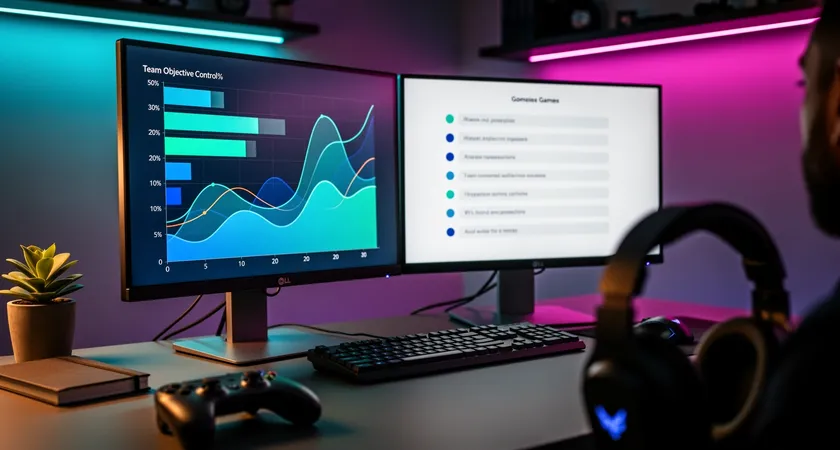
Mastering LoL Ranked 5s is a project in team construction, not just rank accumulation. It begins with respecting the queue's unique demands and building a foundation of clear communication and pre-game strategy. It thrives on scripting your early game and rigorously reviewing your systemic habits rather than your individual highlights.
The journey plateaus when your internal capacity for self-critique is exhausted. At that crossroads, progress hinges on acquiring an external, analytical perspective that can decode the complex patterns of teamplay you're too close to see. The final competitive edge isn't found in a new champion or a secret tactic, but in a team's willingness to structure its growth as deliberately as it structures its game plan. Your next step should be scheduling a dedicated session to analyze just one of your recent losses, focusing solely on the three macro decisions before a major objective was lost.
FAQ
What is the difference between LoL Ranked Flex 5s and the Clash tournament mode?
Ranked Flex 5s is an always-available competitive queue where your team has a persistent ranking (like Iron, Gold, Platinum) that you grind over time. Clash is a periodic, bracket-style tournament held on specific weekends. Flex tests your team's consistency and adaptability over many matches, while Clash tests your ability to prepare for and win a short series against unknown opponents in a high-stakes, single-elimination format.
How many players do you need to start a Ranked Flex 5s team?
You need a premade party of at least three players to queue for Ranked Flex. However, to field a full team of five, you must have exactly five players in your party. The system will not match you with random solo players to fill empty slots. Many serious teams maintain a core roster of five with one or two substitutes to account for scheduling conflicts.
Can a high-ranked Solo/Duel player carry their lower-ranked friends in Flex Queue?
It's significantly harder than in normal games. The Flex Queue has its own separate Matchmaking Rating (MMR). While a highly skilled player can have outsized impact, the system will match your team against other premades likely featuring similar aggregated skill. If the team's coordination and macro play don't match the highest-ranked player's tier, they will often be neutralized by the opposing team's organized response, making pure mechanical carrying difficult.
What are the most important champions to ban for a new Flex 5s team?
New teams should ban champions that excel at punishing poor coordination. Global ultimates like Nocturne or Shen can exploit mis-timed split-pushes. Heavy engage champions like Malphite or Amumu can capitalize on a single team member being out of position. Champions with strong disengage, like Janna, can also frustrate teams that haven't practiced engaging together cleanly. Tailor your bans to disrupt the strategies you struggle with most.
How do you deal with tilt or arguments during a Ranked Flex 5s session?
Establish a pre-game rule: all strategic discussion is postponed until after the game. During the match, communication should be limited to essential callouts and information. If tensions rise, the designated shotcaller should refocus the team on the next concrete objective ('Reset for Dragon in 60 seconds'). Taking a short, scheduled break between games to decompress prevents frustration from snowballing across your entire play session.
Is voice communication mandatory for being successful in Ranked Flex?
It is strongly advised and effectively mandatory for any team aiming to climb consistently. The speed and complexity of information exchange needed for coordinated objective plays, jungle tracking, and teamfight focus cannot be reliably achieved through pings and text chat alone. Teams that do not use voice communication operate with a severe information delay, putting them at a systemic disadvantage against those that do.