5 Stats to Review After Every Stack Session

Your five-player team files out of another League of Legends flex queue session. The post-game chat is a familiar mix of 'GG' and lighthearted blame. But beneath the surface, specific, repeatable patterns are costing you games. You might feel the frustration of a lost lead or a thrown teamfight, but turning that gut feeling into a plan requires more than VOD review. It demands data. To go deeper, you can also read How to Run a Post-Game Review as a Full Stack.
Reviewing the right statistics immediately after a stack session transforms vague 'we need to improve' conversations into targeted, actionable strategy. The trick is knowing which metrics actually matter for a coordinated five-player unit. Massaging your overall KDA or champion damage won't cut it. The stats that unlock real improvement for a flex team are the ones that measure coordination, resource allocation, and collective decision-making, not just individual pop-off moments. To go deeper, you can also read Leveraging In-Game Stats for Flex Improvement: How Data Can Elevate Your League of Legends 5-Stack.
This guide breaks down the five non-negotiable statistics your team should examine after every playing session. These metrics serve as a direct translation of in-game chaos into a clear diagnostic report. They help you answer the core question: are we five individuals sharing a game, or are we one team playing a strategy?
Stat 1: Vision Score Differential and Control Ward Purchases
Picture this common scenario. Your team secures a pick in the river, pushes mid, and then hesitates. No one has definitive information on whether the enemy jungler is respawning or waiting in a flank. The push stalls, the advantage evaporates. This isn't just a macro mistake. It's a vision failure, and it's quantifiable. For a flex team, vision isn't a supportive chore. It's your primary information-gathering system, and reviewing its efficiency is job number one.
Don't just look at total vision score. Isolate the vision score differential at critical timestamps. The ten-minute mark, around objective spawns, and during sieges tell the real story. A positive differential means your team collectively owns more information than the enemy, which directly enables safer invades, cleaner objective setups, and more confident rotations.
The second, more telling metric is aggregate control ward purchases. Solo queue players often treat control wards as a 75-gold 'when I remember' tax. A coordinated team treats them as a shared resource for map control. Add up how many control wards your entire team purchased in the session. If the number isn't comfortably above 15 for a standard 30-minute game, your vision game is being reactive, not proactive. This stat forces a tangible discussion about gold allocation. Are your carries 'too poor' to buy a ward, or are they undervaluing the 75 gold that could prevent a 300-gold shutdown death?

Turning Vision Data into a Team Rule
Once you have the numbers, create a simple team protocol. Many successful amateur teams institute a 'two-ward rule' for objective setups: at least two players must have a control ward in inventory 90 seconds before a major objective spawns. Reviewing the purchase stat shows you if this rule is being followed or forgotten. The goal isn't to shame the player with the lowest score. It's to identify if your team's vision pattern is centralized on one person (like the support) or distributed as a shared responsibility, which is far harder for opponents to dismantle.
Stat 2: Objective Conversion Rate After First Blood
Your jungler and mid laner execute a flawless level three gank, securing first blood. Cheers erupt in Discord. Now what? For too many teams, the answer is 'go back to farming.' The gold lead is a temporary advantage. The map pressure and numerical advantage it creates are the real currency. The objective conversion rate after first blood measures your team's ability to monetize early aggression into tangible map progress.
Track this across your session. After every first blood your team secures, what was the immediate, minute-long follow-up? Did you translate it into:
- A deep ward in the enemy jungle?
- Priority in a lane to secure Scuttle Crab?
- A forced recall, allowing you to crash a wave and plate gold?
- A rotation to secure the first Rift Herald?
If the answer is consistently 'none of the above,' your early game is generating kills but not creating winning conditions. This stat highlights the gap between mechanical skill and strategic purpose. It pushes the conversation from 'we got first blood' to 'what did we buy with it?'

Stat 3: Damage Share Percentage in Winning vs. Losing Teamfights
Teamfighting is the ultimate test of a flex team's coordination. Post-game damage charts are often misleading. A poke-heavy mage will always top the charts, win or lose. A more insightful metric is analyzing damage share percentage within specific, pivotal teamfights. Isolate two or three major fights from your session, particularly around Baron or Soul point. Look at the damage breakdown not in total, but in the critical 3-5 second window where the fight was decided.
In a winning fight, you expect to see a relatively even distribution of damage among your primary damage dealers, indicating focused fire and target selection. In a losing fight, you often see one of two problematic patterns: either one player dealt a massive chunk of damage alone (suggesting the team failed to follow up on an initiation), or the damage is spread wildly across all five enemy champions (indicating a lack of focus fire and communication).
This review moves you beyond 'our ADC died first' to a forensic analysis of execution. Were your front line and back line fighting the same target? Did your burst combo get split because of misaligned engages? The numbers provide undeniable evidence, removing subjectivity from the 'who messed up' debate and refocusing it on 'how did our damage application fail?'
The Gold Efficiency Check
Pair this damage analysis with gold share at the time of the fight. If your top-lane carry with 30% of the team's gold is contributing only 10% of the damage in crucial fights, it signals a fundamental problem with your draft, itemization, or fight positioning. This combo of stats tells you if your team is investing its resources into the right champions for your chosen win condition.

Stat 4: Jungle Proximity and Lane Priority Alignment
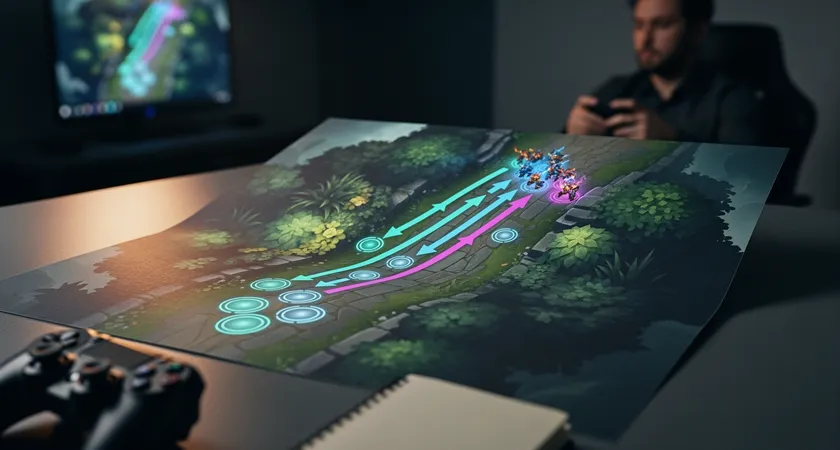
This is a duo-stat that measures the synergy between your jungler and laners, the most critical relationship on the map. Jungle proximity data (available through some third-party stats sites) shows how often your jungler was near each lane during the laning phase. More importantly, you must cross-reference this with lane priority, which lanes were actively pushing their waves to create windows for invasion or objective play.
The ideal pattern shows high jungle proximity to lanes that have, or are about to have, priority. The toxic pattern, which loses games, shows the jungler repeatedly pathing toward a lane that is perma-pushed under its own tower, wasting time and exposing them to counter-ganks. Reviewing a session's replays with this lens answers painful questions. Was your jungler 'never top' because the top laner never created a gankable state? Or did the jungler ignore clear opportunities presented by a pushing lane?
For a flex team, this isn't about blaming one role. It's about auditing your laning phase strategy. Are your laners consciously managing waves to enable your jungler's planned path? Is your jungler communicating their clear timing so laners can adjust? This stat reveals if your early game is a series of independent lane states or an interconnected system.
Stat 5: Post-25-Minute Death Location and Timing
The late game is where disciplined teams separate themselves from chaotic ones. Individual skill matters less. Positioning and patience matter more. A deep review of every death that occurs after the 25-minute mark is perhaps the most punishing, yet most enlightening, exercise for a team stuck in Platinum or Diamond flex.
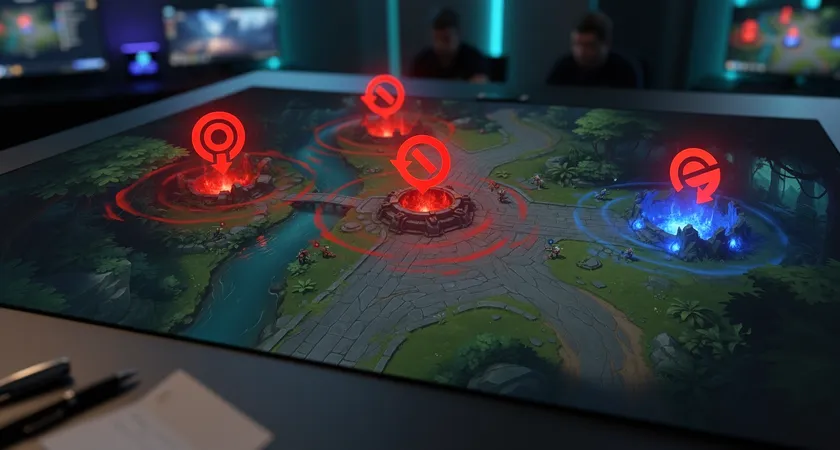
Map these deaths. You are looking for two catastrophic patterns:
- Staggered deaths: Deaths that occur 15-40 seconds apart, preventing a full team regroup and granting the enemy constant, low-risk map pressure.
- Deaths in neutral territory: Dying in the river or enemy jungle with no immediate objective to contest. These are purely resource-denial deaths that gift Baron or Elder Drake.
In practice, teams discover that a staggering majority of their late-game losses are preceded by one or two completely unnecessary picks in the dark. Someone greeded for a wave. Someone face-checked a bush without vision. This stat analysis removes the fog of war from your own decision-making. It creates a stark, undeniable log of game-throwing moments. The resulting team rule is simple but powerful: post-25 minutes, no member moves through unwarded territory alone unless the entire team is committing to the same play. Enforcing this alone can boost a team's win rate by a significant margin.
From Self-Diagnosis to Systematic Improvement
Implementing a consistent review of these five stats will transform your team's post-session discussions. You'll move from anecdotal 'what-ifs' to data-driven 'how-tos.' The process itself builds a shared language and a culture of accountability. However, this is where many ambitious teams hit a ceiling. The data tells you what is broken. It doesn't always provide the specific, tailored how to fix it, especially for deeply ingrained strategic habits or complex draft issues.
Analyzing jungle proximity data might reveal a dysfunctional mid-jungle duo, but correcting it requires understanding both players' champion pools, wave management fundamentals, and alternative pathing patterns. Identifying a low objective conversion rate is straightforward. Designing and drilling three clean, executable playbook rotations for after a first blood is a different skillset entirely. This is the gap between self-coaching and guided development.
Teams often spend months cycling through the same mistakes because their internal review lacks an external, experienced perspective to connect disparate data points. A poor vision score differential, late-game picks, and uneven damage share might feel like separate issues. A seasoned analyst will see them as symptoms of one root cause: a team that wins through individual mechanics but hasn't built the systemic habits to close out games against equally skilled, more disciplined opponents.

Mastering these five stats is the foundation. It turns your team into a self-aware unit capable of identifying its flaws. The natural progression, for teams serious about climbing the flex ladder, is to seek out frameworks and insights that help you not just diagnose problems, but engineer reliable solutions. This often means leveraging external resources, structured practice regimens, or targeted coaching to build the strategic depth that raw stats can only hint at. The goal stops being 'let's play some games' and starts being 'let's solve our next strategic puzzle.'
FAQ
What is the most important stat for a League of Legends flex team to track first?
Start with post-25-minute death location and timing. It's the easiest to track and often the most revealing. Most flex teams in mid-elo lose games from one or two late-game picks that lead directly to Baron or Elder. Mapping these deaths creates immediate, concrete rules for the team to follow, which can stop losses from thrown leads.
How can I get jungle proximity stats for my flex team reviews?
Several third-party League of Legends stats sites and replay analysis tools offer jungle proximity timelines. You don't need ultra-precise numbers. Review the replay and note clear instances where your jungler's path aligned or clashed with lane states. The goal is to start the conversation about early game synergy, not to get a perfect percentage.
Our team has high vision scores but still loses. What are we missing?
High total vision score often means you're placing many wards reactively or in your own jungle. Check the vision score *differential* around objectives and your control ward purchase count. You may be warding defensively while the enemy team wards offensively to set up plays. Also, review if your team is actually using the vision you place to make aggressive moves or just to avoid ganks.
Is damage share really that important if we're winning teamfights?
For long-term improvement, yes. Winning a fight with chaotic, uneven damage distribution means you relied on outplay or an enemy mistake. Analyzing the damage share in your *wins* shows you the blueprint for a clean, repeatable execution. If only one player carried the damage, that's a strategic vulnerability opponents can target in future games by focusing that player.
How often should a flex 5 stack review these stats together?
Aim for a focused 20-30 minute review after every block of 3-5 flex queue games. Reviewing after every single game can be draining, but letting too many games pile up makes patterns harder to spot. Consistency is key. Pick one or two stats to deep-dive on each session rather than trying to cover all five superficially.
Our objective conversion after first blood is low. What's a simple play to practice?
Drill a 'Scuttle Priority' play. When you secure first blood in a side lane, the immediate play is for the affected laner and jungler to push the wave fast, then both rotate to secure the nearest Rift Scuttler. This gives your jungler permanent vision control of one river quadrant for the next few minutes, a massive early advantage that's easy to execute with communication.