Can AI Replace a LoL Coach? What Teams Should Know

Imagine your Flex 5 team has just finished a ranked session. The post-game lobby is filled with conflicting opinions. The top laner blames jungle pathing, the ADC cites a lack of peel, and the support feels vision control was perfect. Now, picture an impartial third party that can review all ten players' perspectives simultaneously, quantifying every click, cooldown, and positioning error without fatigue or bias. This is the promise of artificial intelligence in League of Legends coaching. But does that promise hold up under the pressure of Baron dances and mid-game tempo? The question isn't whether AI can analyze data, but whether it can replace the nuanced, psychological, and adaptive role of a human coach. For teams climbing the Flex queue ladder, understanding this distinction is the difference between gaining a powerful tool and falling for a technological trap. We'll cut through the hype to show you where AI-driven analysis genuinely accelerates improvement and where its limitations could stall your team's growth entirely. To go deeper, you can also read LoL Ranked 5s: what competitive teams should know.
The Rise of Data-Driven Analysis: What AI Actually Does for LoL Teams
At its core, the AI currently available to amateur and semi-pro teams functions as a hyper-specialized data aggregator and pattern recognizer. It doesn't "think" about the game in a human sense. Instead, it processes millions of data points from Riot's API and replay files to highlight correlations and outliers. A human coach might watch a VOD and note that your team lost several fights near the Dragon pit. An AI tool can tell you that, in those fights, your team's average combined ultimate cooldown availability was 23% lower than your opponents', and your jungler's positioning variance was 42% higher than their season average in similar objective setups. This shift from anecdote to specific, measurable metric is powerful. To go deeper, you can also read Comp Win Rate vs KDA: What Teams Should Trust.
From Post-Game Reports to Live Warding Predictions
The most common application is the automated post-game report. Services like Mobalytics or Porofessor offer these, generating grades and stats beyond the standard KDA. They track deep wards per minute, crowd control score, gold differential at specific timestamps, and skill shot accuracy. This provides a baseline for discussion, moving arguments from "you didn't gank" to "our bot side vision coverage between minutes 8 and 12 was insufficient for safe dives." More advanced systems are experimenting with predictive live analytics. Some tools claim to analyze warding patterns in the first few minutes to predict common jungle paths with high probability, offering real-time pings or suggestions. While promising, the reliability of these live predictions in dynamic Flex games, where player habits are less consistent than pro play, is a major point of contention among analysts.
The Quantifiable Edge: Objective Control and Resource Allocation
Where AI truly excels is in auditing resource allocation. It can relentlessly track where every gold piece on the map comes from and where it's spent. It can graph your team's combined gold spent on control wards versus the enemy's, overlaying that with objective control rates. On audits we run for teams, a consistent finding is that groups in Platinum and below dramatically undervalue early investment in pink wards. The data shows a near-linear correlation between early pink ward purchase rates and first Herald secure percentage. An AI can flag this inefficiency instantly, whereas a human coach might take several VOD reviews to isolate the same trend. This is its sweet spot: finding cold, hard statistical inefficiencies that are drowned out by the noise of gameplay.

The Human Element: Where AI Coaching Models Fall Spectacularly Short
Consider a scenario where your mid laner, a talented mechanical player, consistently wins lane but becomes silent and hesitant in mid-game team communications. The AI report will show strong CS differentials, high damage per minute, and positive roam timings. It will give them an 'S' grade. Yet, the team keeps losing because shotcalling breaks down. An AI cannot detect this morale drop, this lapse in communication. It cannot hear the tone of voice in comms, see the body language during a tense moment, or understand that a player is tilting because of an off-game incident unrelated to League. This gap represents the fundamental ceiling for AI as a standalone coach.
Psychology, Morale, and Intangible Leadership
Coaching a team is as much about managing people as it is about managing game states. A human coach conducts one-on-one reviews, identifies personal motivation triggers, rebuilds confidence after a loss streak, and mediates conflicts between players with clashing personalities. They can tell when a player needs a stern critique versus a supportive pep talk. AI has zero capacity for this. It can flag a drop in a player's performance statistics, but it cannot diagnose whether that drop is due to burnout, personal issues, a misunderstanding of a meta shift, or simple fatigue. The terrain of team psychology is a blind spot no algorithm can currently navigate.
Adaptive Strategy and Creative Problem-Solving
League of Legends is not a solved game. The meta evolves, and winning often requires creative, unexpected strategies. AI models are trained on past data. Their suggestions are, by definition, reflections of what has worked before. They can optimize you toward the known, but they cannot invent the new. A human coach can help a team develop a unique pocket strategy, like an off-meta bot lane duo or a specific level 1 invade tailored to the team's champion comfort. They can adapt a game plan in real-time during a draft, reading the opponent's picks and the palpable mood of their own team. AI tools analyze the draft for tier-list strength and known matchups, but they cannot sense the collective confidence a team has when they secure their favorite, practiced composition, even if its tier-list ranking is lower.
A Practical Blueprint: Integrating AI Tools Without Losing Your Human Edge
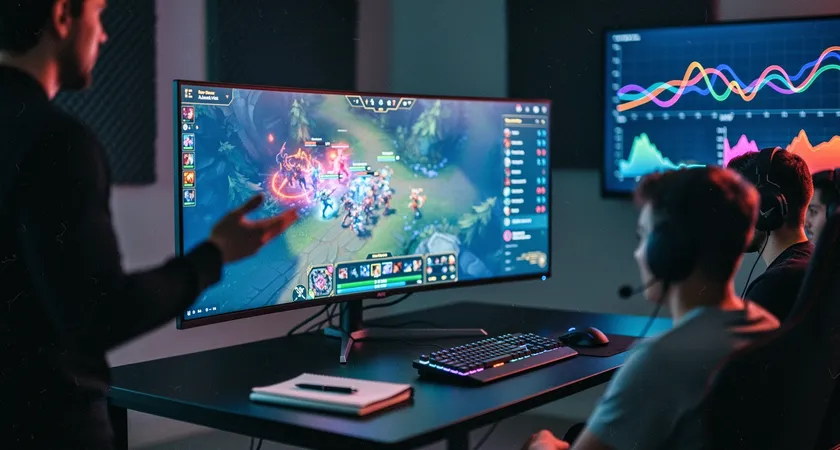
The most successful Flex teams we observe don't choose between AI and human insight. They build a workflow where one feeds the other. The goal is to use AI to handle the tedious, quantitative audit work, freeing up the team's captain or dedicated analyst to focus on synthesis, psychology, and strategy. This hybrid model turns data into wisdom rather than just information.
Start by designating one team member as the "Data Lead." Their job is not to be the coach, but to be the translator between the AI-generated reports and the team's discussions. Each week, they run the post-game analytics and distil the three most pressing, actionable findings. For example: "Last week, our average time to place a ward after clearing an enemy one was 90 seconds. The tool suggests cutting that to under 30 seconds could increase our vision score advantage by 20%." This frames the data as a specific, drillable habit.
Then, in your team review session, use that data as a starting point, not the conclusion. The human discussion asks "why." Why does it take us 90 seconds? Is it a communication issue? A lack of ward inventory management? A prioritization problem? This is where player input, led by a thoughtful captain or external coach, turns a metric into a tailored solution. The AI says "what" is happening. The human team must discover the "why" and decide "how" to fix it.
Critical Pitfalls: The Hidden Costs and False Promises of DIY AI Coaching
Enthusiasm for these tools often leads teams into several common traps. The first is analysis paralysis. With dozens of metrics available, teams can become overwhelmed, trying to improve everything at once and improving nothing. Chasing a higher "vision score" can lead to wasteful warding. Boosting "damage per minute" might encourage risky, low-value fights. Without expert guidance to prioritize which metrics matter most for your team's specific weaknesses, data can become a distraction.
The second pitfall is misinterpreting correlation for causation. An AI might highlight that your wins have a high correlation with your jungler playing a specific champion. The naive conclusion is to force that pick more often. A seasoned coach would dig deeper: Is it the champion, or is it that the champion's playstyle perfectly masks your jungler's decision-making flaw? Or does that champion simply pair well with your mid laner's preferred roamer? Relying solely on the tool's surface-level insight can lead to flawed, counterproductive strategy shifts.
Finally, there's the risk of eroding team cohesion. Broadcasting a player's poor AI-generated grade in a group setting can feel like a public shaming, damaging trust. A human mediator knows how to deliver critical feedback privately and constructively. The impersonal, blunt nature of an AI report can fracture morale if not handled with significant human sensitivity.
The Verdict: AI as a Powerful Teammate, Not a Head Coach Replacement
So, can AI replace a LoL coach today? For the vast majority of Flex teams striving for meaningful improvement, the answer is a clear no. It lacks the emotional intelligence, adaptive creativity, and leadership capabilities required to shepherd a group of players. However, to dismiss it entirely is to ignore a potent weapon. The accurate framing is that AI is becoming an indispensable assistant coach or analyst.
Its value lies in augmenting human coaching, not replacing it. It provides the unbiased evidence base from which a skilled coach can build more effective, personalized training regimens. For teams without the budget for a full-time professional coach, using these tools to structure your own reviews is far better than reviewing nothing at all. But the teams that climb highest are those who recognize the tool's limits. They use the AI to ask better questions, then rely on human judgment, team dialogue, and sometimes external strategic guidance to find the right answers.
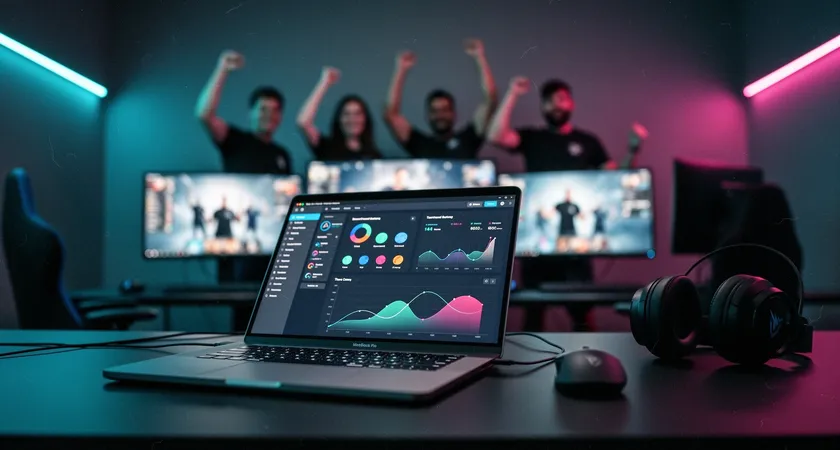
The final takeaway is this: leverage AI for its unparalleled audit capabilities. Let it scan your replays and flag statistical outliers. Use it to benchmark your performance against broader trends. But never outsource the final judgment on your team's strategy, morale, and identity to an algorithm. That role requires a human touch, an understanding of narrative, and the ability to inspire five individuals to play as one. The most powerful setup is a triad: skilled players, insightful data tools, and the strategic, psychological direction that only experienced human insight can provide. Your next step should be to trial one of these analytical tools for a month, but with a strict rule: every data point it generates must be filtered through a conversation focused on "why" and "how," not just "what."
FAQ
What is the best free AI tool for analyzing our Flex team's League of Legends replays?
While no fully "AI" tool is completely free for advanced team-wide analytics, services like Mobalytics' free tier or Op.gg's replay review features offer automated stat tracking and basic insights. For deeper analysis, tools like Porofessor or Insight.gg provide more detailed post-game reports, often with freemium models. The key is to start with one and learn to interpret its basic metrics, like vision score timelines and objective control percentages, before paying for more complex features.
Can AI coaching tools help with champion select and drafting in Flex queue?
Yes, but with major caveats. Many tools offer draft assistants that recommend picks based on tier lists, synergy, and counter-matchups using historical win rate data. This can be helpful for navigating complex bans or identifying strong meta compositions. However, these suggestions ignore your team's specific skill with a champion, practiced strategies, and the human element of player comfort. A statistically perfect draft your team can't execute is worse than a lower-tier draft you've mastered.
How do we know if we're relying too much on AI analysis and hurting our team chemistry?
Warning signs include arguments that solely cite player grades from a tool, players feeling discouraged or targeted by impersonal data, and your team's strategy becoming rigid and predictable as you only follow statistical "best practices." If your post-game talks are dominated by debating the tool's metrics instead of discussing decisions and communication in your own words, it's time to refocus. Use the data as a conversation starter, not the final judge.
What specific metrics from an AI tool should a Gold-level Flex team focus on first?
Ignore advanced damage graphs initially. Focus on three foundational, improvable metrics: Vision Score per minute (especially post-lane phase), Average Death Timers before major objectives (deaths at 25 minutes before Dragon soul are catastrophic), and Gold Differential at 15 minutes. Improving these areas doesn't require perfect mechanics, just better habits and map awareness. Consistent improvement here will create more winning opportunities than chasing complex combo analytics.
Is it worth getting a human coach if we already use AI analytics tools?
Absolutely, if your goal is serious improvement. A human coach does what the AI cannot: translate your raw data into a tailored development plan, work on in-game communication and mental resilience, and provide accountability. Think of it this way: the AI gives you a detailed health report card. A human coach is the personal trainer who designs your workout, corrects your form, and pushes you when you want to quit. The two work best in tandem.
How can we use AI to improve our teamfighting without a coach?
Use replay analysis tools to isolate and review lost teamfights. Instead of just watching, look for the data points: Was there a key ultimate or summoner spell discrepancy when the fight started? What was the vision coverage in the area 30 seconds prior? What was your team's combined gold spend on defensive items versus the enemy's on penetration? This moves the discussion from "we got outplayed" to "we fought without our key cooldown" or "we fought in their vision while blind," which are concrete errors you can fix.