Diamond Ranked Flex: Common Draft Mistakes

Diamond Ranked Flex: Common Draft Mistakes often hide behind a familiar excuse: the team simply played poorly. That answer is too easy. In ranked flex queue, a draft can create a win condition before the first minion wave spawns, or it can make every trade look bad, every skirmish feel forced, and every late-game decision feel rushed. A good draft does not win the game by itself. A bad draft can make a competent team lose while telling itself the real problem was focus, jungle pathing, or someone going off peak. The first thing a diamond flex team needs to stop doing is treating champion select as a popularity vote. It is a planning phase. The notes below cover the mistakes that show up again and again when five players are trying to climb without a clear draft identity. To go deeper, you can also read Most Common Mistakes in Flex Queue Matches.
Why Diamond Ranked Flex: Common Draft Mistakes Hide Behind Execution
I have watched enough flex 5 post-match screens to know the pattern. The team says the draft was fine. Then the first five minutes show a support with no answer to a level 2 invade, a top laner who cannot trade without help, a jungler with no safe starting side, and a bot lane that only wins if every cooldown lands perfectly. The draft did not lose outright. It made every later play more expensive. To go deeper, you can also read Flex Queue: From Ranked Teams to Premades.
That is the real problem with many draft mistakes in Diamond. They do not present themselves as an obvious loser champion. They present themselves as a plan that asks for too much certainty. Top wants to survive until a split-push window. Bot wants to take the first plate early. Mid wants to roam around minute four. Support wants to force a fight before the enemy jungler has enough levels to contest. None of those goals is stupid. Together, they create four clocks fighting each other.
When those clocks collide, players feel the pressure as personal failure. The jungler blames top for not taking trades. Top blames mid for roaming instead of holding priority. Mid blames support for starting a war before the wave can follow. Support blames everyone for not having a clear engage point. The team calls it execution. But execution was built on a draft that gave the team no default answer.
Good draft work in flex queue is not about memorizing a tier list. It is about choosing a shape of pressure. Does your team want lane priority, jungle tempo, split-push safety, or late-game scaling? A diamond team can win with all four shapes. A team that mixes them in one draft usually loses more than it should.
The Early Game Contract Most Teams Forget
Champion select sets the early game contract. If a lane cannot fight at level 1, the team needs a reason not to fight there. If a jungle path expects to contest an objective, the adjacent lane needs damage or control to make that contest real. If a support chooses a poke-heavy, engageless pick, the bot lane cannot pretend it has all-in authority. This sounds simple. In practice, many teams pick champions they like and hope the early game will be less sharp than expected.
A useful audit question is what each lane needs to be safe, and what each lane needs to matter later. If one lane needs to be safe and another lane also needs to be safe, while both are supposed to provide early damage, the draft has a missing tooth. Not every mistake needs a new meta pick. Sometimes it needs a clearer promise between roles.
A five-stack often has one player who can make a weird pick sound powerful, but the other four cannot reproduce the timing. That is how a team gets a plan that feels creative while the match feels like five players guessing different endings. The draft should not reward one player's intuition. It should make the game easier for the average version of the team.
The Champion Pool Trap in Flex 5 Drafting
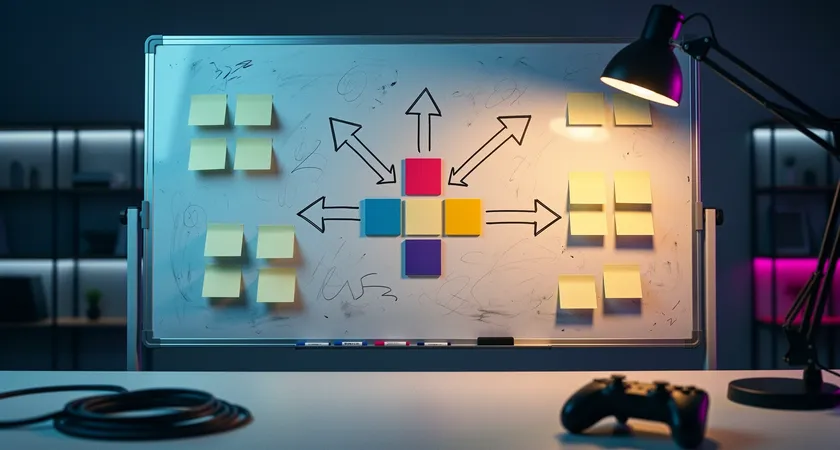
I have seen flex teams list twenty comfortable champions, then panic when champion select asks for a lane that can survive level 2 without a jungle visit. Flex queue rewards a player who can fill, but it also punishes a team that mistakes familiarity for flexibility. A champion pool can look broad on paper. Five players, three lanes, jungle, support, lots of names. Then champion select arrives, and the team runs out of picks that share a coherent early-game story. The pool is not too small. The pool is too shallow in the wrong directions.
In many diamond teams, the biggest draft tax is not a bad one-trick. It is a comfort pick that creates a hole no one agrees to cover. A mid player locks a scaling mage without wave clear. A top player picks a bruiser who needs a long trade sequence. A jungler picks an early-clear path that expects mid to hold waves. A support picks an enchanter because the lane is safe. Each pick may be reasonable alone. Together, the team has no early answer to a roaming assassin and no late answer to a split-push threat. The draft failed because the team never asked what it needs to survive at minute fifteen.
One-Tricks Can Be Useful, But Only When the Team Plans Around Them
A specialist can carry games. The issue is whether the rest of the team knows how to support that specialist when the pick is contested. If your best top laner plays one bruiser into an anti-snowball matchup, the team needs a lane assignment that avoids a second forced fight. If your jungler only plays early-path gankers, the team needs lanes that can trade without waiting for a slow scaling assist. If your support only engages with a hard pick, the bot lane needs to make that engage meaningful before it expires.
Some teams try to solve this by banning champions. Other teams try to solve it by picking a safer second champion. Both can work. Neither should happen as a reflex. A ban is a way to preserve a plan. It should not be a way to postpone an uncomfortable conversation about lane identity.
A Short Draft Sanity Check Before Lock
Before a lock, a team should run a quick verbal or written check. This is not about sounding smart in champion select. It is about avoiding a plan that dies on contact with the first wave.
- The team names the lane that has the most pressure for the first three minutes and confirms it is not supposed to fight before that pressure appears.
- The team identifies one late-game win condition that can survive if the early lead does not show up on the scoreboard.
- The team checks whether every player can play their role under the assumed tempo, not under a fantasy version of the next fight.
This kind of check sounds small. It also changes how the draft feels. Players stop treating locks as expressions of confidence and start treating them as contracts. If no one can explain what the team does when the first objective is denied, the draft is still open. If everyone can only explain what happens when the team gets ahead, the draft is fragile.
Ban Logic That Gives Away Your Draft Priority
A common diamond mistake is banning champions based on what the enemy might pick, not on what your team cannot respond to. That sounds similar, but it is not. The first question asks what is strong in the current patch. The second question asks what makes our specific flex 5 team look bad. The second question is harder, but it gives better ban priority.
If a team is comfortable with early lane priority but weak under a split-push timer, banning a strong early skirmisher may do little. It may leave the enemy free to pick a lane bully that forces your side lane to play scared. If a team relies on one-shot engages but cannot survive poke lane, banning a flashy champion is not enough. The team needs to reduce the pressure its bot lane must handle for eight minutes.
Ban Priority Is About Your Weak Lane, Not the Enemy's Ego
Players often want to ban the champion the enemy support loves, the champion the enemy top player is known for, or the champion that feels unsafe on paper. Those bans can be useful. They can also waste a slot. A better first ban may remove a champion that takes away your safest fallback. If your jungle starts safely only when one enemy mid cannot invade, that mid matters more than the jungler the enemy might play if its path fails anyway.
Another issue is banning into your own uncertainty. A team that does not know whether it wants scaling or early pressure may keep banning dangerous champions until champion select becomes a defensive scramble. The draft ends up feeling cautious, but it also loses identity. It is easy to confuse caution with discipline. In flex 5, discipline means protecting the team's chosen win condition, not banning every champion that could hurt you in the abstract.
The Enemy's Draft Order Is Not a Free Lesson
Many diamond teams react to enemy last picks as if they reveal a complete plan. They do not. They reveal what the enemy can afford while keeping its own lane assignments flexible. A late counterpick may look weak against the first four picks you see, but it may be strong against the final pick you are about to make. A draft conversation should not stop at they gave us their best pick. It should move to what are they forcing us to answer with.
Teams often make this harder because their flex queue communication is thin. There is a voice in champion select, but that voice is not trained to ask questions. It is good enough for picking a comfort champion. It is not good enough for noticing that a lane assignment is being decided by whoever speaks loudest. When draft talk is only about comfort, blind spots appear in the first gank path or first wave recall.
Power Picks, Counterpicks, and Lane Assignments That Fail
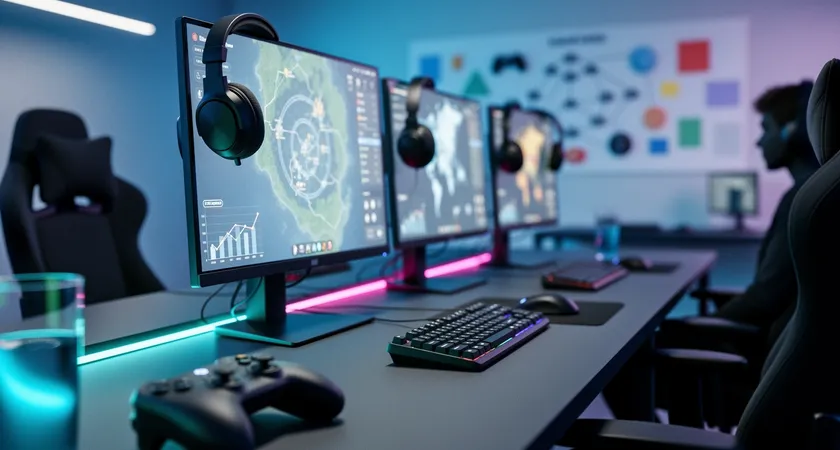
A power pick is not automatically a good pick. It becomes powerful when the team knows what pressure it must create. In diamond flex, teams often lock a champion because it feels current, because one player has high mastery, or because it seems strong against the first two enemy picks. Then the draft forgets the lane assignment. Mid gets control mage. Top gets split-push bruiser. Support gets engage enchanter. Bot gets scaling ADC. Jungle gets clearing champion with no hard gank. Every pick is acceptable on paper. On the map, nobody has early authority to start the game on time.
Counterpicks become misleading for the same reason. A counterpick can solve a matchup while creating a worse role conflict. A player picks a champion that should beat the lane opponent, but the pick assumes the jungler will never visit. Another player picks a champion that should survive the lane, but the pick assumes the support will do work it is not built to do. The lane may become safe. The map may become slower than planned. The counterpick wins a small problem and loses a larger one.
Counterpick Traps That Look Smart Too Early
- A bot lane picks a strong matchup that needs vision for six minutes, while the support has a pick that cannot safely ward the river without leaving the lane open.
- A top lane picks a champion designed to beat a lane bully, while the jungle cannot provide a reliable first path without being counter-jungled every time.
- A mid lane picks a roaming champion to punish a passive opponent, while the side lanes are not allowed to fight for at least four minutes.
These mistakes produce a draft that looks thoughtful until the first objective timer. The team has counters, but no tempo. It has lane safety, but no route to the map. It has strong one-v-one shapes, but no five-player answer when the enemy makes the next call.
Lane Assignment Should Not Be Decided by Confidence Alone
Flex queue asks players to swap roles. If a strong support plays jungler poorly but plays top well, the team should not be afraid to make that move. The trouble starts when the swap is based on who wants the most exciting champion, rather than who can deliver the role's basic job under the assumed game state. A diamond team needs a role test that goes beyond win rate.
Can this player hold a lane against a specific early power? Can this jungler start safely if the enemy support moves out of lane? Can this mid player give the team a reason not to lose a timer? Can this support protect a scaling bot lane when the enemy has a level 2 threat? If the answer is no, the team can draft around it, but it should know where the weakness lives.
The best draft identity often starts with one honest sentence. We are not the team that wins by forcing a lane to lose. We are the team that waits until the enemy must step into our shape. That sentence can protect a team from picking a champion that needs a lane to die early. It can also stop a team from ban-scrambling every time the enemy takes a comfortable pick.
Diamond Ranked Flex: Common Draft Mistakes to Fix First
I have watched enough five-stack VOD calls to see the same habit. The team loses, argues for twenty minutes about one bad objective fight, then locks the next ranked game with a draft that still has no early answer. The easy move is to blame the last player who missed a skill shot. The useful move is to treat draft problems as reviewable decisions, not personal flaws. If a team loses because a support wanted engage and the jungler wanted early pressure, the correction is to name the mismatch before the next lock. If a team gets banned into a weak top lane because it has no counter to a split-push side, the answer is not to panic-pick a safer champion. The answer is to understand what kind of lane the team needs when top is under attack.
A VOD Review That Does Not Turn Into Finger Pointing
Many flex teams review games after losses. That is the right instinct, but the method is often wrong. The team jumps to the first death, the missed skill shot, the late teleport, or the objective fight that ended the game. Those are valid moments. They are not always the beginning of the problem. A better review starts with the first draft call. Why did the team take this side of the map? What was the assumed level 2 plan? Which lane was supposed to buy time, and which lane was supposed to create time? When review begins before minions spawn, players have a less emotional place to stand.
In practice, this kind of review often shows that a draft mistake was not a champion selection error. It was a missing promise. The team picked a champion that needed help, but no one agreed to provide it. The team picked a scaling bot lane, but the jungler's early path had no lane to contest. The team picked a control mid, but the support wanted to fight at four minutes. None of those choices are impossible to fix. They become impossible when every loss is retold as we had to win the lane.
When Self-Review Stops Working
Some teams can diagnose themselves well. Others repeat the same blind spot for weeks. A good five-stack can build habits, watch its own champion select, and correct simple mistakes. But diamond flex has enough ego, fatigue, and patch noise that the same draft argument can become a loop. If a team keeps making the same choice and still says the problem is execution, outside input can be useful. It does not need to be expensive or formal. It needs to be specific.
- The team keeps locking a champion that is strong in one lane but weak in the map shape the enemy punishes.
- The team cannot agree on which player is responsible for the first objective, which means the draft has no owner.
- The team has improved mechanically but its win rate stays flat because champion select still asks for a miracle.
A specialist in flex drafting can help by separating personal comfort from team logic. Sometimes the answer is a lane swap. Sometimes it is a smaller pool with stronger pairings. Sometimes it is a ban priority that stops the team from reacting to scary champions. Sometimes it is a voice in champion select who asks one annoying question: what happens if the first play fails?
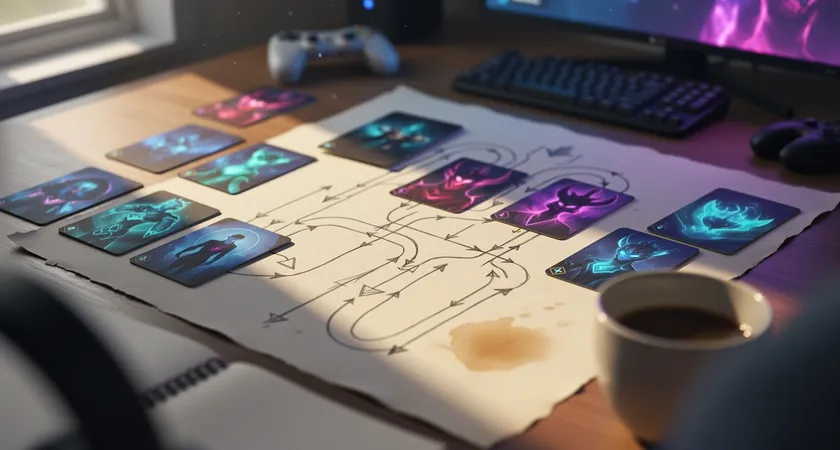
Diamond Ranked Flex: Common Draft Mistakes are easier to fix when the team treats champion select as a repeatable process, not a mood test. Start by choosing one pressure shape. Then make sure every pick supports the first three minutes of that shape. Then ban to protect the shape, not to hide from the meta. Then review the draft before the fight. If a team can do that consistently, it will stop losing games where the plan was missing before players touched keyboard or mouse.
FAQ
What are the first signs that a diamond flex 5 team has bad draft discipline?
Look for losses where every lane wants a different game tempo. The support picks engage, the mid picks control, the bot lane picks scaling, and the jungler picks early pathing. Then no one can explain how the team survives a denied first objective.
Is it better to draft for lane matchups or for team win conditions in flex queue?
Team win conditions should come first. Lane matchup matters less when the draft gives your team no shared early game. A good flex draft creates a route, not just a collection of small counters.
How many counterpicks should a flex 5 team practice before ranked?
Enough to cover your usual roles, not the whole patch. If a player needs a counterpick to hold a lane, the team still needs to know when that player should avoid the fight. Practice a short pool with clear start, recall, and objective timings.
Should diamond flex teams ban champions based on what the enemy might pick?
Only after checking what your team cannot answer. Banning scary champions may protect a lane, but it can also hide a missing early game plan. Better bans remove champions that force your side lane into a role nobody prepared.
When does a five-stack need external draft help?
When the same draft conflict repeats after reviews and everyone still blames execution. Outside help is useful when a team needs a neutral voice to ask what happens if the first play fails. It does not need to be a full coaching package to be worth checking.