How AI Coaching Is Changing Amateur LoL Teams

Your amateur Flex 5 team grinds ranked games, watches replays, and still can't break into a higher tier. The frustration is a familiar one. In the last year, a new set of tools has entered the conversation, promising data-driven clarity. AI coaching is reshaping how non-professional teams analyze performance, identify patterns, and structure their practice. This shift moves team development beyond guesswork and generic advice. But integrating these tools effectively, and understanding their real-world limitations, is the difference between a gimmick and genuine improvement. This article explores what AI coaching actually offers amateur League of Legends teams today, how to use it without losing your team's strategic soul, and where human expertise remains irreplaceable. To go deeper, you can also read LoL 5v5 weekend queue: how teams should prepare.
Beyond Stats: What Modern AI Coaching Actually Provides
AI coaching is not just a fancier post-game stats screen. Its core value lies in pattern recognition and contextual analysis that would take a human coach hundreds of hours to compile manually. On the amateur team level, this manifests in three concrete areas. To go deeper, you can also read Prep Your LoL Team for Amateur Tournaments.
Automated VOD Review with Tactical Annotations
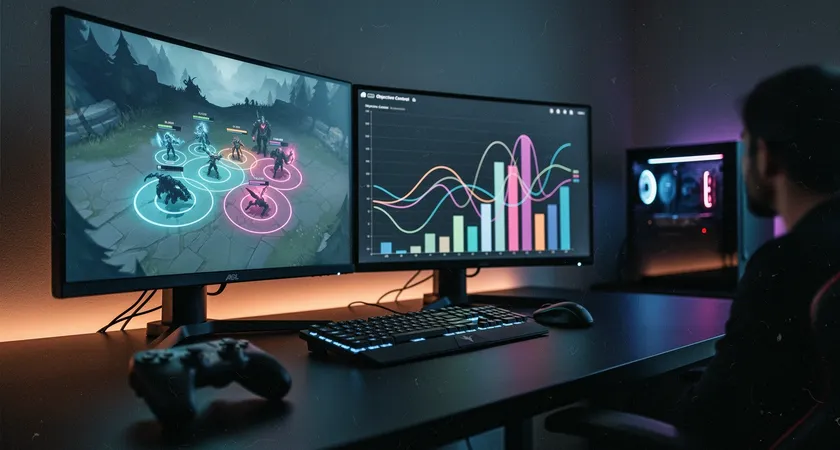
The most immediate application is in video replay analysis. Modern tools can process your team's recorded games and generate timestamped reports. They don't just flag a lost teamfight. They can identify the sequence that led to it, such as a critical ward expiring 45 seconds prior, a key ultimate being used earlier in a skirmish, or a positioning trend that made your backline vulnerable. This turns a two-hour VOD review session into a focused 30-minute discussion on specific, data-flagged moments. Teams report spending less time finding problems and more time solving them.
Predictive Draft Analysis and Counter Strategy
For teams that take draft seriously, AI tools offer a significant edge. By aggregating millions of past matches, these systems can evaluate your proposed team composition against the enemy's. They go beyond win-rate percentages to suggest potential weaknesses in early lane stability, mid-game spike timing, or late-game teamfight execution. For amateur captains, this acts as a second opinion during the frantic draft phase, highlighting synergy gaps you might have missed and suggesting pocket picks that statistically perform well into the enemy's selections.
Individual Performance Trend Tracking
AI excels at tracking micro-trends across dozens of games for each player. Is your jungler's average first Herald attempt timing drifting later? Is your support's vision score post-15 minutes dropping when ahead? These tools create individual dashboards that show progression or regression on specific metrics over time. This moves feedback from 'you died a lot that game' to 'your deaths in the mid-lane between minutes 10-15 have increased 40% over the last 20 games, often when tracking the enemy jungler without vision.' The specificity changes the coaching conversation entirely.
Integrating AI Tools Without Losing Team Agency
The greatest risk with any analytical tool is that it becomes a dogma. A team that blindly follows AI-generated 'optimal' playstyles can become predictable and lose its adaptive spark. Successful integration is about using AI as a consultant, not a commander.
Start by using AI analysis to test your team's own hypotheses. After a loss, discuss what you think went wrong. Then, consult the AI report. Did it identify the same root cause? If yes, you've validated your team's game sense. If not, you have a starting point for a deeper review. This process builds critical thinking. Furthermore, you must curate the data you feed it. An AI trained only on high-elo Korean solo queue meta might give advice irrelevant to your team's chaotic Platinum Flex games. The most useful insights often come from tools configured to analyze games from your specific tier and region.
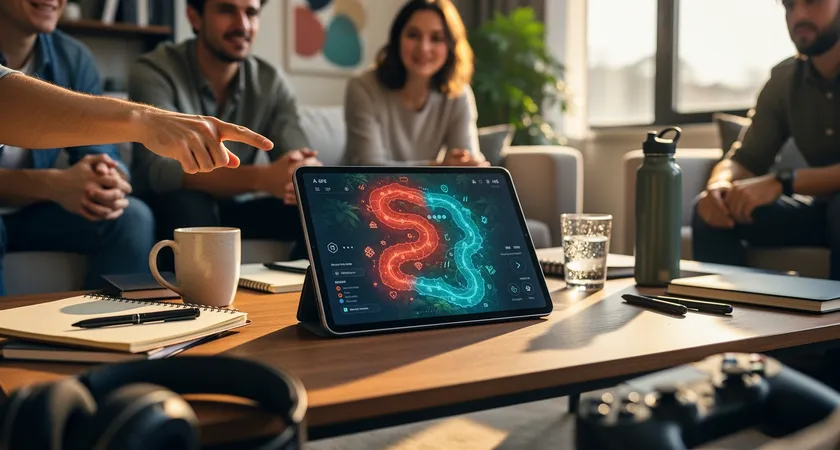
Finally, establish a clear workflow. Designate one person, often the shot-caller or most analytical player, as the primary tool operator. Their job is to synthesize the AI's raw data into 2-3 discussion points for the next team meeting. This prevents data overload. The rule of thumb from teams that make this work is simple: the AI finds the 'what' and the 'when,' but the team must always debate the 'why' and decide the 'how' for moving forward.
The Tangible Impact on Practice and Team Cohesion
So what changes when a team consistently uses these tools? The most reported shift is in the quality of practice. Scrimmages become more purposeful. Instead of playing ten games and vaguely hoping to improve, teams can set explicit, measurable goals for a session. 'Tonight, we will use the AI's feedback on our weak side vision to focus on setting up and protecting two deep wards in the enemy jungle before 12 minutes every game.' This turns practice into a series of experiments.
Morale and conflict resolution also see an impact. Arguments rooted in subjective blame, like 'you never help my lane,' can be defused with objective data. The tool can show gank attempt timelines, proximity metrics, and vision states. It doesn't assign moral fault, but it clarifies responsibility. This externalizes criticism, making it easier to accept. The player isn't being attacked by their teammate; they're both looking at a neutral report pointing out a systemic issue. For amateur teams where players are also friends, this depersonalization is invaluable.
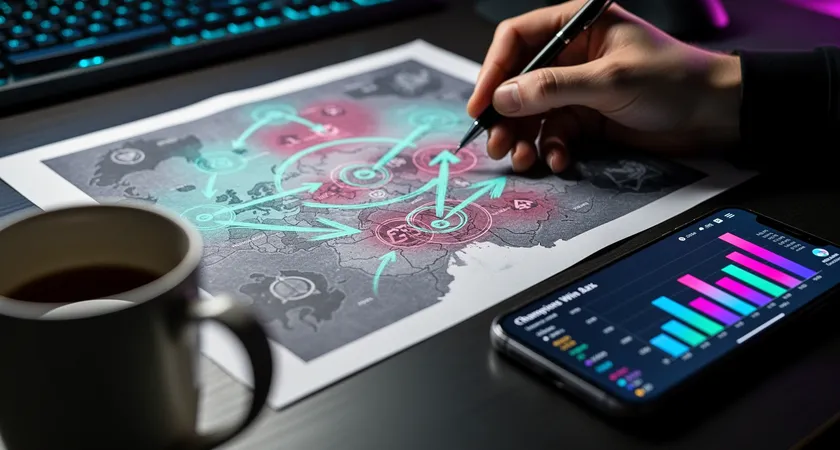
However, a new form of pressure can emerge. Constant performance tracking can feel oppressive if not managed. Players might start playing not to win, but to optimize their personal metrics, avoiding risky plays that could win games but hurt their KDA or vision score in the algorithm. Coaches and captains must emphasize that the data is a diagnostic tool, not a report card. Its purpose is to guide growth, not to create a constant state of evaluation.
Where AI Falls Short: The Non-Negotiables of Human Coaching
This is the critical reality check. AI coaching tools have profound blind spots that no algorithm can currently overcome. Recognizing these limits is what separates teams that get frustrated and abandon the tools from those that use them sustainably.
The first and largest gap is in understanding motivation and psychology. An AI can tell you your top laner is playing overly passive after a death. It cannot detect if this is due to tilt, a loss of confidence in the matchup, a misunderstanding with the jungler, or external stress from school or work. Human coaches read voice comm tone, body language on camera, and engagement levels. They know when to push a player and when to offer reassurance. An AI has zero emotional intelligence. It can only report on behavioral outputs, not the internal states that cause them.
The second gap is in strategic creativity and adaptation. AI models are built on historical data. They are exceptional at identifying what has worked in the past. They are inherently poor at inventing novel strategies or understanding when a meta is about to shift. The infamous 'cheese' strategy, the off-meta pocket pick, the unconventional objective trade, these often fall outside the AI's recommendation framework because they lack sufficient historical data to be deemed 'optimal.' A human coach can recognize a team's unique player strengths and devise a unconventional strategy that plays to them, even if it's not statistically popular.
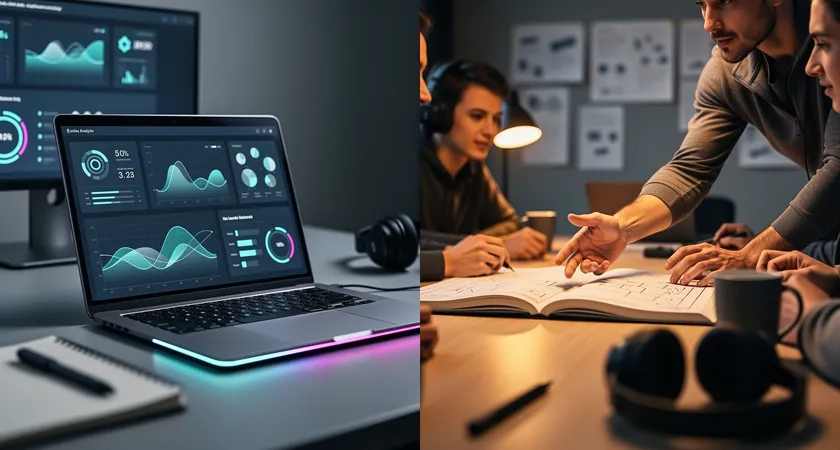
Finally, AI cannot manage team dynamics. It cannot facilitate a difficult conversation between two clashing personalities. It cannot rebuild trust after a competitive disagreement. It cannot instill a team culture of accountability, respect, and shared purpose. These 'soft skills' are the bedrock of any successful team, amateur or professional, and they remain firmly in the human domain. The tools can give you the 'plays,' but they cannot build the 'players' into a cohesive unit.
Building a Sustainable Hybrid Improvement System
The most effective path forward for ambitious amateur teams is a hybrid model. This system strategically layers AI-driven data with human interpretation and oversight. It's a workflow, not just a software subscription.
Begin by allocating your resources clearly. Let the AI handle the heavy lifting of data aggregation and initial pattern detection. Use it to prepare review materials before team meetings. The human component, whether a dedicated coach, a captain, or a rotating analyst, must then contextualize that data. Their job is to ask the questions the AI cannot: 'Why did this pattern emerge?' 'Does this recommendation fit our team's identity?' 'What is the simplest fix we can implement first?' This human layer filters the firehose of information into a drinkable stream of actionable insights.
Set regular checkpoints to evaluate the tool's utility. Every month, ask as a team: Are the AI's insights still surprising us, or are they just confirming what we already know? Is the time we spend reviewing its reports leading to measurable in-game improvements? If the tool has become a routine box-ticking exercise, its configuration or your use of it needs to change. The goal is progressive insight, not repetitive reporting.
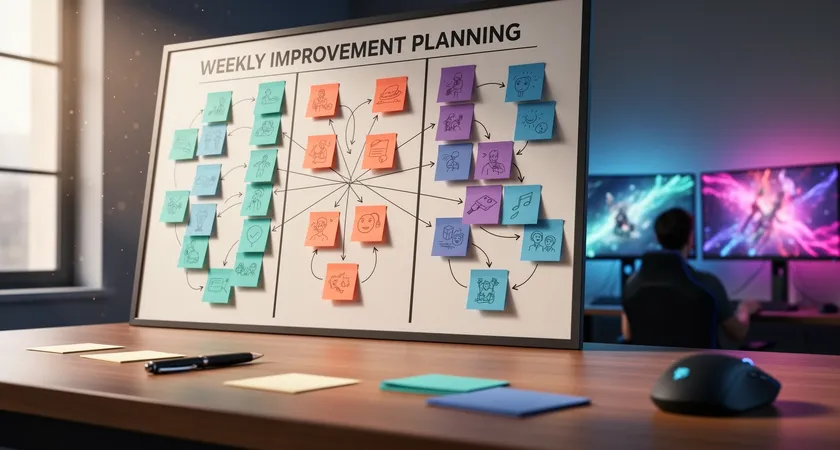
For teams hitting a plateau where the DIY hybrid model feels insufficient, this is where seeking external expertise makes sense. A qualified human coach who is also fluent in these AI tools can be a force multiplier. They can operate the technology at a higher level, interpret its findings with professional experience, and fill the motivational and strategic gaps the AI leaves open. They provide the synthesis that is so difficult to generate internally. The decision to seek this help isn't a failure of your system. It's often the logical next step when a team's ambition outpaces its internal capacity for analysis and leadership.
AI coaching is changing amateur LoL teams by democratizing high-level data analysis. It turns intuition into evidence and provides a structured framework for improvement. Its true power is unlocked not by replacing human thought, but by augmenting it. The teams that will climb furthest are those that master the tool without becoming subservient to it, using its cold logic to inform their warm, collaborative, and creatively human pursuit of better play. The future of amateur team development lies in this partnership, where machine intelligence handles the patterns, and human intelligence handles the purpose.
FAQ
What is the best free AI coaching tool for a beginner LoL team?
There is no single 'best' tool, as free options often have significant limits on features or analysis depth. Many teams start by exploring the basic post-game analytics provided by sites like OP.GG or U.GG, which offer some automated insights. For more team-focused analysis, some freemium tools offer limited free tiers that allow you to analyze a few games per month. The key is to pick one, learn its interface, and see if its insights feel relevant before committing to a paid plan.
Can AI coaching help a team with poor macro decision making?
Yes, but with a caveat. AI tools are excellent at identifying macro mistakes, such as incorrect objective prioritization, poor rotational timing, or vision deficits before a fight. They can show you the 'what' very clearly. However, they are less effective at teaching the underlying principles of good macro. Improving your team's macro requires using the AI's data to spark focused practice and discussion on fundamentals like map tempo, resource trading, and win conditions, areas where human guidance is still crucial.
How do we stop our players from obsessing over their AI-tracked personal stats?
Establish team rules from the outset. Make it clear that the stats are diagnostic tools for the team's benefit, not individual scorecards. Frame discussions around team goals (e.g., 'our combined vision score') rather than individual rankings. Regularly highlight moments where a 'bad' stat (like a player's death) led to a positive team outcome (like winning a fight elsewhere). If obsession persists, consider having only the captain or coach access the full individual metrics to synthesize feedback.
Does AI draft analysis work in low elo Flex queue where anything can happen?
It works differently. In low elo, strict meta compositions matter less than player comfort and simple, executable win conditions. An AI draft analyzer can still be useful by warning you of glaring weaknesses, like a team with no crowd control or all physical damage. Its most valuable low-elo function is often in helping your team understand its own proposed composition's power spikes and primary game plan, adding a layer of intentionality to your pick/ban phase.
What's the biggest mistake teams make when first trying an AI coaching tool?
The most common mistake is data overload. Teams receive a 20-page report after their first analyzed game and try to fix everything at once, leading to confusion and paralysis. The correct approach is to isolate one or two recurring, high-impact issues highlighted by the AI. Focus your next 5-10 games solely on improving those specific elements. This creates a clear feedback loop and prevents the tool from becoming a source of stress rather than improvement.
At what point should a team consider hiring a human coach over relying on AI tools?
Consider a human coach when you consistently understand the AI's data but can't translate it into behavioral change, when team conflict is hampering progress, or when you've plateaued strategically. A human coach excels at the 'why' behind the data, provides accountability, and manages psychology. If your team is highly motivated but stuck in a cycle of identifying problems without solving them, that's a strong signal that expert human insight could provide the missing piece.