Underrated Flex Queue Stats Premade Teams Ignore

Your Flex 5 team logs off for the night, satisfied. A solid 2-1 record. KDA ratios look decent across the board. But this feeling, this reliance on the scoreboard's top line, is why so many premade teams plateau. They ignore the data that matters, focusing on what looks good instead of what wins games. To go deeper, you can also read Flex Queue: From Ranked Teams to Premades.
The difference between a good casual stack and a coordinated team isn't just comms or champion pools. It's in the underrated stats you likely glance over. Stats that measure the engine of teamwork, not just its shiny exhaust pipes. For any team serious about climbing the Flex 5 ladder, understanding and acting on these metrics is the fastest path to improvement. We'll break down the specific stats that reveal coordination gaps, show you how to track them using readily available tools, and explain what to do when the numbers point to a systemic issue. To go deeper, you can also read Best Voice Chat Tools for Flex Squads: Unlocking True Team Synergy in League of Legends Flex 5 Queue.
Vision Score Isn't Just a Number, It's a Timing Map
Most teams check vision score post-game. The support had 80, the jungler 45. Good. But this aggregate tells you nothing about when or where that vision mattered. The critical data lives in the timing and location of vision control spikes.
Consider the 90-second window before a major neutral objective spawns. An effective team isn't just warding the pit; they're establishing control over the adjacent jungle corridors and denying enemy vision. The stat to watch here is 'Control Wards Purchased' and 'Wards Placed' filtered for that specific timer. On many team audits, we see a pattern: one or two players buy the control wards, but the team fails to use them to create a dominant zone. The map remains grey, leading to hesitant, reactive plays.
The actionable insight comes from reviewing replay vision heatmaps for objective setups. Did your team's combined ward coverage create a safe, informed path to the Dragon, or was it a last-second scramble? Look for the moment the vision score line on your team's graph sharply rises against the enemy's. That's your control spike. If it's missing or occurs after the fight starts, you've found a tangible drill for next session: coordinated sweeps and ward placements on a 90-second timer.

The First Tower Fall Tells a Deeper Story
Securing First Tower is a clear gold injection. But the 'how' and 'where' of that fall reveals your team's strategic DNA, often in ways that contradict your stated goals. A team aiming for split-push pressure that gets First Tower from a bot lane ARAM clown fiesta has a coordination problem.
The key underrated metric here is 'Damage to Turrets' by player, coupled with 'Lane Presence' timelines. Tools like post-game analytics platforms can show this. You might discover your top lane Tryndamere, your intended split-push threat, dealt only 1200 damage to structures all game, while your mid laner, on a control mage, accounted for over 3000. This isn't about blame. It's a signal that your team's applied strategy isn't matching your intended strategy.
Common patterns emerge. The split-pusher is constantly drawn to mid-lane skirmishes, wasting tempo. Or, the team fails to create cross-map pressure when the split is attempted, leaving them to die in a 1v3. The fix starts with recognizing this disconnect in the data, then building simple, focused comms around it. "I am shoving top, look for Herald, do not fight" is a command that aligns play with plan.
Kill Participation Lies, But Kill Location and Aftermath Don't
A high Kill Participation (KP) percentage is worn as a badge of honor. But a 70% KP on a jungler who only participates in fights that are already won is a hollow stat. Far more telling are the concepts of 'Kill Location' and 'Objective Conversion Rate' post-pick.
Track where your team's kills happen on the map. Are they predominantly in your own jungle, signaling you're constantly on the reactive backfoot? Or are they near the enemy's tier two mid tower, indicating proactive dives and map pressure? Kills in your own territory often mean you're winning fights out of necessity, not design. This leaves the map state unchanged or even worse, as the enemy often has wave priority before the engage.
The aftermath is everything. The stat that matters is: what did we get after that 3-for-0 skirmish at 22 minutes? Anecdotal reviews of dozens of team replays show a frustrating trend. Teams ace the enemy in the river, then immediately recall to spend gold. The map offers a free Baron, two towers, or deep vision, but the lack of a pre-agreed 'play call' for post-fight scenarios leads to wasted momentum. Start tracking 'Objectives Taken Within 60 Seconds of a Multi-Kill (2+).' If that number is low, institute a simple rule: after a won fight, the shot-caller immediately names the next concrete target before anyone recalls.
The Hidden Cost of Gold: Income Source Disparity
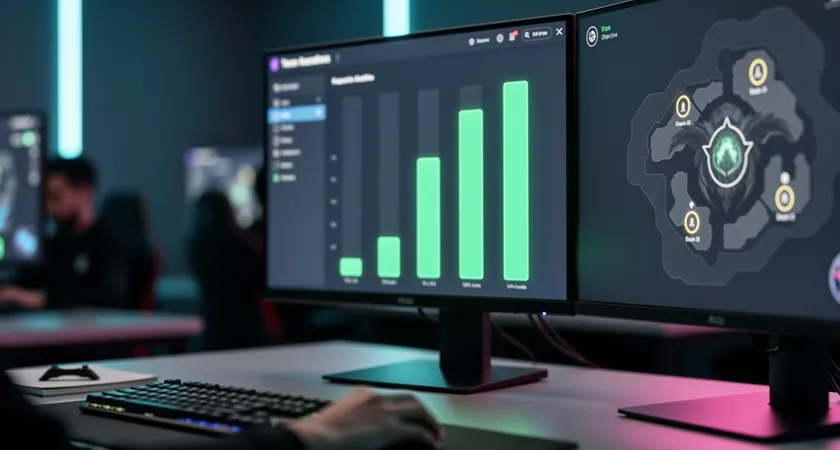
Total gold is the most-tracked resource. However, the source of that gold dictates your team's win condition and its vulnerabilities. A team where 70% of total gold is concentrated in kills and assists is playing a volatile, high-risk game. A team with a higher percentage from minions, structures, and jungle camps has a more stable economic base.
This is where 'CS Differential @ 15' per lane becomes an underrated team stat. It's not just about individual laning skill. A consistently negative differential across multiple lanes often points to a lack of jungle pressure or map awareness, allowing the enemy to farm safely while your lanes are threatened. Conversely, if your bot lane has a massive CS lead but your top is being starved, it indicates a resource allocation dilemma. Is your team prepared to play through the bot side carry, or will they inadvertently funnel shutdown gold to the fed enemy top later?
Reviewing gold source graphs post-match can spotlight these tensions. It answers the question, "How are we actually winning, or why are we losing?" If your victory is solely tied to snowballing kills, one lost teamfight can end the game. Building a strategy that also secures gold from the map itself (turrets, high-value camps) creates multiple avenues to maintain a lead. This requires conscious decisions about lane assignments and jungle pathing after the laning phase, decisions most premade teams make reactively, if at all.
Cooldown Tracking: The Ultimate Proxy for Team Coordination
This is less a traditional stat and more a measurable behavior. The frequency with which your team correctly tracks and acts upon major enemy summoner spell and ultimate cooldowns is a direct proxy for your level of coordination. It's the difference between a forced engage and a int.
You can create a simple metric for this. In your next VOD review, pick three key engagements. For each, pause 30 seconds before the fight starts. How many players verbally called out an important cooldown? "No flash top," "Malphite R down," "Janna exhausted me last fight." In our observations of team comms, lower-tier Flex stacks operate in a permanent present tense, reacting to what they see. Higher-coordination teams operate on a future tense, planning windows of opportunity based on known cooldowns.
Implementing this starts with designating a 'cooldown captain,' often the support or jungler. Their secondary job is to vocalize timers from TAB-checking. The goal is to build a habit. The data point you're tracking is the reduction in engagements started when key enemy defensive tools are available. Over time, this single practice dramatically increases the quality of your team's initiations and reduces throw potential.

When the Data Points to a Wall: Recognizing Systemic Gaps
You've started tracking these underrated stats. You review VODs as a team. You see clear patterns: vision collapses before objectives, gold leads aren't converted, cooldown tracking is non-existent. You run drills, but the improvement is incremental, and old habits resurface under the stress of ranked games. This is a common plateau.
The gap often isn't in identifying the problem, the data does that. The gap is in systematically installing the solution. Five friends can all agree that warding is important, but installing a new, complex vision system mid-game requires a structured approach most teams lack the time or expertise to build. It involves role-specific responsibilities, fallback protocols, and a shared vocabulary that goes beyond "ward more."
This is the point where the DIY approach hits diminishing returns. The team knows something is wrong, but the internal feedback loops are polluted by shared biases and social dynamics. An outside perspective, one that translates these underrated stats into tailored, phased training modules, can break the logjam. For example, fixing post-fight objective conversion isn't just about calling Baron. It's about ensuring wave states are pre-managed, jungle tracking confirms safety, and buyback timers are calculated, a multi-layered checklist that feels natural under pressure.
The Limits of Self-Analysis and the Value of a Framework
Self-analysis is powerful, but it has a blind spot: your team's shared assumptions. You might all believe you're a "late-game scaling team," so you ignore early-game stats like First Herald control. A structured framework from an external coach doesn't just provide answers; it challenges those foundational assumptions with neutral data.
They bring tested processes for turning a stat like 'negative kill location' into a week-long focus. Day 1: theory on creating proactive map pressure. Day 2: a custom game drill on lane priority and dives. Day 3: ranked practice with a single, specific win condition. This structured repetition builds muscle memory, moving the skill from a conscious thought to an automatic part of your team's playbook. The underrated stats become the dashboard your team uses to steer, not just a post-mortem report.
Climbing in Flex 5 Queue requires moving beyond the surface-level accolades. The stats that matter are the ones that measure your team's coordination engine: the timing of your vision, the alignment of your actions with your strategy, and the efficiency with which you convert advantages. Start by picking one underrated metric from this list, perhaps objective conversion after kills or gold source disparity, and make it the sole focus of your next review session.
Break down what it's telling you, design a simple comms rule or mini-drill to address it, and track it for five games. You'll likely find the problem is clearer, but the solution is more nuanced than you thought. For teams hitting that wall of nuance, where the data is clear but the path forward is foggy, seeking a structured, external framework is the logical next step. It transforms those ignored stats from a critique of your past into the blueprint for your team's future wins.
FAQ
What is the most important stat for Flex Queue teams besides KDA?
Objective conversion rate after kills is arguably more critical. It measures your team's ability to turn won fights into tangible map progress like towers, inhibitors, or Baron. A high KDA with low objective conversion often indicates winning fights but losing the macro game.
How can a Flex team effectively track enemy summoner spell cooldowns?
Designate one player, typically the support or jungler, as the 'cooldown captain.' Their role is to frequently press TAB and verbally announce when key enemy spells like Flash or Teleport are used, and to give time-check reminders. The team should then actively plan engages around these known windows of vulnerability.
Why does our Flex team win lane but lose game?
This common issue often stems from gold source disparity and poor post-laning coordination. You may have individual lane leads (gold from kills/CS), but if you're not collectively taking towers and controlling jungle resources, your gold lead is unstable. Review where your team's gold comes from after 15 minutes and how you handle side waves.
What's a simple drill to improve vision before objectives?
Set a 90-second timer before Dragon or Baron spawns. In that window, the team's goal is to place three control wards and four stealth wards in the surrounding river and jungle, while clearing at least two enemy wards. Practice this in a normal or custom game focusing solely on the setup, not the fight.
How do you analyze replays for a full Flex 5 team?
Focus on key transition points: the first tower fall, the first major objective fight, and a late-game Baron dance. For each, ask: What was our intended plan? What does the vision score timeline show? Where did our gold come from? What did we do after winning or losing a fight? Keep notes on these specific moments rather than watching the entire game passively.
Can a Flex team climb by just improving individual mechanics?
Only to a point. Individual mechanics can win lanes and fights, but coordinated teams win games. Around Platinum and above, teams that systematically excel in underrated areas like cooldown tracking, objective setup, and gold conversion will consistently outperform a group of slightly better mechanical players with no coordinated macro plan.