Why Group Win Rate Drops After Patches

A hotly debated patch drops, your Discord lights up with theorycrafting, and you jump into your usual flex 5 queue. The first few nights are a mess. Your previously crisp win rate, the one you built over weeks, is suddenly evaporating. The usual scapegoats get blamed, the jungler's pathing, a questionable new item build, but your team's collective performance is taking a hit that feels out of proportion to the patch notes. To go deeper, you can also read Raise LoL Team Win Rate & Synergy for Free.
This pattern isn't random bad luck. When a League of Legends patch lands, it doesn't just change the game. It changes your team. The drop in win rate experienced by coordinated 5-stack groups is a distinct phenomenon from the solo queue volatility everyone feels. It stems from predictable, interconnected system shocks that disrupt the very fabric of your team's coordinated play. Identifying these shocks is the first step to moving from frustrating losses to managed adaptation. To go deeper, you can also read 5 Stats to Review After Every Stack Session.
The patch hits more than champions; it fractures your team's shared language
The most immediate and tangible impact of a major patch is the disruption to your team's shared map. For weeks, your squad has operated on a common set of assumptions. You know your top laner's power spikes against certain matchups, enabling your jungle's pathing. Your support knows exactly when the ADC will hit a key item threshold to force a dragon skirmish. A patch, especially one with item or rune changes, doesn't just alter numbers. It invalidates that shared, internalized calendar.
Suddenly, your ADC is pinging a completed item at 12 minutes instead of 13:30. The mid laner's mana pool during a push feels different, throwing off the timing of your coordinated roams. These micro-discrepancies accumulate into macro-level confusion. The team that was once operating on instinct now hesitates, second-guesses, or worse, acts on outdated timings, leading to lost fights and objectives. It's less about individual skill and more about the de-synchronization of your collective clock.

The collective knowledge gap creates a vacuum of confidence
In a solo queue game, a player only needs to process new information for their own role. In a flex 5 team, every member feels pressure to understand changes across all five roles. This is an impossible task. The result is a vacuum of confidence during critical shot-calling moments.
Consider a simple scenario: the new patch buffs a specific bruiser item. Your top laner might understand its impact on their 1v1. But does your jungler know how it changes the 2v2 skirmish in the river? Does your mid laner accurately judge if they can still burst that top laner after the item's completion? When no one is certain, decisive calls become risky gambles. Teams often revert to passive, reactive play, conceding map control and initiative. This hesitation directly translates to a lower win rate, as you cede the game's tempo to teams that, by luck or design, adapted their aggression quicker.
Why amateur scrims often reinforce bad habits post-patch
A common reaction to a patch drop is to schedule extra practice games or internal scrims. The logic is sound: more reps equals faster adaptation. In reality, without a structured framework, these scrims can do more harm than good. You're not just learning the patch. You're learning and ingraining your team's initial, flawed interpretation of the patch.
If your team misjudges the power of a new dragon soul and repeatedly forces bad fights around it, those losses aren't neutral. They cement a faulty gameplan. You're building muscle memory for a strategy that is statistically inferior. This is why you often see teams plateau or even decline further after an initial week of intense practice. They've become very good at playing the wrong way.

On the audits we conduct for flex teams, a recurring post-patch pattern emerges. Teams review their own VODs, but they review them through the lens of their own assumptions. They ask, 'Why did we lose that fight?' but not the more critical, 'Was that fight even worth taking in the new meta?' Without an external benchmark or a method to challenge their foundational strategy, they optimize execution on a broken process. This is the DIY trap. The team's energy is directed inward, refining a broken model, rather than outward to discover what the patch actually rewards.
The four predictable system shocks that tank your win rate
To move from frustration to a plan, name the enemies. The post-patch win rate drop for organized groups typically stems from a combination of four concurrent shocks.
- The Tempo Shock: Games get faster or slower. A patch that buffs early-game champions and towers will accelerate the average game length. If your team's practiced win condition is a 35-minute scaling composition, you will be playing against the meta's grain. Your win rate drops not because your comp is bad, but because you're trying to play a 40-minute game in a 28-minute meta. The inverse is equally true.
- The Priority Shock: Map objectives swap value. Perhaps the first Herald's plating damage is reduced, making an early Rift Herald play less impactful than securing an early dragon. Teams that auto-pilot to their old priority list will trade objectives inefficiently, bleeding incremental advantages that add up to a lost game.
- The Composition Shock: Synergies break, and new ones emerge. A duo bot lane that relied on a specific item interaction may find its all-in power suddenly absent. Meanwhile, a previously niche jungle-mid combo might become meta-defining. Your team's comfort picks and practiced synergies can become suboptimal overnight.
- The Vision Shock: Mobility and vision tool changes alter safe pathways. A nerf to sweeping lens cooldown or changes to camouflage mechanics can dramatically shift how and where you can safely ward or move. Teams that don't adjust their vision patterns and jungle routes will walk into ambushes or lose track of opponents, leading to disastrous picks.
No single shock is usually fatal. It's the cascading effect. A Tempo Shock leads to rushed, poor decisions. A Priority Shock has you trading a dragon for a Herald that no longer gives the same gold swing. You're playing chess while the meta has changed the rules of checkmate.
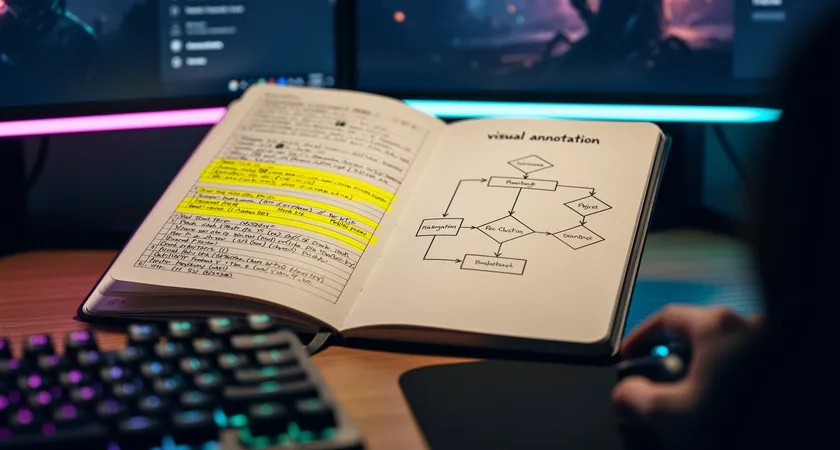
A practical, three-phase framework for the first 14 days
Instead of diving headfirst into ranked flex queue, treat the first two weeks post-patch as a distinct mini-season. This structured approach can flatten the win rate drop curve and accelerate your recovery.
Phase 1: The Information Diet (Days 1-3)
Do not play ranked. Your goal is to consume, not produce. Assign each team member a specific, narrow research focus. One studies professional analyst streams for early item build consensus. Another reviews high-elo solo queue stat websites for win rate spikes on specific champions. A third focuses on objective timing data. Gather this intelligence separately, then synthesize it in a single, brief team meeting. The output should be a shortlist: two to three objective priorities to test, two to three champion picks per role that seem overperforming, and one major 'do not force' strategy from the previous patch.
Phase 2: The Focused Lab (Days損4-10)
Enter the flex queue with a strict experimental mindset. Each session has one primary hypothesis to test. For example, 'Tonight, we prioritize first dragon over first Herald in all games, regardless of lane states.' Or, 'We will test the new bruiser item on our top laner in three games and then switch to the old standard for three games for comparison.' You must record the results. This turns losses into data. Was the dragon priority successful? Did it lead to earlier lost towers? The goal is not to win every game. It's to validate or invalidate your early hypotheses about the meta.

Phase 3: The Consolidation (Days 11-14)
By now, you have data. You know which of your initial assumptions were wrong. You've likely identified one or two new strategies that work for your team's style. Now, you begin to refine. Run the successful compositions again. Tighten the timings. Work on the execution of the new priority calls. This is when you start playing to win again, but with a playbook adapted to the current patch. Your win rate should begin its climb back.
When adaptation isn't enough, and what to look for
Sometimes, despite your best efforts, the win rate doesn't rebound. The drop is steep and stays steep. This is a critical signal. It often indicates a deeper disconnect between your team's core identity and the demands of the new meta. Perhaps you are a meticulous, scaling-oriented team, and the patch brutally favors chaotic, early skirmishing. You can try to adapt, but you're fundamentally playing against your own strengths.
In these cases, continued DIY grinding has diminishing, even negative, returns. Frustration builds, communication suffers, and the team's foundation cracks. This is the point where an external perspective transitions from a luxury to a necessity. A qualified third party, a coach or an analyst, doesn't bring you magic solutions. They do something more valuable: they hold up a mirror to your process. They can spot if you're correctly diagnosing problems or just treating symptoms. They can tell you if your 'adaptation' is just a slight modification of a doomed strategy, or a genuine pivot.
The most common pitfall they help teams avoid is the sunk cost fallacy. 'We've practiced this new engage comp for 20 hours, we have to make it work.' An outside voice can ask the hard question: 'Is this comp viable, or should you shelve it and double down on the one style that still works for you this patch?' That objective assessment can save a team weeks of tilt and preserve morale for the next patch cycle.
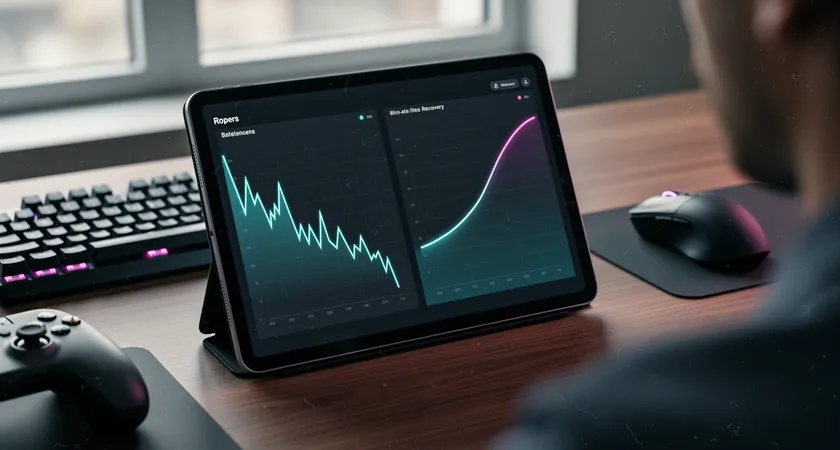
Your group's win rate after a patch isn't just a number. It's a diagnostic tool. A sharp drop is expected. A prolonged slump is a message. The initial disruption is universal, a tax paid by every coordinated team. The recovery speed, however, separates reactive groups from resilient ones. It tests your team's ability to learn not just new champion mechanics, but to rebuild your shared strategic language from the ground up. Focus first on identifying which of the four system shocks hit you hardest. Run your two-week adaptation cycle with discipline, treating losses as paid-for data. If the curve doesn't bend upward, consider that the problem may not be your play, but your perspective. The true test of a flex team isn't winning in a stable meta. It's navigating the chaos of change without losing your identity in the process.
FAQ
How long does it usually take for a flex 5 team win rate to recover after a major patch?
For most organized teams following a structured adaptation process, you should see the win rate begin to recover within 10 to 14 days. The first week is typically the lowest point, as teams are testing and discarding strategies. A full recovery to pre-patch levels can take two to three weeks, depending on how drastically the patch changed the meta relevant to your team's style.
Should we avoid playing flex queue ranked right after a patch?
Yes, for at least the first 3 to 4 days. Treat this period as a research phase, not a performance phase. Playing ranked immediately often cements bad habits based on pre-patch assumptions. Use this time to gather data from high-level streams, stat sites, and patch analysis, then enter queue with specific, testable hypotheses rather than a goal to win.
What is the most common mistake flex teams make after a patch?
The most frequent mistake is attempting to adapt individually rather than as a system. Each player researches their own role, but the team fails to rebuild its shared priorities and timings. This leads to coordinated plays that fall apart because members are operating on different assumptions about power spikes, objective value, and win conditions.
Does playing more games after a patch help you adapt faster?
Only if those games are structured experiments. Mindlessly spamming games often reinforces incorrect interpretations of the meta. Faster adaptation comes from focused testing, changing one or two variables per gaming session and deliberately reviewing the outcomes, not from sheer volume of play.
How can we tell if our win rate drop is normal or a sign of a bigger problem?
A drop of 10-15 percentage points in the first week is common. A bigger concern is if the win rate fails to show any upward trend after two weeks of focused adaptation, or if team morale and communication deteriorate sharply. This can indicate a fundamental clash between your team's core strengths and the patch's demands, requiring a strategic pivot rather than just tactical tweaks.
Are certain team compositions more vulnerable to post-patch win rate drops?
Teams reliant on very specific, high-synergy compositions or a single, non-meta win condition are most vulnerable. For example, a team that only wins through late-game hyper-carry protection may struggle if a patch drastically speeds up game tempo. Teams with a broader champion pool and more flexible playstyles generally weather patch changes with less severe win rate impact.