Get More From Coaching Sessions With Your Stack

Your team logs in for a scheduled coaching session. The first fifteen minutes disappear into checking replay recordings, debating which game to review, and waiting for someone's client to update. By the time the coach gives their first piece of actionable feedback, half the session is gone. This scenario is a common drain on resources, budget, and morale for serious Flex 5 teams. Coaching is a powerful accelerator, but its value is dictated by what happens before the coach joins the call and after they leave. To get more from coaching sessions with your stack, you must engineer the environment for learning. This means shifting from a passive, reactive model to an active, operational one. The difference isn't just a better hour with a coach; it's the tangible climb in your team's coordination and your collective win rate. To go deeper, you can also read How AI Coaching Is Changing Amateur LoL Teams.
From Passive Recipients to Active Architects
Treating a coaching session as a blank slate where the expert imparts wisdom is the first mistake. The most effective teams approach their coach not as a storyteller, but as a specialized consultant. They come with a prepared brief. This document, however simple, frames the entire engagement. It answers three critical questions: What specific problem are we trying to solve? What evidence do we have of it? What have we already tried? To go deeper, you can also read 5 Stats to Review After Every Stack Session.
For instance, a brief shouldn't state "we lose mid-game." A prepared brief says: "In our last seven games, our average gold lead at 15 minutes is +1.5k, but we lose 70% of games where the first Baron is contested. We suspect our vision collapse around objectives and our jungler's flank timing. We've tried committing two control wards to each major objective pit and having our support call a ten-second prep timer." This level of specificity transforms the session. The coach can immediately analyze your attempted solution, critique its execution in the provided replays, and offer a higher-level alternative. The session becomes a collaborative workshop on your defined problem, not a generic lecture on macro play.

Crafting the Pre-Session Dossier
Building this brief is a team responsibility, ideally led by the shot-caller or most analytically minded player. Start by aggregating data. Use your match history on platforms like Lol-Tracker to identify patterns. Look beyond wins and losses. Filter for games where a specific champion was picked, where a particular objective was lost, or where games stretched beyond 35 minutes. The goal is to move from feelings, "their jungler always gets ahead", to observable, repeatable events.
Next, select one or two replay files that perfectly exemplify the pattern you've identified. The time investment here is critical. Watching a full 40-minute replay is inefficient. Instead, use the recording tool's timeline to bookmark key moments: the level 3 jungle path, the bot lane dive at 6:30, the Baron setup at 24:00. Share these bookmarked replays with your coach at least 24 hours in advance, along with a two-paragraph summary of the pattern and your hypothesis. This allows the coach to prepare targeted analysis, saving precious live session time for discussion and simulation, not watching gameplay they've never seen.
Optimizing the Live Session for Muscle Memory
With the groundwork laid, the live session becomes a dynamic training ground. The primary pitfall teams face here is remaining in "viewer" mode. They watch the coach draw on a map, nod in agreement, and take notes. Learning is passive. The goal must be to create active recall and simulated pressure. This means integrating drills into the session itself.
A powerful technique is the "freeze-frame" drill. When reviewing a critical mistake, like a lost teamfight, pause the replay at the exact moment the engagement was decided, perhaps when your frontline mispositioned. Instead of just explaining the error, the coach should task your team with a live comms re-enactment. "Okay, replay is paused at 27:14. Without looking at the minimap again, each of you tell me right now: where do you think their jungler is, and what is your very next command?" This forces players to articulate their decision-making under scrutiny, revealing gaps in game state awareness that simple observation misses.
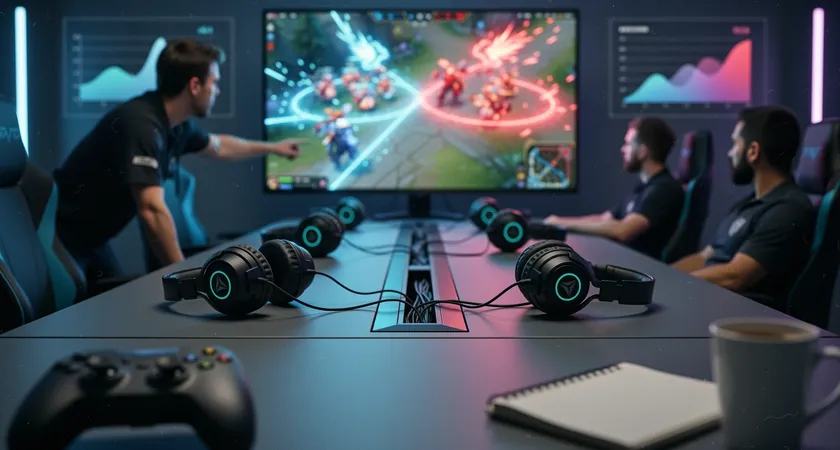
Another method is the limited-scope custom game. If the session's theme is early jungle tracking, don't just talk about ward placements. Dedicate the last 20 minutes to a 1v2 or 2v2 custom game on Howling Abyss or in the jungle with specific rules: no killing before 3 minutes, only goal is to track and ping the opposing jungler's path. This compressed, repetitive practice builds the neural pathways far faster than theoretical discussion. The coach's role shifts from lecturer to drill conductor, observing your team's execution in real-time and providing micro-corrections.
The Critical 48-Hour Integration Window
The session ends. The coach disconnects. This is where the vast majority of coaching value evaporates. Notes are saved in a Discord channel never to be opened, and the team queues for ranked with a vague notion to "play better around objectives." To prevent this, you need a formalized post-session integration protocol. The most effective teams treat the 48 hours following a coaching session as a mandatory implementation phase.
First, within one hour of the session ending, the team leader should post a distilled summary in your team's primary communication channel. This isn't a transcript. It's a list of no more than three concrete, executable action items. Format them as commands: "1. On blue side, our support MUST place a control ward in the pixel brush opposite red buff at 1:10. 2. When setting up for Dragon, our mid laner calls 'flank check' 15 seconds before spawn. 3. In teamfights, our ADC's first comms priority is to name the single biggest threat before the fight starts." These items become your team's focus for the next week of play.
From Notes to In-Game Prompts
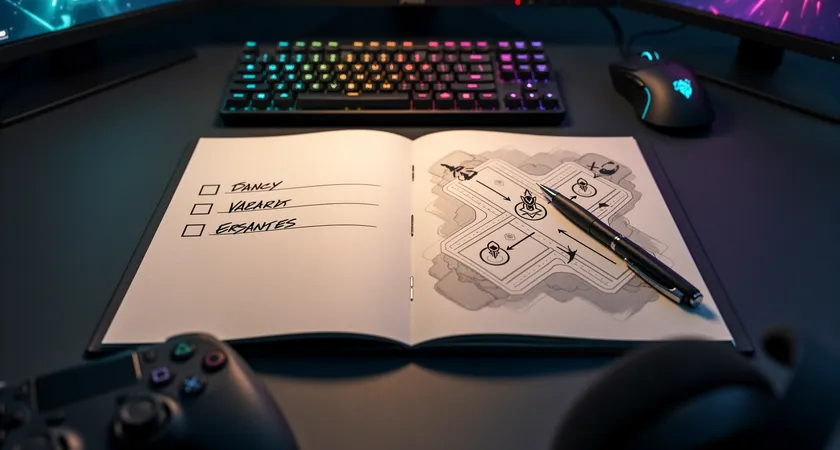
Action items are useless if forgotten in the heat of a match. The next step is to build systems that force recall. Some teams use a physical sticky note on their monitor with a one-word reminder like "WARD" or "PING." More tech-savvy stacks use overlay apps or even modify their in-game chat macros. For example, creating a macro that types "/all gl hf" at game start could be changed to a private message to your team: "/team Dont forget: Track jg early." The act of creating and seeing these prompts embeds the coaching lesson into your gameplay loop.
Finally, schedule a brief, 15-minute team huddle two days after the coaching session. The sole agenda: review the action items. Watch a clip from one of your post-coaching games. Did you execute the ward timing? Did the flank check happen? This accountability check transforms coaching from an isolated event into a continuous cycle of improvement. It also generates clear feedback for your next session. You can tell your coach, "We implemented the pixel brush ward. It worked three times, but in this fourth game, here's how the enemy jungler pathed around it..."
Identifying When DIY Hits Its Limits
A team that masters pre-session prep, active drilling, and post-session integration can extract tremendous value from any coaching hour. Yet, there is a ceiling to self-guided improvement. Recognizing that ceiling is not an admission of failure; it's a strategic assessment. One common limit is diagnostic blindness. You can prepare a brief on why you're losing mid-game, but your entire hypothesis might be wrong. You're focused on vision, but the core issue might be your team's default itemization against mixed damage comps. An external expert brings a dispassionate, systemic view that cuts through your team's internal biases and meta assumptions.
Another frequent plateau involves conflict resolution. Coaching often reveals strategic disagreements between players, maybe your jungler and mid laner have fundamentally different philosophies on lane priority. A teammate can facilitate this discussion, but an experienced third-party coach acts as a mediator. They can reframe competing ideas not as personal critiques, but as compositional or meta choices, depersonalizing the conflict and guiding the team toward a data-backed consensus. This is a nuanced facilitation skill that goes beyond game knowledge.
Scaling Insights Across Your Roster and Goals
As a Flex 5 stack evolves, so do its needs. Perhaps you're preparing for a specific tournament, experimenting with a completely new champion pool, or integrating a substitute player. These are moments where generalized coaching becomes less effective than highly specialized, programmatic support. The prep work we discussed remains vital, but the scope of the engagement changes.
Consider a team aiming to dominate a tournament known for a particular meta, like heavy early skirmishing. A DIY approach might involve spamming scrims. A structured approach with expert support would involve a targeted analysis of the tournament's past matches, the creation of a tailored champion draft protocol, and the design of specific early-game invasion and counter-invasion drills to run in custom games. The coach's role expands from a session leader to a temporary strategic director, helping you build a custom system for a specific goal.
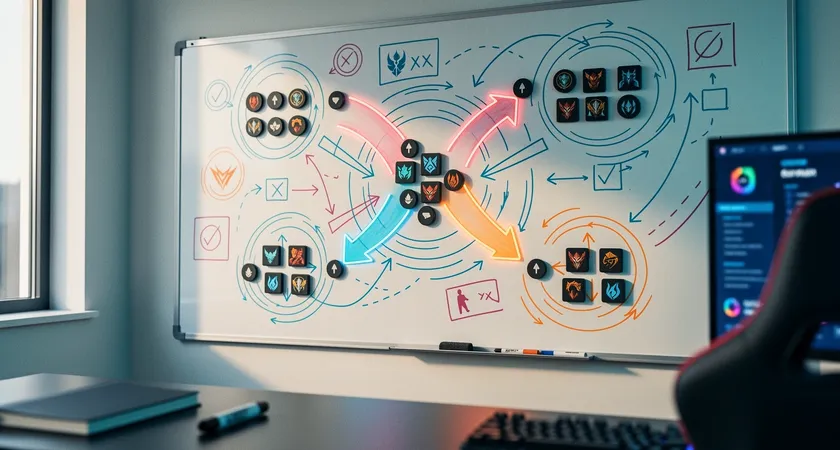
Similarly, integrating a new player, even a talented one, can disrupt months of built-up synergy. An external coach can expedite this process by mapping the new player's style to your existing framework, identifying the quickest pathways to cohesion, and designing duo-specific exercises for the player and their lane partner or jungle duo. This saves weeks of potentially frustrating trial and error in ranked games.
Translating Theory into Consistent Ranked Gains
The ultimate measure of a coaching session's value is not the insight gained during the hour, but the LP accumulated in the weeks after. The framework outlined here, meticulous preparation, active session participation, and rigorous post-session integration, is engineered to bridge that gap. It forces abstract concepts into concrete habits. When a team commits to this process, coaching stops being an occasional boost and starts functioning as the engine of their iterative improvement cycle.
Begin with your next scheduled session. Don't just show up. Create a one-page brief focused on a single, evidenced pattern. Send your bookmarked replays ahead of time. During the call, challenge yourselves and your coach to move beyond review into simulation. Afterward, lock in your three action items and build the reminders that will keep them in front of you. The quality of your coaching is not just something you receive. It is something you actively build, session by session, game by game.
FAQ
How do I prepare a replay for a League of Legends coaching session?
Don't just send the full VOD. Use the replay client's bookmark feature to mark 3-5 key moments that illustrate your team's problem, like a failed objective take or a lost level 3 skirmish. Write a short note for each bookmark explaining why it's relevant. Send these bookmarked files to your coach 24 hours in advance so they can analyze the specific plays, not waste session time watching a full game.
What should a Flex 5 team talk about after a coaching session?
Hold a 15-minute huddle within a day. Don't rehash everything. Distill the session into 2-3 concrete, immediate action items, like 'support places a ward at pixel brush at 1:10 every game.' Then, decide how you'll remind yourselves in-game, whether through a chat macro, an overlay note, or a pre-game verbal checklist. This turns discussion into executable protocol.
How can we make coaching sessions more interactive and less lecture-based?
Request drills. Ask your coach to pause the replay at a critical moment and put your team on the spot. Have each player state their intended next move or guess an enemy's location without looking. Propose using the last 20 minutes for a focused custom game with a single goal, like practicing jungle tracking without fighting. This builds muscle memory faster than passive listening.
Our team argues after coaching feedback. How do we handle conflicting opinions?
Frame disagreements as strategic experiments, not personal critiques. Use the coach's feedback as a neutral starting point. Say, 'The coach suggested X. Let's try it for three games and track the result.' This moves the conversation from 'I'm right' to 'what does the data show.' If conflicts persist, a skilled third-party coach can mediate by depersonalizing the issue and focusing on compositional fit.
How often should a Flex 5 team get coaching to see real improvement?
Frequency matters less than the cycle of implementation. A monthly session with strong pre-work and two weeks of focused practice on the action items is far more valuable than a weekly session with no follow-through. The goal is to master a few concepts at a time, not collect insights you never use. Schedule your next session only after you've integrated the lessons from the last one.