League of Legends Macro Guide for 5v5 Teams

Your team knows the combos. Your mechanics are sharp. Yet somehow, game after game, the enemy team is always in the right place at the right time, securing objectives while your squad is scattered. This isn't a problem of individual skill; it's a breakdown in macro play. For Flex 5 teams, especially those transitioning from Solo Queue, the leap from understanding macro concepts to executing them as a synchronized unit is the single biggest performance gap. This guide moves beyond generic 'rotate better' advice to deliver the actionable frameworks and communication protocols that turn five players into one team. We'll break down the components of a cohesive macro strategy, from the three-minute plan to late-game soul point pressure, focusing specifically on the challenges unique to coordinated 5v5 play. To go deeper, you can also read Balancing Macro and Micro Play for Teams: Unlocking Flex 5 Success in League of Legends.
From Solo Queue Instincts to Team Macro Fundamentals
One player sees a wave crashing at a Tier 2 turret and decides to catch it. Another senses a numbers advantage in the river and pings for a fight. In isolation, both decisions can be correct. In a team context, they can be catastrophic. The first step in building a team macro identity is establishing a shared vocabulary and a set of fundamental priorities that override individual instincts. To go deeper, you can also read Setting Realistic Improvement Goals for League of Legends Flex 5 Teams.
For a coordinated team, macro isn't just about what you do; it's about what you do together. This starts with a simple hierarchy of objectives. While tier lists exist, your team's specific hierarchy should be agreed upon. A common, effective baseline prioritizes Nexus > Baron/Elder Dragon > Soul Point Dragon > Towers (especially Inhibitors) > Standard Dragon/Rift Herald > Vision Control > Farm. This list isn't revolutionary, but the commitment to it is. Every cross-map decision, every split-second rotation, must be filtered through this lens. If securing a Mountain Soul is your win condition, then that Dragon spawn dictates all other movements for the ninety seconds prior, not just the thirty.
The Three-Minute Rule and Shared Intent
A practical tool we recommend to teams is the 'Three-Minute Rule.' At any given moment, your team should have a clear, verbalized objective for the next three minutes of game time. This is not a vague 'scale' or 'farm.' It's a specific, actionable goal: 'We are setting up vision to force Baron at 20:15' or 'We are conceding this Dragon to get the top lane Inhibitor.' The jungler or shot-caller should state this objective clearly after every major event (objective take, teamfight, death). This ritual forces proactive planning instead of reactive scrambling and aligns all five players toward a single endpoint.
Shared intent closes the gap between a good macro call and its flawless execution. If your team's three-minute plan is to siege mid, but your top laner is silently planning a side lane split push, the plan fails before it starts. Verbalizing the plan, even briefly ('sieging mid, all hands'), ensures everyone's camera is in the same place and their abilities are on standby for the same fight.
Building Your Macro Gameplan: Early, Mid, and Late Game Transitions
Let's map the Three-Minute Rule onto a full game. Early game macro for a 5v5 team is less about explosive plays and more about constructing a foundation. Your primary resource here is information. While the toplaner might focus on a cheater recall timer, the team's macro focus should be on establishing control over one quadrant of the jungle, typically linking your winning lane with your jungler's path. If your bot lane has priority, that's your signal to own the bottom river and dragon pit. This isn't just about placing a ward; it's about having your mid laner and jungler positioned to punish any enemy who tries to challenge that control. The goal is to create a 'safe zone' where your team can operate with superior information, leading to the first major objective takes.
The transition from early to mid-game is where most Flex teams falter. It often happens around the 14-minute mark, when outer turrets start falling and the map 'opens up.' This is a critical decision point. The default, often wrong, instinct is for all five players to group mid and ARAM. Instead, you must consciously choose a macro setup. The two most effective for organized teams are the 1-3-1 split push and the 4-1 objective siege.
Executing the 1-3-1: More Than Just Splitting
A successful 1-3-1 requires specific champion picks, but more importantly, it demands a rigorous discipline in timing and threat assessment. The three players in the middle are not trying to win a fight; they are applying just enough pressure to occupy at least three enemy champions. Their job is to be a durable, annoying distraction. The two split pushers, in the side lanes, must operate on a shared clock. They push waves in sync, reaching the enemy turret at roughly the same time. This stretches the enemy defense thin. The moment one splitter draws two or more enemies to answer, that is the signal for the other splitter and the mid group to force an objective cross-map. This requires constant communication: 'Two top, I'm backing off, you can force Dragon.' Without this, the split pushers die separately and the team achieves nothing.
The 4-1 Siege and the Power of Tempo
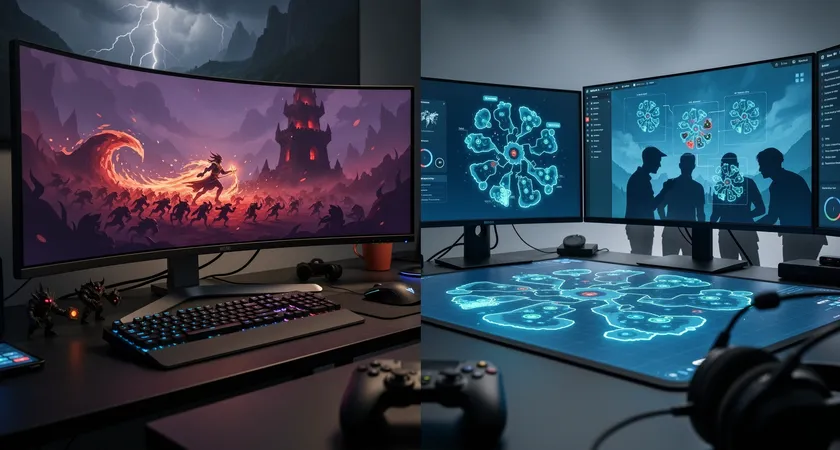
If your team composition excels at teamfighting, the 4-1 siege is your weapon. Here, the '1' is not a traditional split pusher, but a player with strong wave clear and escape, like a Corki or Jayce. Their role is to slow-push a side wave until it becomes a massive, crashing threat. As that wave builds, the group of four gathers mid. They do not engage a 4v5 fight. They posture, clear vision, and wait. The enemy team now faces a lose-lose choice: send someone to clear the massive side wave (creating the 4v3 advantage your team wants) or let the side wave take a turret. This strategy controls the tempo of the game, forcing the enemy to react to your timing. The key is patience. The siege group must resist the temptation to force a bad fight before the side wave creates its leverage.
The Communication Protocols That Make Macro Work
You can have a perfect macro plan on paper, but without clean communication, it dissolves into chaos. For Flex 5 teams, moving from the clutter of Solo Queue pings to a structured comms protocol is non-negotiable. This isn't about being a military unit; it's about reducing cognitive load and eliminating ambiguity.
First, designate primary roles. Who is the main shot-caller for macro movements? Often this is the jungler or support, but it can be any player with strong game sense. Crucially, when that person makes a definitive call ('rotate Baron now'), other voices should defer or ask quick clarifying questions, not debate. Second, establish a 'no noise' rule during critical execution. When engaging Baron or setting up a dragon contest, comms should be silent except for essential information: 'Jungle smite up in 5,' 'Leona no flash,' 'Zed flanking west.' The post-fight analysis happens after the objective is secured or lost.
A specific technique used by many competitive teams is 'staggered comms.' During downtime, the support or jungler lays out the next macro sequence: 'Our bot wave is pushing in 30 seconds. Top, slow push your wave. Then we'll all converge mid for a siege on their T2.' This gives everyone time to process their individual tasks before the play happens, leading to cleaner execution than a sudden 'group mid now!' shouted in panic.
Identifying and Plugging Your Team's Macro Leaks
Even with good frameworks, teams develop persistent macro leaks, repetitive errors that bleed small advantages until the game is lost. The most common leak for Flex teams is the 'victory disease' overchase. You win a fight 3-for-1 at the 25-minute mark. Instead of securing the free Baron or an Inhibitor, two players chase the lone survivor deep into the enemy jungle for 30 seconds while the others recall. The net gain is zero. Another endemic leak is the 'passive objective setup.' Your team pings Dragon is spawning in 30 seconds, but everyone returns to farming their own lanes. At spawn time, you scramble to the pit with no vision, no lane priority, and get ambushed.
Plugging these leaks requires post-game review focused solely on macro. Don't rewatch the failed teamfight. Watch the two minutes leading up to it. Why were you in that position? Did you have vision? Did you have a cross-map pressure option you ignored? A simple exercise is to watch your VODs on mute, following only the minimap. You'll see the story of your loss not in missed skillshots, but in disorganized blobs of player icons reacting too slowly to the map's demands.
The Trap of the Default ARAM
The late-game ARAM standoff is a macro failure state, yet it's the default for countless teams. It occurs when a team lacks the confidence or clarity to execute a split-push or cross-map play. They group mid because it feels safer, surrendering all map pressure and conceding farm to the enemy. To break this habit, you need a pre-agreed 'break glass' protocol. When your team has been grouped mid with no progress for more than a minute, your shot-caller must trigger the protocol: 'Okay, ARAM mode. Bot, go catch the wave at our T2 and then slow push. We'll hover mid.' This one rotation instantly creates map pressure and forces the enemy to make a choice, breaking the stalemate.
When DIY Macro Hits Its Limits: The Value of External Perspective
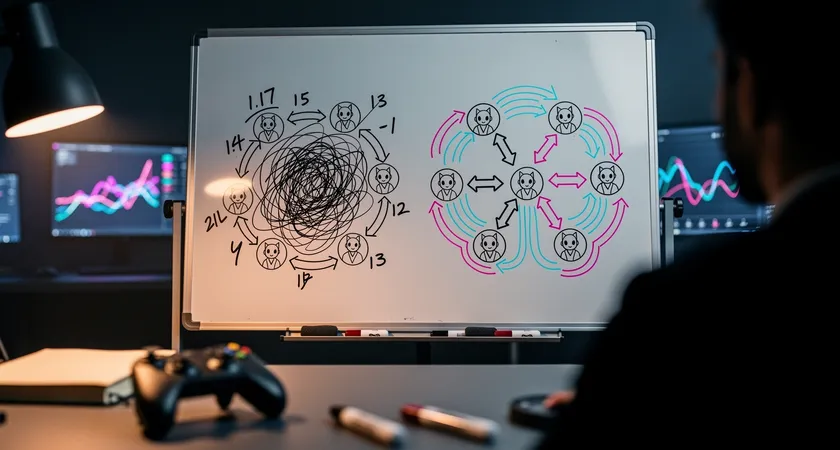
You've implemented the Three-Minute Rule. You're reviewing VODs. You're working on your comms. Progress is real, but then you hit a plateau. You can't seem to crack into the next tier of ranked Flex. This is a normal, almost inevitable, stage. The problem often lies in the fact that you are both the player and the analyst. Your internal perspective is limited by your own assumptions and meta perceptions. You might be meticulously executing a macro plan that is, fundamentally, outdated or poorly suited to your team's specific champion pool.
For example, your team may be forcing 4-1 sieges because a guide said so, but failing to account for your ADC's preference for short-range champions, making seiging unsafe. An external coach or analyst doesn't just see what you're doing wrong; they can identify why you're defaulting to those actions. They spot the patterns invisible to you: that your jungler consistently paths away from the lane with priority, or that your vision lines are always defensive, never enabling proactive plays. They bring a library of comparative data, not vague '67% of teams' stats, but observations from working with other squads on what effective macro transitions actually look like in your specific ELO bracket.
The most common feedback from teams that bring in an outside perspective is surprise at how a few targeted adjustments can dismantle a long-standing bad habit. It might be as simple as changing the timing of your first deep ward, or re-prioritizing which early tower to focus. This isn't about a coach playing the game for you; it's about equipping you with the diagnostic tools to self-correct faster. When your own review sessions start going in circles, 'we just need to fight better', that's the signal that an expert eye could provide the missing link between your effort and your results.

Mastering macro for a 5v5 team is a continuous process of learning, applying, and refining. It begins with replacing Solo Queue individualism with a shared hierarchy of goals and a simple planning ritual like the Three-Minute Rule. From there, you build deliberate strategies for map transitions, whether through the calculated pressure of a 1-3-1 or the forced tempo of a 4-1 siege. None of it works without disciplined communication that prioritizes clarity over clutter. Your progress will be marked by identifying and plugging the specific leaks, like the overchase or the passive setup, that hold you back. Ultimately, the goal is to develop a team-wide macro intuition, where all five players read the map as one entity, making decisions not based on what they each want, but on what the team needs to win. For many teams, reaching that final level of synchronicity requires a viewpoint they can't provide themselves, turning the complex puzzle of the map into a clear, executable plan.
FAQ
What's the most important macro concept for a new Flex 5 team to learn first?
The single most important concept is establishing and committing to a shared objective hierarchy. Before anything else, all five players must agree on what's most important to win the game, like Nexus > Baron/Elder > Soul Point > Towers. Every decision, from chasing a kill to recalling, is filtered through this list. Without this common foundation, you'll have players working at cross-purposes all game.
How do we stop always ARAMing in the mid-game and actually make a plan?
Implement the 'Three-Minute Rule.' After every major event, your shot-caller should verbally state a specific objective for the next three minutes, like 'taking the top T2 turret' or 'setting up for Mountain Dragon.' This forces proactive planning. To break an ongoing ARAM, have a pre-agreed protocol where one player is sent to slow-push a side lane, creating the map pressure needed to force the enemy team to make a bad decision.
Our team comms are a mess during big objectives. How can we clean them up?
Designate a primary shot-caller for macro and enforce a 'no noise' rule during critical moments like Baron or Dragon contests. Only essential, concise information should be called out: 'Jungler no flash,' 'Zoe sleeping in bush,' 'smite up in 3.' Save the discussion and analysis for after the fight. Staggered comms, where the plan is explained during downtime before execution, also drastically reduce chaotic mid-fight talking.
We understand split pushing in theory, but we always die doing it. What are we missing?
Successful split pushing is about synchronized timing and communication, not just being in a side lane. The split pushers must push their waves in sync to apply pressure simultaneously. The moment one splitter draws multiple enemies, they must immediately communicate that so the rest of the team can force an objective elsewhere, like 'Two top, go Baron.' If you're dying, you're likely pushing on your own timer without this live coordination.
How do we effectively review our own macro mistakes after a loss?
Mute the audio and watch the replay focusing only on the minimap. Track your team's movements as a whole. Look for the two minutes leading up to a lost objective or bad fight. Ask: Did we have vision? Did we have lane priority? Was there a better cross-map play we ignored? Identify patterns, like consistently pathing away from the lane with pressure, rather than just blaming the lost teamfight itself.