Tournament Draft LoL: pick and ban strategy for teams

You've practiced the scrims. You've analyzed the meta. Your team communication is on point. Then the draft begins, and suddenly you're on the back foot, forced into a suboptimal composition or facing a direct counter to your star player's champion. A poor tournament draft in League of Legends can lose a series before a single minion spawns. For teams in Flex 5 or amateur circuits, mastering this strategic phase is the single biggest lever for improving win rates. This guide breaks down pick and ban strategy from a team coordinator's perspective, moving beyond solo queue logic to actionable frameworks for coordinated play. We'll cover how to establish champion priority, build coherent team compositions, and execute a flexible draft plan that adapts to pressure. To go deeper, you can also read LoL 5v5 weekend queue: how teams should prepare.
Moving beyond tier lists: Redefining champion priority for your squad
Most draft discussions start with a tier list. While meta strength matters, a tier list is a starting point, not a playbook. Champion priority for a tournament team is a three-dimensional matrix: it balances the meta's power picks with your team's unique mastery and the specific strategic identity you want to project. A champion with a 52% win rate in solo queue might be useless for your team if no one can pilot it effectively in coordinated play. To go deeper, you can also read LoL Ranked 5s: what competitive teams should know.
The first step is conducting an honest internal audit. Create a simple spreadsheet listing every player and their champion pool. Categorize them not just as "can play," but as comfort picks (high mastery, reliable under pressure), pocket picks (surprising, matchup-specific), and meta obligates (recently learned to cover a power pick). This exercise reveals your team's true draftable assets, which are often narrower than assumed.

Building your core strategic identity
Before you can draft effectively, you must know what you're drafting towards. Do you excel at fast, explosive teamfighting around objectives? Are you a patient, scaling team that wins through superior macro and late-game compositions? Perhaps your strength is in split-push and map pressure. Your core identity, often built around your most consistent players, should guide 80% of your drafts. If your mid laner is a world-class control mage player, forcing an assassin meta every game is a path to failure. Instead, build drafts that facilitate their strength: protect-the-carry comps, or compositions that can safely stall for their power spikes.
This is where "priority" gets personal. A champion like Orianna might be A-tier on a general list, but for your team, with your mid laner, she is an S+ must-pick or must-ban. Conversely, a meta-dominant jungler like Viego might be a lower priority if your jungler's style doesn't synergize with his reset mechanics. The goal is to arrive at a shortlist of 12-15 champions that represent your team's highest-percentage winning plays.
The anatomy of a phased draft: A turn-by-turn decision framework
Tournament drafts follow a set order: Blue side picks one champion, then red side picks two, then blue picks two, and so on. This structure creates distinct phases, each with different strategic goals. Treating the draft as one long sequence is a mistake. Instead, break it into three acts: the opening, the mid-draft, and the counterpick phase.
The opening phase (first three picks) is about securing power and denying pain. If you are on blue side, your first pick is the most valuable in the draft, you get access to the single strongest meta champion available. Use it to either secure a universally powerful flex pick (a champion that can go to multiple roles, like Graves who can jungle or top) or to take the crown jewel of the meta that your team can play. Red side's first turn, two picks back-to-back, is where you can establish a powerful duo synergy. This is the classic moment to pick a jungle-mid combo like Elise and Syndra for early priority, or an ADC-support pair like Xayah and Rakan.
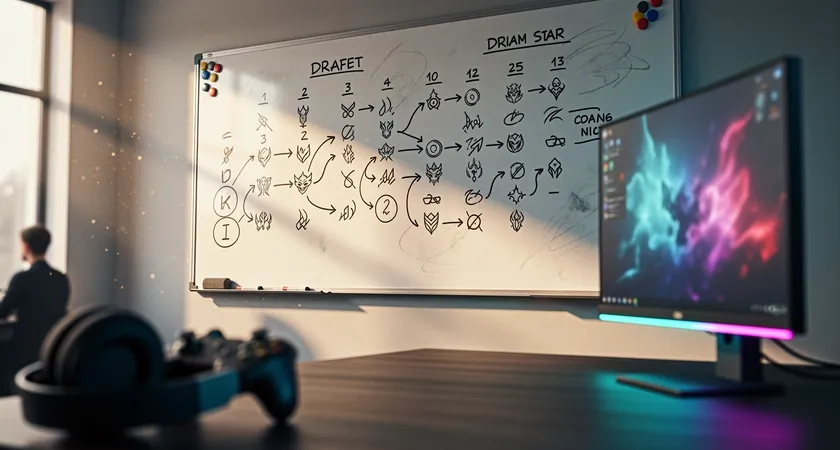
The mid-draft (picks four, five, and six) is where team composition starts to crystallize. By now, you've seen three or four of the enemy's champions. Your decisions here should fill out your composition's needs. Do you need engage? Frontline? Wave clear? Magic damage? Avoid the trap of picking a champion just because it's "good." Ask instead: "What role does this pick fulfill in our win condition?" If you have a hyper-carry ADC like Jinx, your next picks might be a protective support like Tahm Kench and a peel-oriented mid like Lulu.
Leveraging the final counterpick slots
The final phase of the draft (usually the last two picks, one for each side) holds immense power. These are your dedicated counterpick slots, most often used for top lane and mid lane. The goal here isn't just to win lane; it's to pick a champion that negates a key component of the enemy's strategy. If the enemy has drafted a dive-heavy composition with Camille and Nocturne, a final-pick top lane Poppy can completely disrupt their engagement with her Steadfast Presence. If the enemy mid is a roaming assassin like Talon, a champion like Twisted Fate can match roams or Galio can negate burst.
The critical mistake teams make is wasting this slot on a comfort pick that doesn't address the draft. Even if your top laner is a great Fiora player, if the enemy has a Malphite and a Lulu, you've just drafted into a teamfight wall you cannot penetrate. This phase requires the most flexibility and the deepest champion pool understanding from your players.
Ban psychology and information warfare
Bans are often treated as a simple list of "OP champs." In tournament play, they are your first and most direct tool for shaping the game. There are three types of bans: meta bans, targeted bans, and comfort bans. A balanced ban strategy uses all three.
Meta bans remove the universally acknowledged, often statistically overpowered champions that you either cannot or do not want to play against. These are the staples that dominate the first three ban slots for both teams. However, blindly following the community ban list can be a trap. If a champion like Aphelios has a 60% ban rate but your ADC is a specialist who thrives against him, letting him through could be a calculated risk that nets you a power pick elsewhere.
Targeted bans are the sharpest tool in your kit. These are bans aimed directly at a specific player on the enemy team. This requires pre-game research. Does their mid laner have a 80% win rate on LeBlanc over 50 games? That's a prime target. Does their jungler only play three champions at a high level? Banning one can significantly narrow their effective pool. This is where VOD review of your opponents pays immediate dividends.
Comfort bans are the most overlooked. These are bans of champions that are not necessarily S-tier, but that your team collectively struggles to play against due to style or composition. For example, a team that prefers slow, scaling fights might perma-ban Hecarim for his relentless early-game pressure, even if he's only considered A-tier. The decision here is internal, not external.
Your ban phase also conveys information. Are you banning three ADCs? You might be signaling your own bot lane priority, or trying to bait the enemy into a reaction. Sometimes, leaving a power pick open is a bluff, you might have a prepared counter ready, forcing the enemy to use their first pick on it and allowing you to secure two other strong champions.
Common draft traps and how amateur teams fall into them
Watching amateur tournament replays, the same draft pitfalls appear with frustrating regularity. Recognizing these traps is the first step to avoiding them.
The first is the "We won with it last time" trap. Just because a composition worked in a previous round does not mean it's optimal for the next. Different opponents have different weaknesses. Drafting the same five champions repeatedly makes you predictable and easy to prepare for. Your strategy should have a core identity, but within that, you need variance and adaptability.
The second, more technical trap is "AP/AD imbalance." It sounds basic, but under draft pressure, teams often end up with four physical damage dealers and one token magic damage source. This allows the enemy team to itemize effectively, stacking armor becomes overwhelmingly cost-efficient. A good rule of thumb is to ensure at least two reliable sources of significant magic damage in your composition, forcing the enemy to split their defensive itemization.
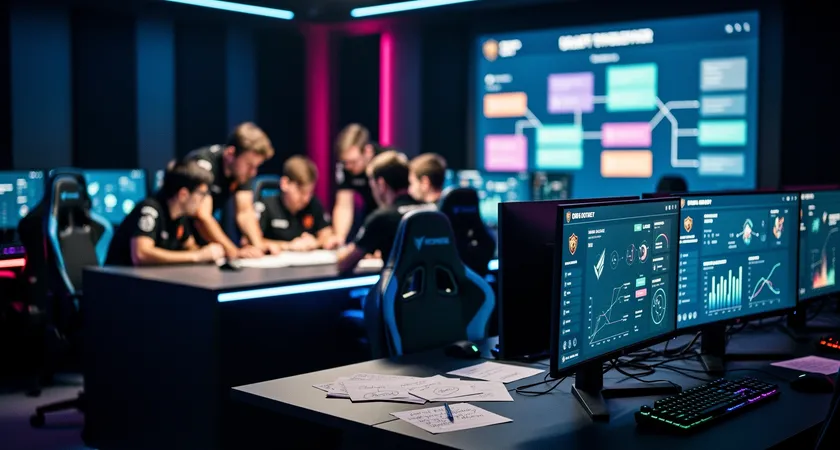
The third trap is the "win condition paradox." This occurs when a team drafts champions with conflicting game plans. You have a late-game hyperscaling bot lane like Kog'Maw and Lulu, but also an early-game snowball jungler like Lee Sin and a lane-bully top like Renekton. Does your team fight early to get Lee ahead, or farm passively to scale for Kog'Maw? This indecision often leads to a disjointed, ineffective game where no champion hits their intended power window. Every pick should reinforce a single, clear path to victory.
Finally, there's the "counterpick overcommitment." In the zeal to win a specific lane, a team will use their final pick on a hard counter that fits nowhere in their overall comp. You counter the enemy top lane Gnar with Quinn, but now you have a squishy, split-push marksman in a composition that desperately needed a frontliner for teamfights around Dragon. You won the battle but lost the war. The counterpick must serve the broader strategy.
From theory to practice: Developing your team's draft protocol
Knowing the concepts is one thing. Executing them under the 30-second timer of a live tournament draft is another. This requires a practiced protocol, clear communication roles, and preparation that happens days before the match.
Start with a pre-draft meeting. Review your opponent's known preferences and recent matches. Based on your internal priority list and their tendencies, establish a flexible game plan A and B. Plan A is your ideal draft based on your identity. Plan B is your adaptation, what you will do if they ban or pick key pieces of Plan A. Having these two skeletal frameworks prevents the draft from devolving into panic.
Assign clear in-draft roles. One person, usually the shot-caller or coach, should be the "draft captain." Their job is to make the final call when there is disagreement and to manage the timer. Another player can be tasked with tracking the enemy composition's strengths and weaknesses aloud ("They have no hard engage yet," "All their damage is physical"). This distributes the cognitive load.
Practice drafting. Use custom lobbies or online draft simulators to run through scenarios. Draft against hypothetical teams. Draft from red side versus blue side. Have someone on your team mimic an opponent's known strategy. These dry runs expose flaws in your communication and gaps in your champion pool preparedness long before a real match. The feedback from these sessions is often brutally revealing. You might find that your planned power pick duo falls apart against common counters, or that your team consistently forgets to secure wave clear.
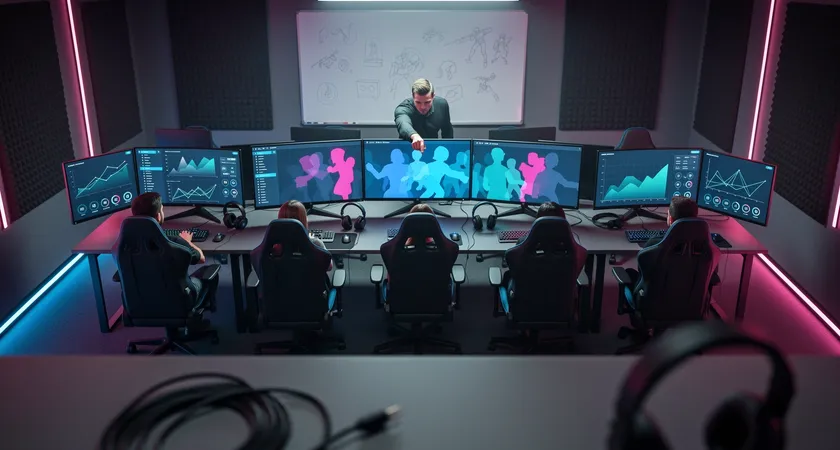
For many committed amateur and Flex 5 teams, this is where the DIY approach hits its ceiling. The analysis required, scouting opponents, maintaining champion pool databases, simulating drafts, and developing layered strategies, becomes a part-time job. The gap between a prepared team and an unprepared one in the draft phase is often insurmountable, regardless of mechanical skill. This strategic layer is why organizations employ analysts and dedicated coaches. Their value isn't just in knowing the meta; it's in building systems that transform individual champion knowledge into a replicable, stress-tested draft process that gives your team a tangible advantage before the loading screen even appears. For teams serious about tournament results, investing in this expertise or developing it internally is not an extra cost, it's a prerequisite for converting practice into wins.
A tournament draft is a complex puzzle with limited time and imperfect information. Success doesn't come from memorizing a single solution, but from having a robust process to find the best possible one each time. By defining your priority around your players, mastering the phased draft framework, using bans strategically, avoiding common traps, and drilling your execution, you turn the champion select screen from a moment of anxiety into your first and most decisive victory.
FAQ
What is the most important pick in a League of Legends tournament draft?
The most strategically valuable pick is usually the first pick for blue side, as it gets the single strongest meta champion. However, the most impactful picks are often the final counterpick slots for solo lanes. These picks can completely negate a key part of the enemy's strategy, turning a difficult matchup into a winning condition for your team.
How many champions should each player master for a flexible tournament draft?
For true flexibility, each player should have at least 3-4 comfort picks they can play at a tournament level. These should cover different roles within a composition. For example, a top laner might need a tank, a split-pusher, and a carry champion. Depth is more important than breadth, mastering a few champions perfectly is better than being mediocre on many.
How do you draft when you don't know your opponent's strategy?
When scouting information is limited, default to your team's core strategic identity and draft a composition you are most practiced with. Prioritize flexible champions that fit into multiple comps and avoid overly niche strategies. Use your bans to remove the most universally powerful champions that also happen to counter your preferred playstyle, creating a safer environment for your known game plan.
What is the biggest difference between solo queue and tournament draft strategy?
Solo queue drafting focuses on individual lane strength and meta tier lists. Tournament drafting is about building a cohesive team composition with a unified win condition. Synergy between champions, overall damage balance (AP/AD), and a clear strategic plan like teamfighting or split-pushing are all prioritized over simply winning each lane in isolation.
How should a team decide who gets the counterpick in draft?
Assign the counterpick to the player with the widest and most adaptable champion pool, or to the lane that is most critical to countering the enemy's win condition. If the enemy team is built around a hyper-carry mid laner, giving your mid the counterpick is wise. Often, the top lane is the designated counterpick slot because matchups there can be the most snowball-heavy.
Is it better to ban for your team's weaknesses or target the enemy's strengths?
A balanced ban phase does both. Start with 1-2 meta bans for overpowered champions. Then, use targeted bans to remove a signature champion from the enemy's best player if you have that intel. Finally, use at least one comfort ban to remove a champion your team historically struggles against, regardless of its general tier list ranking.