What Successful Premades Often Get Right

You've seen it before, maybe you've been it. A Flex 5 queue team, five friends or teammates, decent individual skill, yet somehow the sum of those parts never quite clicks. You win some, you lose more, and the post-game lobby dissolves into a blur of "my bad" and "if only." Meanwhile, other squads climb steadily, their coordination feeling like a practiced dance. The gap between a random collection of players and a true premade unit is vast, but it's not built on secrets. It's built on a series of deliberate, replicable decisions that successful teams consistently get right. This article breaks down those habits, moving from foundational setup to in-game execution, so you can bridge that gap yourself. To go deeper, you can also read LoL Ranked 5s: what competitive teams should know.
They Define Their Champion Pool Before the Queue Pops
The most common mistake a new Flex team makes is treating champion select like a Solo Queue experience. Everyone hovers their current main, with zero regard for synergy, lane priority, or composition. The successful premade solves this problem before the first ban is placed. They operate from a shared, limited champion pool. To go deeper, you can also read Season Rewards Differences in Flex Queue: What Every League Player Should Know.
Synergy Over Solo Carry Potential
This doesn't mean each player only has one champion. It means the team collectively agrees on 2-3 core composition archetypes. Are you a pick-comp team, relying on heavy crowd control from a Sejuani jungle and Twisted Fate mid to enable your Draven? Or are you a front-to-back siege team with a Jayce top, Ziggs bot, and poke-heavy disengage? Successful teams identify their preferred style and then assign champions to players that serve that style, even if it means someone plays a comfort pick that's a 7/10 for them personally instead of their 10/10 main.
In practice, we observe teams that draft for synergy win significantly more games at similar average individual skill levels than those who draft five independent power picks. A Lucian-Nami bot lane, practiced and understood, will almost always outperform a random Caitlyn paired with a Brand support, even if the Brand player has a higher mastery score.

The Comfort vs. Meta Balance
Successful premades also have a clear policy on the meta. They don't blindly chase every flavor-of-the-month S+ tier champion. Instead, they ask one key question: "Does this meta shift benefit or hurt our core compositions?" If a new item buffs artillery mages and your comp is siege-heavy, you adapt and maybe add one new champion to your pool. If the meta shifts towards early skirmishing and your comp is late-game scaling, you might need to adjust your early game pathing, not necessarily your entire champion pool. The principle is to control the variables you can. Your team's coordinated play on slightly off-meta comfort picks is a more reliable weapon than five players on meta champions with zero practiced synergy.
They Communicate in a Structured, Low-Noise System
Imagine a voice comms recording from a typical struggling team. It's a cacophony of reactive noise: "He's on me! He's on me!", "I'm dead.", "Where's the jungle?!", "Can we fight? Can we fight?" Now imagine the comms of a successful premade. It's quieter, predictive, and built on shared shorthand. They get communication right by treating it as a system, not a panic button.
The cornerstone is assigning primary voice roles. One player, often the jungler or support, is the primary shot-caller for objective timers and major engages. Another might be designated for tracking summoner spells and ultimate cooldowns. This isn't about creating a hierarchy, but about reducing cognitive load. When everyone is trying to track everything and make every call, important information gets drowned out.
Pre-Game Briefs and Post-Game Reviews
Communication starts before the fountain gates open. Successful teams spend 60 seconds in lobby discussing their win conditions. "We outscale, play for picks around dragon," or "We need to crush top side, I'll camp for Herald." This sets a collective intention. Post-game, they might spend another two minutes on a single, specific learning point. "Our vision line before the third dragon fight lost us the game. Let's all buy one extra control ward next time." This focused, incremental review prevents the blame-spiral and turns losses into a single, actionable adjustment for next time.
The language itself is precise. Instead of "careful jungle," they say "Khazix last seen top side, no vision river." Instead of "let's fight," they say "Malphite flash down in 20, my ult up, we can force Baron." This level of detail comes from practice and a shared commitment to clarity. It turns communication from a stream of consciousness into a tactical tool.
They Play Around Objectives, Not Kills
The Solo Queue mentality is kill-focused. A successful Flex team is objective-focused. Every action on the map is evaluated not by the gold it generates, but by the map pressure and objective control it enables. This is perhaps the single most important strategic shift a group can make.
Consider a common scenario: your team wins a 3-for-2 skirmish in the mid lane. The disorganized team will recall immediately to spend their gold, maybe typing "gj" in chat. The organized team will instantly assess the state of the map. Is the enemy jungler dead, making Baron a possibility? Can they secure vision deep in the enemy jungle to control the next dragon? Can they crash two waves into mid and top towers to create map pressure for the next objective spawn? They use the temporary numerical advantage to claim a permanent map advantage.
The Concept of Tempo and Sequencing
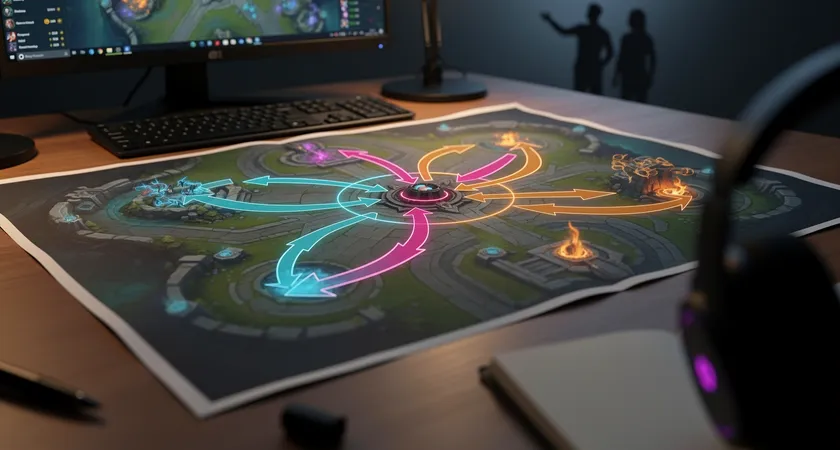
This objective focus creates a concept of tempo. Successful teams sequence their plays. They don't take a tower and then wander aimlessly. They use that tower's destruction to gain deeper vision, which allows them to safely secure the next dragon or Herald, which then allows them to pressure another tower. Each successful objective unlocks the next. They think in chains of cause and effect. If the enemy team commits three players to kill your split-pushing top laner, your immediate response isn't "sorry," it's to take the now-undefended dragon or bot lane inhibitor. You trade a kill for an objective of higher value.
This requires discipline. It means sometimes letting a low-health enemy escape because chasing would take you too far from the spawning dragon. It means sacrificing your own KDA for tower damage or vision control. The successful premade has internalized that the Nexus is destroyed by taking objectives, not by padding kill counts.
They Have a Clear, Non-Negotiable Rule for Conflict
Here's the uncomfortable truth: even the most successful teams have bad games, make mistakes, and feel frustration. The difference is in how they handle the internal conflict that inevitably arises. Unsuccessful teams let criticism become personal, leading to tilt, passive-aggressive play, and often the dissolution of the team itself. Successful premades establish a rule for conflict upfront, and they stick to it.
The most effective rule we've observed is simple: criticize the play, not the player. The language is always about the decision, not the person. "That engage was early because we didn't have vision of the Lee Sin" is acceptable. "You always engage too early, you're throwing" is not. This framework keeps feedback analytical and depersonalized. It allows a player to say, "You're right, my timing was off there," without feeling attacked.
The 10-Minute Cooldown and the Veto
Two other practical habits separate the mature premade. First, the 10-minute cooldown. After a particularly tilting loss, the team agrees to take a ten-minute break, no discussion, no analysis. Everyone gets water, steps away, and lets the emotion dissipate. Re-convening with cooler heads prevents the infamous "loss spiral" where one bad game leads to five more because everyone is tilted.
Second, the strategic veto. If the team has agreed to practice a specific composition or strategy, but a player is having an off-day or simply isn't feeling it, successful teams allow a one-word veto: "Not today." The team then defaults to their most comfortable, fallback strategy without question or guilt. This respects individual mental state and avoids forcing a player into a high-pressure role they can't perform, which is a guaranteed loss. Trust means knowing when not to push a teammate.
They Recognize the Plateau Where DIY Isn't Enough
After implementing the habits above, a Flex team can climb remarkably far. They'll develop their own identity, their own inside jokes, and a satisfying sense of progress. But there comes a point for many ambitious teams where the DIY approach hits a wall. The wins become harder, the losses more confusing, and the incremental improvements you could once identify yourselves become elusive. This plateau isn't a failure; it's a natural consequence of reaching a certain level of play.
At this stage, the problem is often one of perspective. You are all inside the system. You share the same blind spots, reinforce the same habits (good and bad), and lack the external reference point to see the macro patterns you're missing. For example, your team might consistently lose games at the 25-minute mark. Internally, you debate champion picks or bad fights. An external analyst, reviewing a handful of your VODs, might instantly spot that your vision coverage completely collapses at the third dragon spawn, or that your team consistently fails to build adaptive items against the enemy's main threat.
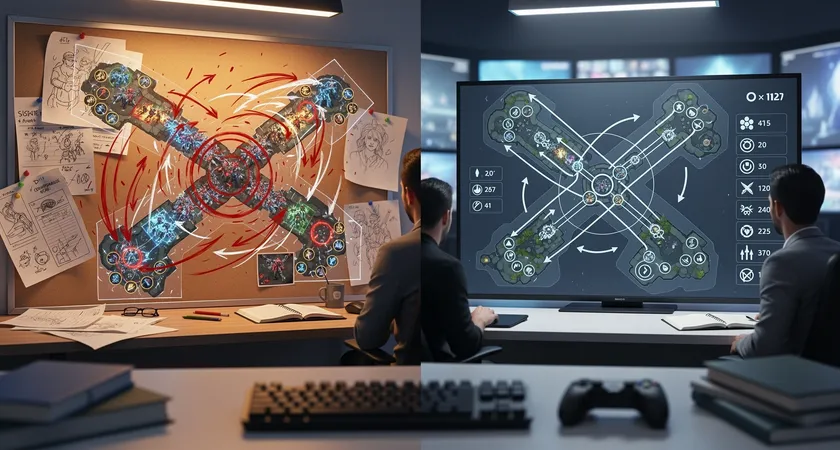
This is where the value of qualified external input becomes evident. It's not about having a "coach" shout commands. It's about engaging a resource that can do the deep, time-consuming diagnostic work you no longer have the bandwidth or objectivity for. They can compare your play against meta trends at your target rank, break down your communication logs for efficiency, and create structured practice drills for specific weaknesses like late-game Baron setups or sidelane management.
Investing in this kind of review is a logical next step for a team serious about breaking through their ceiling. It shifts the workload from guesswork and grinding to targeted, evidence-based improvement. The team's practice sessions become more productive, the feedback loop tighter, and the climb resumes with a clear direction. The most successful premades understand that their greatest strength, their tight-knit, shared perspective, can also become their biggest limitation, and they aren't afraid to seek a wider lens when needed.
Building a successful Flex 5 team is less about discovering hidden tricks and more about consistently applying fundamental principles of organization, communication, and focus. Start by locking down your champion pool and speaking a common tactical language. Let objectives guide your every move on the Rift, and let a clear social contract protect your team's morale. These are the levers any group can pull. When progress stalls despite honest effort, that's the sign of a team ready to graduate, not quit. It means you've mastered the basics and are now facing the complex, nuanced challenges of high-tier play, challenges that often require a fresh pair of expert eyes to solve.
FAQ
What is the best champion pool size for a Flex 5 team trying to climb?
There's no magic number, but the most effective approach is to have 2-3 core team compositions that your entire team understands, with each player mastering 3-4 champions that fit into those comps. This balances flexibility with deep, practiced synergy. It's better to be great at a few coordinated strategies than mediocre at many random picks.
How do you deal with a teammate in Flex queue who refuses to communicate or follow the team plan?
First, address it directly but politely outside of the game, focusing on the impact on wins. If the behavior persists, that player may not be a good fit for a structured premade. Successful teams have shared goals; someone who consistently opts out of the team system will cap your potential. It's often better to find a fifth who aligns with your approach.
Our Flex team wins lane phase but always throws mid-game, what are we likely doing wrong?
This is a classic sign of an objective focus problem. You're probably translating lane leads into kills and personal gold, but not into map pressure. After winning a fight, immediately ask: what objective is now free? Shift your comms from "recall" to "can we take tower/herald/dragon?" Use advantages to secure vision, not just items.
Is it worth creating spreadsheets and documents for a casual Flex team?
It doesn't need to be complex. Even a simple shared document listing your agreed-upon compositions, primary shot-callers for objectives, and one recurring mistake to avoid can create massive clarity. The act of writing it down forces alignment and serves as a quick pre-game reminder, which is valuable at any level.
How often should a serious Flex team review their own replay VODs?
For meaningful improvement, review one loss per session together, but limit it to 15 minutes and focus on a single macro mistake (e.g., vision before Baron, a bad engage call). Reviewing every game or nitpicking micro-play leads to burnout. The goal is one actionable takeaway, not a full autopsy.
At what rank should a Flex team consider getting a coach or analyst?
It's less about a specific rank and more about hitting a plateau despite consistent practice. If you've implemented structured comms, defined compositions, and objective-focused play but your win rate stagnates over 50+ games, an external perspective can identify systemic blind spots you can't see yourselves, making it a worthwhile investment to break through.