League of Legends team strategy

You've just finished a frustrating Flex queue game. Your team was ahead, maybe even had a significant gold lead, but a messy Baron fight turned everything around. The post-game lobby is a mess of 'gg' and 'what was that call?'. It feels like your strategy evaporated when it mattered most. This breakdown, common for teams from amateur clubs to semi-pro rosters, usually points to a foundational issue: the difference between having a collection of individual gameplans and a cohesive, adaptable team strategy. A real League of Legends team strategy isn't just a pick/ban sheet or a single win condition scribbled in chat. It's the operating system for your team's five-player unit. It dictates how you move, fight, and think as one entity from the loading screen to the Nexus explosion. This article will dissect the core pillars of building that system, from champion pool construction to late-game decision paralysis, and explain why many teams find their progress stalling without external, structured guidance. To go deeper, you can also read Comparing Flex 5 with Clash Team Dynamics: Deep Dive into League of Legends Team Play.
Your champion pool is your first and most critical strategic statement
Most Flex 5 teams start their 'strategy' talk in champion select. They target-ban what's annoying on the patch, pick comfort champions, and hope for the best. This reactive approach cedes massive strategic ground before minions spawn. Your team's champion pool is not the sum of five individual 'mains'. It is a curated toolbox of synergies, fallbacks, and specific game plans. The first question isn't 'what do we all play?' but 'what style do we want to enforce?' To go deeper, you can also read Compare Solo Performance and Team Statistics in League of Legends Flex 5: Unlocking True Team Potential.
Building around proactive, not reactive, synergy
Synergy is often misunderstood as two champions whose abilities combo well, like Malphite and Yasuo. While powerful, this is a narrow, all-or-nothing view. Deeper, more reliable synergy comes from shared strategic goals. A team that practices a siege composition needs to think beyond just picking Caitlyn and Ziggs. It needs champions who can control vision in the enemy jungle (like a Maokai support), disengage from hard engages (like a Janna or Gragas), and secure objectives quickly. Their pool isn't built for explosive 5v5s in the river; it's built to choke out the map and take structures. Conversely, a team favoring early skirmishes needs champions with strong level 2-4 power spikes and mobility to create numbers advantages, regardless of the specific combo. The pool must reflect that identity.
In practice, we see teams with a designated 'shot caller' struggle when their preferred style is banned out. Their flexibility collapses because their pool was built for one script. A robust strategic pool has layers: a primary, well-drilled style, a secondary style that uses some overlapping champions for efficiency, and a 'pocket' counter-strategy for specific matchups. This requires moving beyond personal comfort. It might mean your mid-laner invests time in a control mage even if they prefer assassins, because the team's siege composition demands it. That investment is a strategic asset.
The hidden cost of a shallow pool
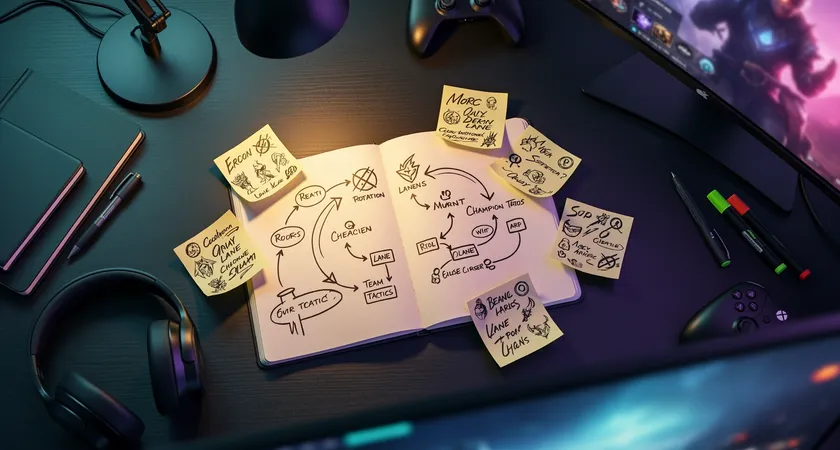
The consequence of a narrow pool isn't just losing a draft. It's mental fatigue and strategic predictability. If your team only knows how to play one way, every loss feels catastrophic, and every draft becomes a stressful game of 'do we get our champs?'. Over a session of multiple Flex games, this pressure erodes communication and tilts players. A broader, strategically understood pool provides psychological safety. It says, 'We have a Plan B.' This adaptability is what separates teams that plateau in mid-gold Flex from those that consistently climb. The drafting phase becomes an opportunity to outmaneuver, not just to survive.
Translating picks into a map movement doctrine
You have your champions. The game loads. Now what? For many teams, the next 15 minutes are a collection of isolated lane states and reactive roams. A true strategy provides a doctrine for map movement. It answers the question: where do we want to be, and when, to maximize our champions' strengths?
Consider a team with a strong early-game jungler like Lee Sin and a mobile mid-laner like LeBlanc. Their strategic doctrine should clearly prioritize invading the enemy's top-side jungle between waves three and four. This isn't a spontaneous 'let's invade' call. It's a pre-meditated play that requires the top laner to have lane priority, the support to be positioned to rotate, and vision to be placed at specific times. The play's goal isn't just a potential kill on the enemy jungler; it's to establish deep vision, track the enemy jungle path, and create a safe zone for your top laner to scale. Every player knows their role because the strategy, born from the champion picks, dictates it.
Contrast this with a scaling composition featuring a Jinx and a Kayle. Their movement doctrine for the early game is fundamentally different. It prioritizes safe vision around their own jungle entrances, wave management to avoid ganks, and cross-map plays to deflect pressure. Their movement isn't about seeking fights; it's about defusing them until their power spikes arrive. Without this shared understanding, the Jinx player might get frustrated with a lack of jungle attention, while the jungler feels pressured to make risky plays that don't suit the comp. The strategy aligns expectations.
The objective ladder: moving beyond 'we need Baron'
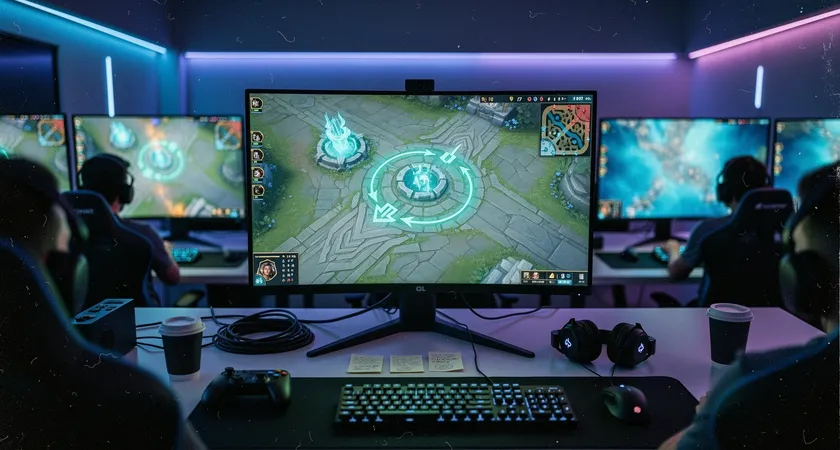
Every team knows they need to take objectives. The strategic failure point is the 'why' and the 'how'. Calls for Baron or Dragon often emerge from a vague sense of opportunity rather than a concrete sequence of actions. An effective strategy establishes an 'objective ladder' - a prioritized, conditional flowchart for taking map control.
The base of the ladder is vision control. You cannot seriously contest an objective you cannot see. The rung above is lane pressure. A Baron call should not start at the Baron pit; it starts with a slow push building in the bottom lane, forcing an enemy to answer it and creating a numbers advantage. The next rung is the actual setup around the objective, including clearing enemy vision and establishing flank wards. Only then do you begin the objective itself. Most failed objective attempts skip one or more of these rungs. A team will rush to Dragon because it's spawning in 30 seconds, but with no vision in the river and all lanes pushed under their own towers. They are trying to climb the ladder from the top, and they fall every time.
A disciplined team strategy bakes this ladder into its communication. The shot caller isn't yelling 'Baron now!' but is issuing the sequence: 'Jinx, set the slow push bot. Leona, we need to sweep their tri-brush vision first. Once the wave is at their tier two, we group for vision around Baron.' This structured approach removes ambiguity and turns a high-risk coin flip into a systematic takeover of the map. It also provides clear abort conditions. If the slow push gets cleared instantly, or if three enemies disappear from vision, the strategy dictates you back off and reset. You don't force it.
When the plan meets reality: adapting the ladder
The rigid ladder can break. An enemy gets caught out randomly. Your team scores an unexpected ace. This is where many strategies disintegrate into frantic, inefficient action. The correct strategic response isn't to abandon planning; it's to have a pre-agreed protocol for 'windfall' scenarios. Does getting a pick at 20 minutes with three enemies dead mean you go for Baron, or do you prioritize taking multiple towers and inhibs? The answer depends on your team's composition, respawn timers, and map state. Discussing these scenarios outside of the game, in a review session, is what turns a collection of players into a strategic unit. You build a shared mental library of responses.
The communication frameworks that prevent collapse
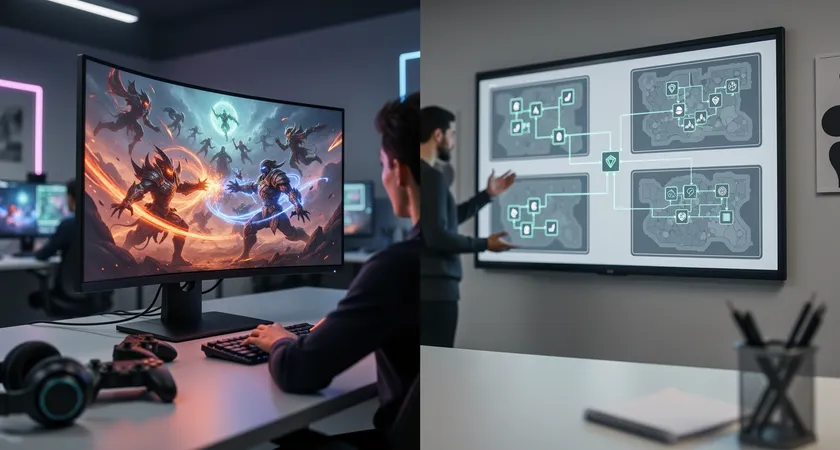
Even the most beautiful strategy on paper is worthless if your team's communication is a cacophony of panic and overlap. Information flow needs a structure. The most common pitfall is the 'play-by-play' commentary, where everyone narrates what they are doing individually. 'I'm backing.' 'I need help top.' 'They have no flash.' This floods the comms with low-priority data and drowns out critical strategic calls.
Effective teams implement role-based communication protocols. Often, this means designating a primary shot caller for macro decisions (objective focus, rotations) and a secondary caller for fight-specific commands (target focus, peel orders). The other players' primary communication duty shifts to feeding specific, high-value information: summoner spell cooldowns spotted, missing enemies, and jungle tracking. This creates a hierarchy of data. The strategic plan provides the 'what' and the 'why,' and the communication protocol executes the 'how' without everyone talking over each other.
In our observations of team reviews, communication breakdowns in late-game moments almost always trace back to a lack of this protocol. Five people see the same opening and all shout a different command. The result is hesitation, split actions, and a thrown lead. Practicing communication is as vital as practicing combos. It means running drills where only one person speaks during a simulated Baron setup, or reviewing VODs specifically to critique the clarity and timing of calls, not just the mechanical misplays.
Why most DIY team strategies hit a hard ceiling
You can implement all of the above. Your team can work on its pool, its movement doctrine, its objective ladder, and its comms. And you will improve, likely significantly. Yet, a large majority of committed Flex teams eventually find themselves stuck. The wins and losses become cyclical, and progress feels incremental at best. This ceiling isn't a reflection of individual skill; it's the inevitable limitation of an internal perspective.
Every team develops blind spots and ingrained bad habits. These are often invisible from the inside. They manifest as consistent losses against a particular playstyle, repeated draft mistakes, or late-game throws that feel like bad luck but follow a predictable pattern. The mid-laner who consistently overextends on vision. The jungler whose pathing becomes readable after three games. The Baron setups that always lack a flank ward. When you are inside the game, focused on your own performance and the immediate tension, you cannot reliably spot these systemic leaks. You review your own VODs and discuss what went wrong, but without a structured framework and an external eye, you tend to fix the symptoms (I died there) and not the disease (our vision pattern always leaves this flank exposed).
This is where the DIY approach reaches its logical limit. Practice makes permanent, not perfect. If you are practicing with the same underlying strategic flaws and blind spots, you are simply cementing them. Breaking through requires an audit, a diagnostic process that maps your team's entire strategic footprint: drafting trends, vision maps, objective timing, gold allocation in transitions. It's forensic work. It moves from 'we lost that fight' to 'our comp had a 2000 gold lead at 20 minutes but we took zero tier two turrets because our siege formation and target priority were never defined.' This level of analysis is difficult, time-consuming, and emotionally challenging to do for yourselves. It requires detachment.
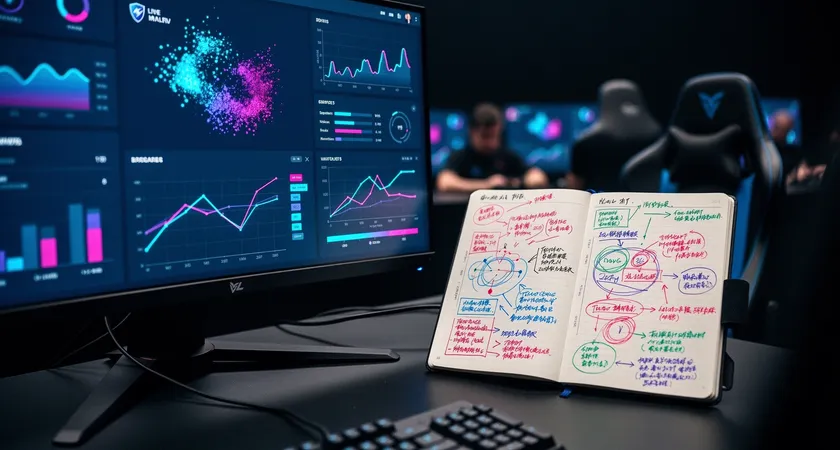
The value of experienced external guidance isn't in giving you a secret playbook. It's in providing that detached, systematic audit. It's in identifying the one or two fundamental strategic leaks that are holding back your entire system. A good analyst or coach doesn't tell you what new strategy to play; they show you why your current strategy is bleeding out, and then provide the tools and frameworks to fix it yourselves. They accelerate the learning cycle from months of trial and error into weeks of targeted, effective practice. For a team serious about moving from a group of players to a competitive unit, this outside perspective isn't a luxury. It's the catalyst that turns effort into results.
Turning strategy into a competitive identity
Building a League of Legends team strategy is a continuous process, not a one-time meeting. It starts with intentionality, moving from reactive comfort picks to a proactive champion pool that defines your playstyle. That identity must then extend into a clear doctrine for map movement and a disciplined, rung-by-rung approach to securing objectives. All of this must be channeled through clean, role-based communication to avoid mid-game chaos. These are the pillars any team can and should work on.
The true differentiator, however, comes when you stop just playing games and start actively diagnosing your team's organism. The patterns in your losses, the repeated draft pitfalls, the late-game decisions that feel like a roll of the dice those are the data points. Capturing and correctly interpreting that data internally is the great challenge. It often requires stepping outside of the five-player perspective to see the system as a whole. Whether through structured self-review frameworks or by seeking an external audit, the next step for any team hitting that ceiling is to shift from being participants in the strategy to becoming analysts of it. That shift, from playing to understanding why you play the way you do, is what ultimately builds not just a strategy, but a team.

FAQ
What is the most important part of a League of Legends team strategy for Flex queue?
While all parts interconnect, a cohesive champion pool built around a specific playstyle is the foundational pillar. It determines your win conditions, your map movement, and your objective focus before the game even starts. Teams that draft five comfort picks with no strategic synergy are building on sand.
How do you fix constant late game throws in Flex 5v5?
Late game throws typically stem from a lack of a pre-defined 'objective ladder' and communication overload. Establish a clear sequence for taking objectives: lane priority first, then vision control, then setup, then the take. In comms, designate a single voice for macro calls during these tense moments to prevent conflicting commands that cause hesitation and split decisions.
What's a simple team strategy for beginners in Flex queue?
Start with a single, easy-to-execute game plan like a 'pick' composition. Draft champions with reliable crowd control (like Ashe, Malzahar, Maokai) and agree that your sole objective for the first 25 minutes is to get vision control in the enemy jungle and catch one person out of position before fighting for anything. This creates a clear, shared goal that simplifies decision-making for a new team.
How many team compositions should a Flex team master?
Depth beats breadth. It's far more effective to have one primary composition you can play perfectly and one secondary style you can fall back on if it's banned or heavily countered, than to have three or four half-understood strategies. Mastery of one style teaches your team fundamental concepts about movement and timing that translate to other comps later.
Why does our Flex team win lane but lose game consistently?
This classic problem almost always points to a lack of a mid-game doctrine. You have individual lane leads but no shared plan to convert that gold into map control. The solution is to decide, based on your composition, what your first major objective is after laning ends (e.g., Herald to break a tower, Dragon soul pressure, sieging mid) and practice the specific rotation and vision pattern needed to execute it as a unit.
Can you have a good team strategy with friends of different skill levels?
Yes, but the strategy must account for it. The core principle is to build a game plan that protects and enables your less experienced players while playing to the strengths of your most skilled. This often means choosing compositions with clear, safe roles for everyone and avoiding high-risk, high-mechanic strategies. The focus shifts heavily to macro play and objective control over flashy outplays.